
Small Garden Design Solutions: Maximising Every Square Metre
Landscaping Garden Design Experts
DNA Landscapes
Using Design Solutions to Maximise Enjoyment of your Small Garden
Small gardens dominate Coventry and Warwickshire. Most terraced houses, Victorian conversions, and new-build developments provide compact outdoor spaces—often just 20-40 square metres of garden to work with. If you've looked at your modest plot feeling frustrated by its limitations, you're not alone. Many homeowners assume small gardens mean compromised design, accepting cramped, uninspiring outdoor spaces because they don't see alternatives.
The reality? Small gardens aren't inferior—they're opportunities. With intelligent design, compact spaces transform into stunning outdoor rooms that feel significantly larger than their actual dimensions. A well-designed 30 square metre garden can feel more spacious, interesting, and enjoyable than a poorly planned 100 square metre space. The difference lies in understanding how to maximise every element—layout strategies, vertical solutions, material choices, and optical tricks that make boundaries recede and compact spaces breathe.
At DNA Landscapes, we've designed hundreds of small gardens across Coventry—from narrow terraced plots in Earlsdon to compact new-build courtyards in Whitley. We understand the specific challenges facing typical Midlands properties: limited width, heavy shade from neighbouring buildings, awkward proportions, and the need to accommodate multiple functions (entertaining, storage, planting) within minimal space.
This guide shares the strategies we use to transform small gardens, covering layout approaches that create illusion of space, vertical gardening techniques maximising height over width, material selections enhancing rather than overwhelming compact areas, and planting strategies delivering impact without clutter. You'll discover how to make your small garden feel twice its size whilst creating an outdoor space you'll genuinely use and love, not just tolerate as inadequate afterthought.
Understanding Small Garden Challenges and Opportunities
Small gardens present unique design challenges but also unexpected advantages often overlooked when homeowners focus solely on spatial limitations. Understanding both perspectives helps approach your compact garden positively rather than feeling defeated by dimensions you can't change.
Why Small Gardens Feel Smaller Than They Are
Most small gardens feel more cramped than their actual measurements justify. Several factors create this perception—factors we can address through thoughtful design rather than accepting as inevitable limitations.
Visible boundaries everywhere:
In small spaces, fences and walls dominate your view from every position. You're constantly aware of enclosure, making the space feel oppressive rather than cosy. Boundary treatments become the garden rather than backdrop to it. This matters enormously—in larger gardens, boundaries recede from consciousness as planting and features command attention. In small gardens, boundaries are unavoidable focal points unless deliberately addressed through design.
Coventry terraced gardens typically measure 4-6 metres wide by 8-12 metres long. Stand anywhere in these gardens and you're rarely more than 2-3 metres from a boundary. This proximity makes fences psychologically larger than they physically are, emphasising confinement.
Complete visibility eliminating mystery:
Seeing your entire garden from any single position removes journey and discovery—major factors making larger gardens feel spacious. You absorb everything instantly, leaving nothing to explore or reveal gradually. The brain processes this total visibility as "small space completely understood" rather than "space with possibilities."
This immediate comprehension makes gardens feel smaller than identical dimensions would if partially concealed or revealed sequentially. Mystery and gradual discovery create perceived spaciousness even within modest actual dimensions.
Proportionally oversized features:
Garden sheds, bin storage, and furniture occupy far larger percentages of small gardens than they do in spacious plots. A standard 2.4 × 1.8 metre shed that's barely noticeable in a 100 square metre garden dominates a 30 square metre courtyard, consuming 15% of total space. Similarly, a 1.8 metre diameter table with chairs requires roughly 3 × 3 metres when pulled out—nearly 10 square metres including circulation space.
These necessary elements can't be eliminated but their proportional impact in small gardens makes every placement decision critical. Poor positioning compounds their space-consuming effect whilst clever placement and screening minimises visual dominance.
Cluttered, incoherent planting:
Small garden owners often attempt compensating for limited space by cramming in diverse planting—dozens of small pots, multiple plant varieties in tiny borders, competing colours and textures. The result feels chaotic and cluttered rather than abundant and interesting. Visual confusion makes spaces feel smaller as the eye finds nowhere to rest.
This clutter often stems from good intentions—wanting maximum interest and variety—but achieves opposite effect in compact dimensions requiring restraint and simplicity for spacious feeling.
Heavy shade from surrounding buildings:
Terraced houses, semi-detached properties, and courtyard gardens surrounded by walls suffer disproportionate shading. Neighbouring buildings block low-angle sun, creating gardens that remain significantly shaded for much of the day. Dark spaces feel smaller and less inviting than bright, sunny gardens of identical dimensions.
North-facing Coventry gardens (common in terraced streets running east-west) receive minimal direct sun, compounding the challenge. East-facing plots get morning sun but remain shaded afternoons. This shading limitation requires specific design responses rather than pretending sun-loving Mediterranean plants will thrive.
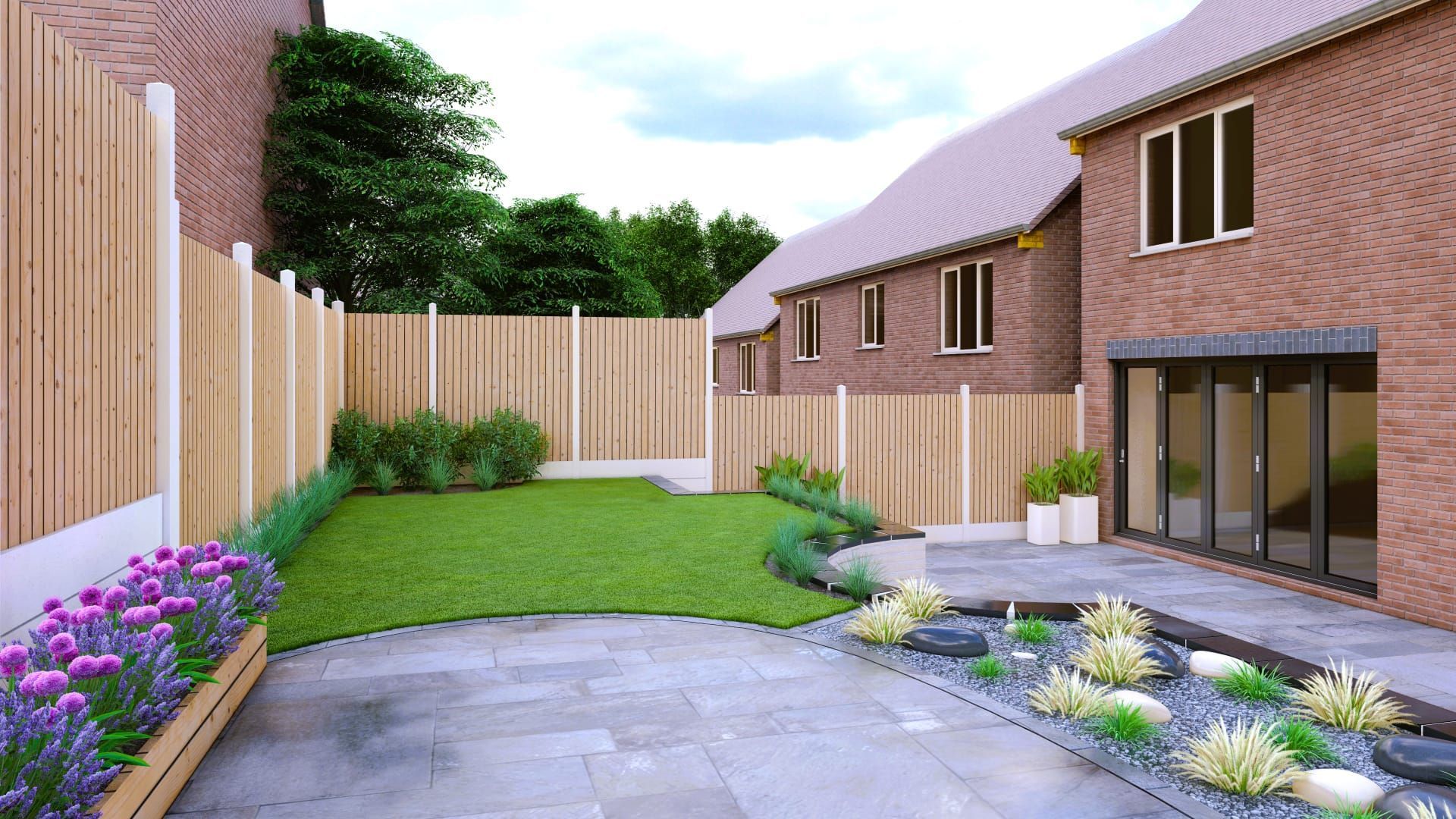
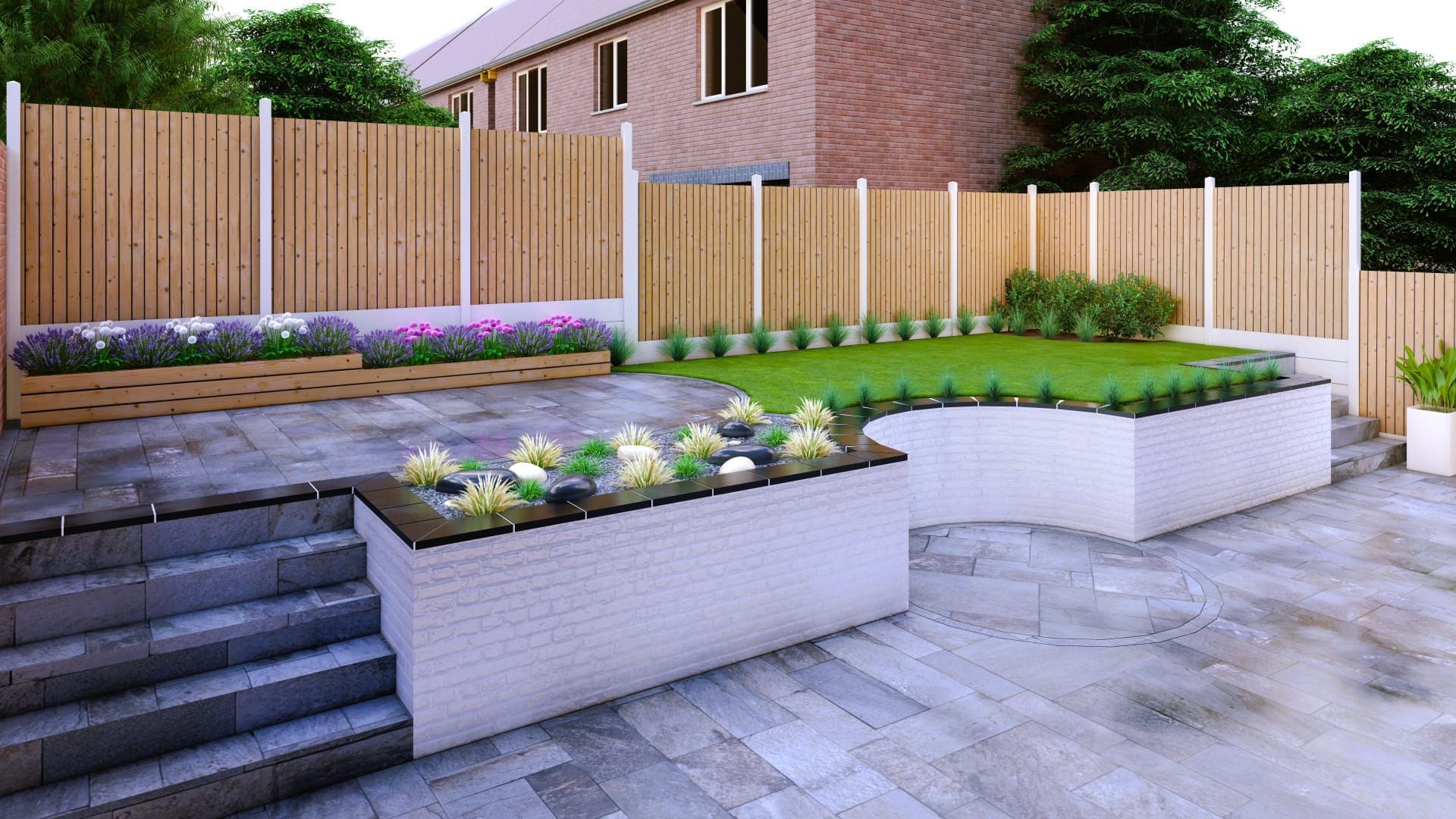
The Advantages of Compact Garden Spaces
Reframing limitations as opportunities changes your entire approach. Small gardens offer genuine advantages that larger spaces can't match—advantages worth celebrating and maximising rather than dismissing whilst fixating on what you lack.
Significantly lower maintenance commitment:
Small gardens require fraction of the time larger gardens demand. Less lawn to mow—or none at all if you choose paving, decking, or artificial grass. Minimal borders to weed, prune, and maintain. Reduced watering requirements during dry spells. You can achieve and maintain perfection in small gardens whilst equivalent standards in large gardens would consume every weekend.
This suits contemporary lifestyles brilliantly. Busy professionals and young families wanting attractive outdoor spaces without weekend-consuming maintenance find small gardens deliver perfect balance. You can enjoy pristine, designed appearance with perhaps one to two hours monthly maintenance once established—impossible in traditional large gardens with extensive borders and lawns.
Intimate, enclosed atmosphere:
Small spaces feel private and cosy—genuinely positive attributes when embraced through design rather than fought against. Properly designed small gardens create outdoor room sensation, feeling like genuine extensions of your home rather than separate external spaces.
This intimacy suits entertaining beautifully. Groups of six to eight people feel comfortably gathered in compact gardens, creating convivial atmosphere. The same group in a vast garden feels scattered and disconnected. Small gardens naturally encourage proximity and conversation.
The enclosure also provides privacy automatically. In terraced and semi-detached properties, small gardens surrounded by boundaries feel more private than larger gardens where you're visible from multiple neighbouring properties across wider areas.
Budget efficiency opens premium options:
Premium materials that would devastate budgets in large gardens become accessible at compact scale. That stunning Kandla Grey porcelain paving at £65 per square metre? Covering 20 square metres costs £1,300 for materials—significant but manageable. The same paving across 80 square metres runs £5,200—often prohibitive.
This budget efficiency means small gardens can feature quality that creates genuine luxury feel. Composite decking, premium stone, architectural containers, statement water features—elements reserved for large-garden focal points can dominate entire small gardens, creating cohesive high-end character throughout.
You can also invest proportionally more in professional design services. Design fees representing 15-20% of small garden budgets remain affordable whilst equivalent percentages of large garden projects become substantial investments.
Complete transformation in single season:
Changing your mind or updating styles becomes manageable in small gardens. Complete renovation from concept through installation might take just two to three weeks. Material quantities remain modest, labour requirements limited, disruption brief.
This allows experimentation and evolution. You can try contemporary style knowing that if it doesn't satisfy, pivoting to different approach in a few years remains financially and practically feasible. Large gardens represent such substantial commitment that design mistakes prove expensive to rectify—small gardens offer far more flexibility.
Easier achieving cohesive design:
Creating harmonious, unified design proves easier when entire garden remains visible simultaneously. Every element relates visibly to every other element, making design coherence natural to achieve. Colour schemes, material choices, and style decisions read clearly when viewed as complete composition rather than series of separate areas.
This visibility also means design mistakes become immediately obvious—encouraging careful, considered decisions rather than reactive choices you might regret.
Explore our complete guide to garden design styles to identify which approaches work best in compact spaces.
Layout Strategies for Small Gardens
Layout decisions affect small gardens more dramatically than large ones. Every choice—where pathways run, how zones divide, which materials transition where—either enhances or diminishes perceived space. A 30 square metre garden with strategic layout feels spacious and interesting. The identical space with poor layout feels cramped and disappointing. Understanding layout principles that create illusion of space represents the single most valuable knowledge for small garden success.
Many homeowners instinctively approach small gardens by trying to maximise open space—keeping everything simple, avoiding divisions, creating single open area. This feels logical but achieves opposite of intended effect. Undivided small gardens read instantly as "small space," leaving nothing for imagination or discovery. Strategic division, counterintuitively, makes compact spaces feel significantly larger through creating journey, mystery, and varied experience within modest dimensions.
Breaking Up Space: Creating Zones and Interest
The fundamental principle for making small gardens feel larger: divide them into distinct zones revealed gradually rather than presenting everything simultaneously. This contradicts instinct—surely dividing already-limited space makes it feel smaller?—but proves remarkably effective in practice.
How zoning creates perceived space:
When you see an entire garden at once, your brain instantly calculates its dimensions and dismisses it as "small space fully understood." When zones partially conceal areas, suggesting spaces beyond immediate view, your brain can't complete the calculation immediately. This uncertainty creates perception of larger, more complex space than actually exists.
The key lies in partial division—screening that suggests separation whilst maintaining glimpsed connections. You're not building solid walls creating completely separate rooms (which would indeed feel cramped) but rather creating gentle divisions encouraging movement through zones whilst hinting at areas beyond.
Partial screening strategies:
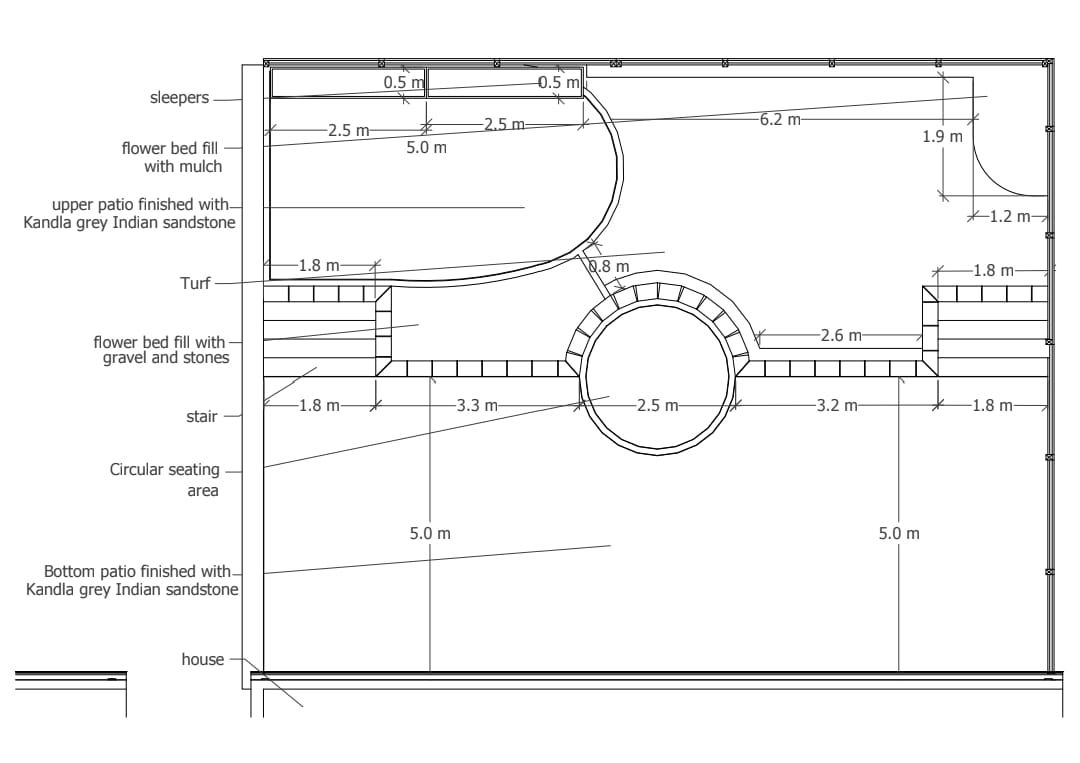
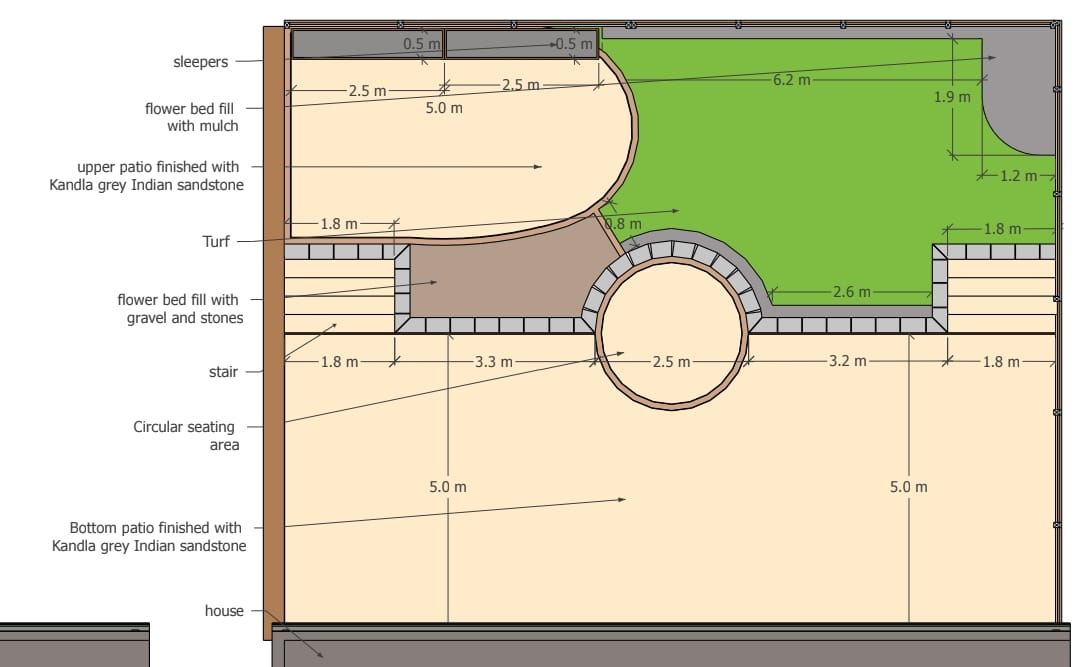
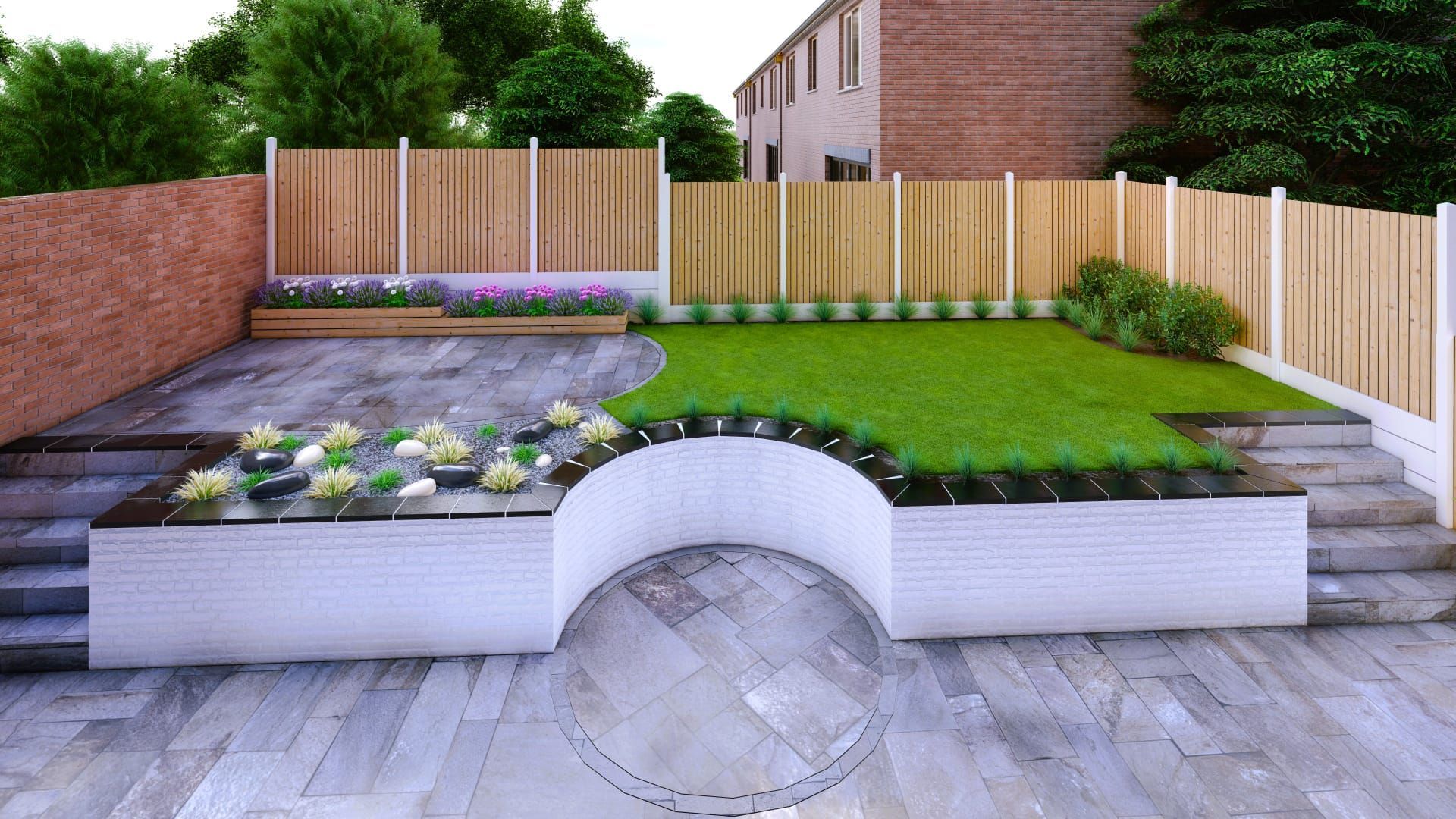
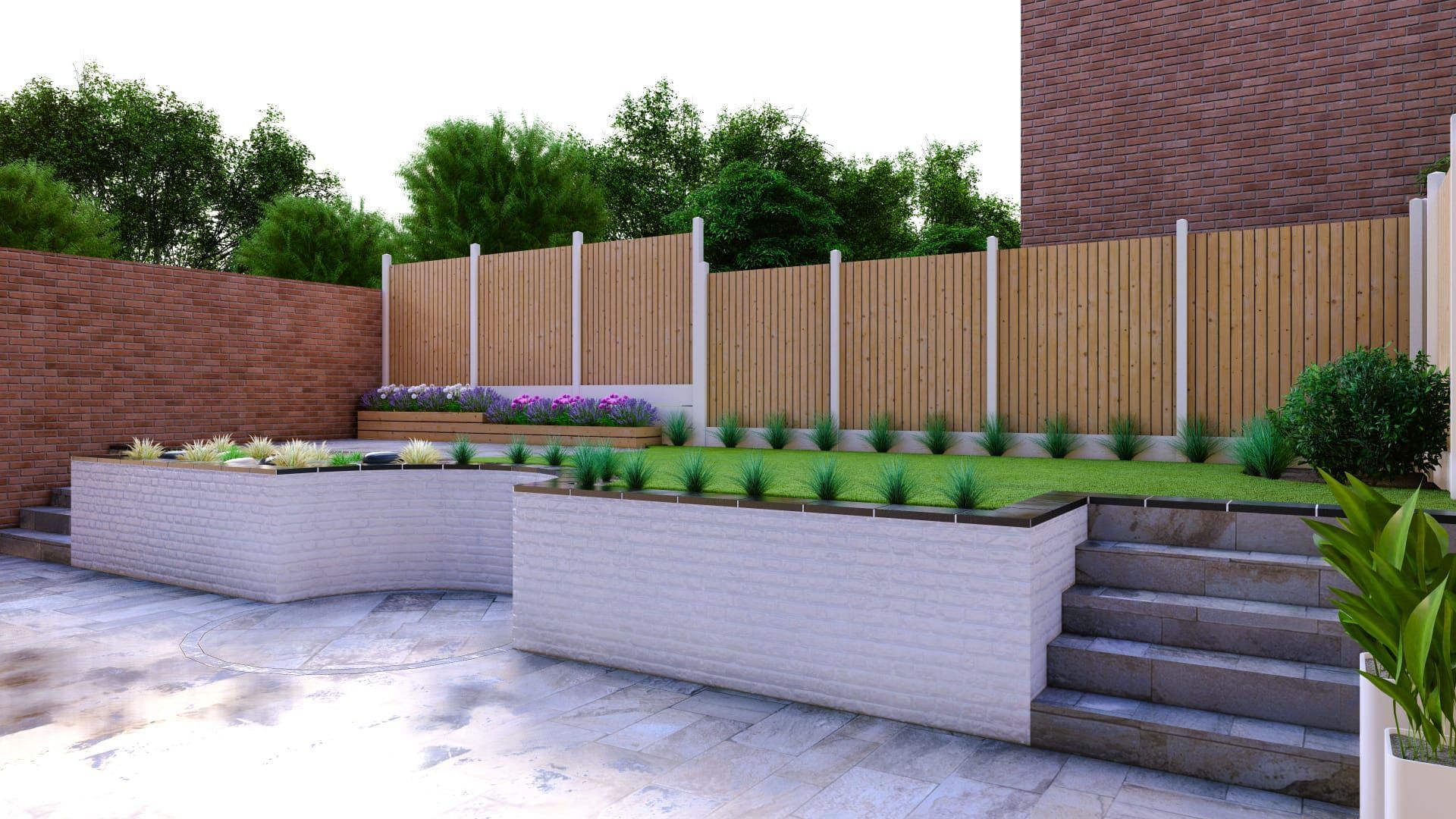
Low walls and raised beds (40-60cm height) create boundaries at seated eye level without blocking standing views completely. You're aware of zones beyond whilst feeling distinctly within one area. This works brilliantly for separating entertaining spaces from planting zones—you see flowers beyond whilst seated at your dining table, but the raised bed prevents your patio feeling overwhelmed by planting immediately adjacent.
We build these using rendered blockwork, sleepers, or brick matching your property. The horizontal line they create divides garden visually whilst the gap above prevents oppressive enclosure.
Planting as screening: Ornamental grasses (Miscanthus, Calamagrostis) at 1-1.5 metres height provide see-through screening—you glimpse areas beyond through stems and foliage without clear views. This creates mystery whilst avoiding solid barriers. Shrubs planted in groups rather than continuous hedges achieve similar effect—gaps between plants suggest hidden areas whilst maintaining airiness.
Slatted screens and trellis panels create boundaries through rhythm and pattern rather than solid barriers. Contemporary slatted screens (horizontal timber or composite slats with gaps) feel modern and architectural. Traditional trellis supporting climbers creates romantic divisions. Both allow light and glimpsed views through whilst establishing clear zones.
Material transitions signalling zones:
Different surfaces announce zone changes without physical barriers. Paving near the house transitions to decking in a central seating zone, then to gravel or bark mulch in a planting area. These material boundaries create psychological divisions—you know you've moved from one area to another through surface texture and appearance changes.
This works particularly well in narrow gardens where physical screening would feel oppressive. The ground plane variation creates zoning whilst maintaining open sight lines.
Level changes creating distinct zones:
Even modest level changes (single 15cm step up or down) establish clear zones whilst adding three-dimensional interest. Raised planting beds 30-45cm high create seating edges doubling as garden division—functional furniture integrated with spatial organisation.
In gardens with existing slopes, working with these levels rather than creating completely flat spaces often produces more interesting results. A patio at one level, lawn or planting zone one step down, creates natural division whilst the level change adds spatial complexity making the garden feel more substantial.
Sunken seating areas (one step down from surrounding garden) feel surprisingly spacious despite occupying minimal space. The lowered position creates sense of enclosure and intimacy—positive attributes in small gardens—whilst the raised edges provide casual seating when entertaining larger groups.
Focal points drawing eye through zones:
Positioning focal points—sculpture, water feature, specimen plant, or seating area—at garden ends or zone boundaries draws attention through and beyond immediate space. Your eye travels to these features, creating perceived journey even in compact dimensions.
In a 10-metre long garden, placing a statement container or small water feature at the far end pulls your view through the entire space. This maximises perceived distance whilst creating reason to move through zones rather than remaining static in one position.
What not to do with zoning:
Avoid solid, tall divisions: Walls or fences above 1 metre height within small gardens create claustrophobic cells rather than interesting zones. Keep internal divisions low (under 60cm) or see-through (trellis, grasses, slatted screens).
Don't create too many tiny zones: Three zones maximum in gardens under 40 square metres. More creates confusing fragmentation rather than interesting journey. Typical arrangement: entertaining zone near house, central lawn or planting zone, storage or utility area at far end.
Don't block natural circulation: People need to move through gardens logically. Forcing awkward routes around barriers creates frustration. Zones should guide movement naturally, not impede it.
Diagonal Lines and Curves: Optical Illusions That Work
Rectangular gardens arranged parallel to boundaries emphasise their limitations—narrow width becomes impossible to ignore, length feels finite and obvious. Introducing diagonal lines or gentle curves forces the eye to travel longer distances, creating perception of increased space whilst adding visual interest preventing monotonous predictability.
Why diagonals expand perceived space:
Straight lines parallel to boundaries are measured instantly by your brain. You see the width, recognise it's limited, and that becomes the garden's defining characteristic. Diagonal lines can't be assessed as quickly—your eye must travel along them, covering more distance, creating impression of larger space.
A 4-metre wide garden with paving running straight across remains obviously 4 metres wide. The same 4-metre garden with decking boards running at 45-degree angles forces your eye to travel roughly 5.6 metres (the diagonal distance), making the space feel wider despite identical actual dimensions.
Diagonal decking orientation:
This represents one of the simplest, most effective tricks for narrow gardens. Instead of running deck boards along length (emphasising narrowness) or across width (limiting perceived length), lay them diagonally at 45 degrees. This works especially well in gardens where one dimension is particularly restricted.
We install composite decking this way frequently in narrow terraced gardens—the diagonal orientation makes 4-5 metre widths feel substantially more generous whilst adding visual interest preventing blank expanses of parallel boards.
Cost consideration: Diagonal laying increases wastage (more cuts, more off-cuts) adding roughly 10-15% to material costs. However, the spatial improvement usually justifies this modest increase in small gardens where every visual trick matters.
Diamond-pattern paving:
Laying square or rectangular pavers in diamond orientation (rotated 45 degrees) creates similar effect to diagonal decking. The eye follows diagonal joint lines rather than absorbing width instantly. This works with any rectilinear paving—porcelain slabs, natural stone, block paving.
Diamond patterns also slow visual reading of space. The more complex geometry requires more attention to process, creating impression of more substantial, interesting space than simple grid patterns.
Diagonal pathways through gardens:
Instead of straight paths running directly from house to garden end, angle paths diagonally across space. This maximises actual distance travelled within limited area whilst creating more interesting journey.
In a 4-metre wide by 10-metre long garden, a straight path covers 10 metres. A path running diagonally from one front corner to opposite rear corner covers roughly 10.8 metres—modest increase, but combined with the visual interest of diagonal route, it significantly affects perceived spaciousness.
Stepping stone paths work particularly well for diagonal routes—individual stones suggest informal, exploratory journey rather than efficient direct route.
Curved pathways and borders:
Gentle curves hide garden ends and sides, creating mystery about what lies beyond visible areas. S-curve pathways through narrow gardens maximise distance whilst feeling natural and organic rather than geometrically contrived.
Curved lawn edges soften rectangular boundaries and prevent the garden reading as obvious rectangle. Even subtle curves—not dramatic serpentine edges—add sufficient visual interest to prevent monotonous predictability.
In very small gardens (under 30 square metres), keep curves gentle and minimal. Dramatic curves in tiny spaces feel forced and consume precious space creating them. Subtle curves provide visual interest without spatial cost.
Angled features and furniture:
Positioning seating areas at angles to boundaries rather than square and parallel adds interest whilst maximising perceived space. A bench at 30-45 degrees to the rear fence creates more dynamic composition than one sitting parallel.
Raised beds positioned diagonally rather than following fence lines create more interesting layouts. They don't need to be dramatically angled—even 15-20 degrees off parallel creates more engaging geometry than strict rectangles.
Multi-Level Designs for Compact Spaces
When horizontal space is limited, vertical variety becomes essential for creating interesting, spacious-feeling gardens. Level changes add three-dimensional complexity, create natural zoning, and provide varied perspectives making small spaces feel more substantial.
Raised beds and planters creating levels:
Raised planting beds at varying heights (30cm, 60cm, even 90cm) bring plants to different viewing levels whilst creating architectural interest. Eye-level planting (60-90cm height) creates impact without consuming floor space—you're utilising vertical space that would otherwise remain empty.
Built-in seating on raised bed edges provides furniture without additional footprint. A 45cm high raised bed with 30cm wide coping stones creates comfortable seating around planting—dual purpose efficiency essential in small gardens.
Different bed heights create visual rhythm and interest. Three raised beds at 30cm, 45cm, and 60cm heights create more engaging composition than three identical beds. This variety adds complexity suggesting larger, more developed garden than flat, uniform planting.
Materials for raised beds:
Sleepers (new oak or railway sleepers): Create rustic, substantial raised beds. Stack two sleepers (approximately 40cm total height) for comfortable seating height. Cost-effective and long-lasting.
Rendered blockwork: Contemporary clean-lined beds painted to match boundary walls. More expensive than sleepers but creates sophisticated, architectural effect perfect for contemporary small gardens.
Brick matching property: Creates cohesive connection between house and garden. More expensive and labour-intensive but delivers premium, permanent feel.
Gabion walls: Wire cages filled with stone. Contemporary industrial aesthetic, excellent drainage, and relatively affordable. Popular for modern small gardens.
Sunken features adding depth:
Sunken seating areas (one step down from surrounding level) create intimate spaces feeling larger than their footprint suggests. The lowered position provides sense of enclosure—positive in small gardens—whilst raised edges around the sunken area provide additional casual seating.
This works particularly well in small courtyards. A sunken seating area 2.5 × 2.5 metres feels spacious and room-like, with surrounding raised edges accommodating 8-10 people for entertaining despite modest overall dimensions.
Installation consideration: Sunken areas require excavation and proper drainage—rainwater must drain away rather than pooling in the lowest point. This adds construction cost but delivers dramatic spatial impact.
Split-level designs creating zones:
Main patio at one level, planting zone raised 30-45cm above, creates clear functional separation whilst the level change adds visual interest. Steps between levels provide additional informal seating when needed.
This works brilliantly in gardens with existing slopes—work with the levels rather than expensive excavation creating completely flat areas. A patio cut into the slope at house level, lawn or planting zone at natural ground level one step up, feels spacious through varied perspectives.
Viewing angles from different levels: Standing at lower level looking up to raised planting creates different perspective than viewing from above. This variety makes gardens feel more complex and interesting—qualities associated with larger spaces.
Pathways and Circulation in Small Gardens
How people move through gardens affects spatial experience profoundly. Well-planned circulation creates journey and purpose. Poorly planned pathways waste space whilst making gardens feel awkward and restrictive.
Keeping pathways appropriately narrow:
Small gardens don't need paths designed for two people walking side-by-side. Functional pathways serving single-person circulation can be just 60-80cm wide—half the 1.2-1.5 metre width appropriate for larger gardens.
This matters enormously in compact spaces. An unnecessarily wide path consuming 1.2 metres width in a 4-metre wide garden devours 30% of total width. A 70cm path uses under 20%, leaving substantially more space for planting and features.
Stepping stones instead of continuous paths:
Individual stepping stones across gravel or through low planting feel less dominant than continuous paths whilst serving identical functional purposes. The gaps between stones allow planting to flow around them, creating softer, more spacious feel.
Stepping stones also cost significantly less than continuous paving—fewer materials, less groundwork, quicker installation. This budget efficiency allows investing saved money in premium paving for main patio or other high-impact areas.
Spacing stepping stones: 55-65cm apart (measured centre-to-centre) suits average stride comfortably. Too close feels fussy, too far becomes awkward requiring conscious attention to footing rather than natural walking.
Purposeful routes avoiding wasted space:
Every pathway should lead somewhere specific—seating area, focal point, hidden zone, storage area. Paths without clear destinations waste precious space whilst feeling purposeless.
This doesn't mean paths must be long. Even 2-3 metre paths serve purpose if they create journey to distinct destination. The psychological effect of purposeful route matters more than actual distance covered.
Material choices for pathways:
Using main paving material throughout creates visual cohesion making gardens feel larger through consistency. If your patio uses Kandla Grey porcelain, using the same for pathways eliminates visual breaks fragmenting space.
Two materials maximum when you want differentiation—main paving (porcelain, natural stone) for patios and terraces, secondary material (gravel, stepping stones) for pathways. More than two creates visual fragmentation counterproductive in small spaces.
Gravel pathways work beautifully in small gardens—affordable, permeable, informal feel, and easy to install. Edge with timber boards, metal edging, or brick to prevent gravel migrating into borders or lawn.
Proportion matters in material selection: Avoid very large paving slabs (900 × 600mm+) for pathways in small gardens—they feel oversized relative to narrow path widths. Smaller slabs (600 × 400mm, 600 × 300mm) or stepping stones suit compact pathway proportions better.
Vertical Gardening: Maximising Height Over Width
Small gardens can't expand horizontally but almost always offer substantial vertical space—walls, fences, and vertical structures providing planting opportunities equivalent to several square metres of border whilst consuming minimal floor space. Most small garden owners dramatically underutilise this vertical potential, leaving bare fences and walls whilst cramming too much into limited ground-level borders. Shifting focus upwards transforms small gardens, creating abundant planted character without sacrificing precious floor area needed for seating, circulation, and functional spaces.
Vertical gardening isn't just practical necessity for small spaces—it creates visual interest through varied heights, softens harsh boundaries, and establishes the layered, mature appearance characteristic of successful gardens regardless of size. A small garden with well-clothed vertical surfaces feels infinitely more established and abundant than one with generous ground-level planting but bare boundaries towering above.
Climbing Plants and Wall Shrubs
Climbing plants represent the most effective, affordable vertical gardening solution for small spaces. They transform bare fences into living walls, soften harsh boundaries, and provide seasonal interest overhead rather than competing for limited ground space.
Essential climbers for small gardens:
Clematis—the small garden hero:
Clematis offers unmatched variety for compact spaces—dozens of varieties flowering from spring through autumn, occupying minimal ground space whilst covering substantial vertical areas. Unlike many climbers needing years reaching maturity, clematis establishes relatively quickly and flowers within 1-2 seasons of planting.
Clematis montana provides vigorous coverage if you need substantial areas covered quickly. White or pink flowers smother fences completely in May. Warning: very vigorous—only use where you want complete coverage and can manage enthusiastic growth. Avoid in tiny courtyards where it overwhelms.
Large-flowered hybrids (Clematis 'Nelly Moser', 'Jackmanii', 'The President') offer spectacular blooms on more manageable growth. These suit small gardens perfectly—covering 2-3 metres height without overwhelming whilst providing dramatic flowers from June through September.
Late-flowering varieties (Clematis viticella types, Clematis tangutica) bloom August onwards when many climbers finish. 'Etoile Violette' produces masses of purple flowers. Clematis tangutica offers yellow lantern flowers followed by silky seed heads attractive through winter.
Planting tip: Clematis need roots shaded (mulch heavily or plant low shrubs nearby) but flowers in sun. Plant deep—5-10cm deeper than pot level—encouraging multiple stems from below ground. If clematis wilt affects stems, buried growth points regenerate.
Climbing roses for romance and scent:
Climbing roses create quintessential English garden character—perfect for small cottage-style or traditional gardens where abundant flowering matters more than stark contemporary minimalism.
'New Dawn' remains the most reliable climbing rose for Coventry conditions. Continuous pale pink flowers June through October, disease-resistant, vigorous but manageable (3-4 metres), tolerates less-than-perfect conditions. If you only grow one climbing rose, choose this.
'Golden Showers' offers bright yellow flowers and compact habit (2.5 metres)—ideal for small gardens where larger varieties overwhelm. Repeat flowers reliably through summer.
'The Generous Gardener' (David Austin) provides soft pink, heavily scented flowers on 3-4 metre growth. Beautiful but requires good conditions and regular feeding—worth the effort for its romantic character.
Support requirements: Climbing roses need substantial support—trellis, horizontal wires (30cm spacing), or wall-mounted frameworks. Unlike self-clinging climbers, roses require tying in to supports as they grow.
Honeysuckle for scent and wildlife:
Native honeysuckle (Lonicera periclymenum) provides heavily scented flowers attracting evening moths, followed by berries feeding birds. Grows to 4-5 metres, twining naturally around supports without needing tying.
Lonicera periclymenum 'Serotina' flowers July-October with burgundy and cream blooms. Semi-evergreen in mild Coventry winters, maintaining some foliage year-round.
Lonicera japonica 'Halliana' offers white flowers aging to yellow and evergreen foliage. Very vigorous—only use where you want substantial coverage quickly and can manage enthusiastic growth.
Trachelospermum jasminoides—evergreen elegance:
Star jasmine provides glossy evergreen foliage year-round plus heavily scented white flowers covering plants completely in June-July. Grows to 4-5 metres, twining naturally through supports.
Borderline hardy in Coventry—needs sheltered position (south or west-facing walls) and protection during harsh winters when young. Once established (3-4 years), tolerates cold snaps more reliably. The evergreen foliage and incredible scent justify the slight tenderness—transforms small courtyards into Mediterranean-feeling spaces.
Hydrangea petiolaris—shade solution:
Climbing hydrangea solves the common small garden problem: north-facing boundaries receiving minimal sun. Most flowering climbers need reasonable light, but Hydrangea petiolaris thrives in shade, providing white lacecap flowers in June plus attractive foliage through summer.
Self-clinging (no support needed—attaches directly to walls or fences), deciduous (bare in winter but attractive branch structure remains), slow to establish (often takes 2-3 years before growing vigorously) but worth patience. Eventually reaches 8-10 metres but easily managed through pruning in small spaces.
Wall shrubs trained flat against boundaries:
Wall shrubs differ from true climbers—they don't climb naturally but tolerate being trained flat against walls or fences, creating similar coverage using different plants.
Pyracantha (firethorn) provides evergreen coverage, white spring flowers beloved by bees, and spectacular autumn/winter berries (orange, red, or yellow depending on variety). Thorny branches deter intruders—useful for front boundaries. Grows 2-4 metres depending on variety and pruning. Tolerates any aspect including north-facing.
Train against wires or trellis, tying branches horizontally to encourage flat growth and maximum berry production. Prune after flowering to maintain shape and prevent projecting too far from boundaries.
Chaenomeles (Japanese quince) flowers on bare stems in late winter/early spring—scarlet, pink, or white blooms when little else flowers. Deciduous, grows 2-3 metres, tolerates any aspect including deep shade. Underused in small gardens but brilliant for early season colour on challenging boundaries.
Ceanothus (California lilac) creates stunning blue flowers in May-June on evergreen foliage. Needs sunny, sheltered wall—south or west-facing only. Not fully hardy in exposed Coventry gardens but thrives in sheltered courtyards. The blue is unique—no other climber or wall shrub offers this colour, making Ceanothus worth growing despite slight tenderness.
Supporting structures and training systems:
Trellis panels fixed to fence tops add 30-60cm height whilst providing climbing support. We fix these 2-3cm away from fences (using battens or spacers) allowing air circulation behind climbers—prevents rot and mildew whilst making maintenance easier.
Traditional square or diamond trellis suits cottage or traditional gardens. Contemporary slatted panels (horizontal or vertical) suit modern small gardens better.
Horizontal wire systems provide neat, minimal supports perfect for training roses, pyracantha, or espalier fruits. We fix wires 30-40cm apart vertically, tensioned properly to prevent sagging. Looks tidy and professional whilst remaining unobtrusive—plants become focus, not supports.
Wall-mounted planters at varied heights create vertical interest on blank walls in courtyards. Install planters at 60cm, 120cm, and 180cm heights, planting trailing plants (ivy, trailing fuchsias, Heuchera) creating living art on vertical surfaces.
Vertical Planting Structures and Living Walls
Purpose-built vertical growing systems take vertical gardening beyond climbers, creating planted walls and structures adding dramatic impact whilst consuming minimal ground space.
Living walls and green walls:
Modular systems holding multiple plants vertically—essentially wall-mounted planters creating continuous planted surfaces. Transform blank walls in courtyards or beside patios into living artwork, providing abundant planting without consuming floor space.
How living walls work:
Modular panels or pockets mount to walls, filled with growing medium and planted densely. Most require irrigation systems (drip lines running through panels) ensuring even watering—hand-watering proves impractical for wall-mounted plants, particularly upper sections.
Suitable plants for living walls:
Shaded walls (north or east-facing):
- Ferns: Asplenium scolopendrium (hart's tongue), Polypodium vulgare (common polypody)
- Heuchera varieties: coloured foliage, tolerates shade
- Ajuga reptans: purple foliage, blue spring flowers
- Carex varieties: low-growing sedges providing texture
Sunny walls (south or west-facing):
- Sedums: drought-tolerant succulents, minimal irrigation needs once established
- Sempervivums: architectural rosettes, various colours
- Trailing Pelargoniums: flowers and drought-tolerance
- Mediterranean herbs: thyme, oregano (edible and ornamental)
Maintenance requirements:
Living walls need more attention than ground-level borders. Automated irrigation prevents daily watering but you'll need seasonal plant replacement (some plants fail, need refreshing), occasional feeding, and removing dead foliage.
Suits people wanting dramatic green impact accepting this ongoing commitment. Living walls work brilliantly as focal features in small courtyards—single 2 × 1.5 metre living wall creates massive visual impact without consuming any floor space.
Budget consideration: Professional living wall installation costs £400-800 per square metre including irrigation. DIY modular systems reduce this to £150-250 per square metre but still represent significant investment compared to climbers (£20-40 per plant covering similar areas once established).
Tiered planters and vertical herb gardens:
Stacked containers or tiered systems provide vertical growing using conventional pots arranged vertically rather than spreading horizontally. Works brilliantly for productive growing—herb gardens, salad leaves, strawberries—where you want multiple plants occupying minimal ground space.
Tiered wooden planters: Purpose-built stepped systems (three or four tiers) hold 6-12 plants in approximately 1 square metre floor space. We build these using treated timber or composite boards matching decking.
Pyramid planters: Square planters stacked in reducing sizes (60cm base, 45cm second tier, 30cm top) create attractive vertical displays perfect for herbs near kitchen doors or strawberries on sunny patios.
Wall-mounted gutter gardens: Plastic guttering sections mounted horizontally on walls or fences at different heights create inexpensive vertical salad gardens. Drill drainage holes, fill with compost, plant salad leaves or herbs. Very affordable and surprisingly effective, though appearance is utilitarian rather than decorative.
Obelisks and tripods creating mid-border height:
Freestanding structures support climbers mid-border, adding height without requiring wall or fence support. Perfect for creating vertical interest in centre of small gardens where everything else grows at low levels.
Obelisks (pyramidal metal or timber structures 1.5-2 metres tall) support clematis, sweet peas, or annual climbers (morning glory, black-eyed Susan). Position in borders or large containers for portable vertical elements.
Willow or hazel tripods create rustic supports for runner beans, sweet peas, or lightweight clematis. Make these yourself from garden canes or willow withies—affordable, effective, and renewable.
Trained Fruit Trees for Small Spaces
Fruit trees trained flat against walls or fences provide blossom, fruit, structure, and year-round interest whilst occupying just 30-40cm depth—incredibly space-efficient for small gardens where freestanding fruit trees would dominate.
Espalier trees—horizontal tiers:
Trees trained with horizontal branches extending either side of central trunk, creating formal tiered appearance. Traditional method for small walled gardens, equally effective in modern small spaces. Typically three or four tiers creating 1.8-2.5 metre height × 3-4 metre width coverage.
Fan-trained trees—radiating branches:
Branches radiate from short trunk in fan pattern. Less formal than espalier, suits stone fruits (cherries, plums, peaches) better than apples or pears. Similar space requirements to espalier—2-3 metre width × 2-2.5 metre height.
Cordons—single angled stems:
Most space-efficient training method—single stem growing at 45-degree angle. Plant cordons 60-75cm apart, allowing multiple varieties in space one espalier would occupy. Perfect for very small gardens wanting varied fruit without space for multiple full-sized trees.
Best fruits for small gardens:
Apples—most reliable and versatile:
Choose varieties on M26 (semi-dwarfing) or M27 (very dwarfing) rootstocks keeping trees compact. M26 reaches 2.5-3 metres as espalier or fan, M27 stays under 2 metres (perfect for tiny courtyards).
'Discovery' (early eater, August), 'James Grieve' (September, dual-purpose), and 'Sunset' (October, excellent flavour) provide succession. For cooking, 'Bramley's Seedling' trains as large espalier (needs vigorous rootstock—use M26 not M27).
Pears—elegant and productive:
Similar training to apples. 'Conference' (reliable, partially self-fertile), 'Beth' (early, melting flesh), and 'Concorde' (compact, excellent flavour) all train successfully.
Pears prefer warm walls—south or west-facing—for reliable ripening in Coventry. North-facing walls suit apples better.
Cherries—compact modern varieties:
Traditional cherry trees grow enormous—impossible for small gardens. Modern varieties on Gisela 5 rootstock stay compact (2-2.5 metres trained). 'Stella', 'Sunburst', and 'Lapins' are self-fertile (no pollination partner needed) and sweet-tasting.
Plums—more challenging but possible:
Plums need careful pruning (only prune during growing season, never when dormant, to avoid silver leaf disease). 'Victoria' (self-fertile, reliable) on Pixy rootstock (semi-dwarfing) reaches 2.5-3 metres trained. More demanding than apples but produces excellent fruit in good summers.
Space requirements and positioning:
Wall or fence needed: Trained fruits need sturdy support—walls or fences providing framework for horizontal wires (30-40cm spacing) to which you tie branches.
Aspect matters: South or west-facing for pears, cherries, plums. East or west for apples (tolerate less sun). Even north-facing suits some apples though cropping lighter.
Planting distance from boundaries: 30-40cm gap between trunk and wall/fence allows air circulation and access for maintenance. Branches extend up to wall but trunk stands slightly proud.
Installation and establishment:
We can supply and plant trained trees (2-3 years old, framework already established—expensive but instant structure) or young maidens (single-stem year-old trees—affordable but require 2-3 years training before fruiting).
Pre-trained trees cost £60-120 depending on size and variety. Young maidens cost £20-35 but need patient training. Both deliver identical results long-term; choice depends on budget versus patience.
Benefits beyond fruit production:
Spring blossom creates seasonal drama rivalling any ornamental tree—apple blossom in April-May transforms small gardens into romantic spaces.
Autumn foliage provides colour—pears offer particularly good autumn tints.
Winter structure from trained branches creates architectural interest when herbaceous plants disappear—far more attractive than bare fences.
Wildlife value attracts pollinators to blossom and birds to fruit, supporting biodiversity in urban small gardens.
Trained fruit trees represent one of the best investments for small gardens—combining productivity, ornament, seasonal interest, and space-efficiency in single feature. They suit contemporary gardens (clean trained lines), cottage gardens (romantic blossom and harvest), and traditional spaces (historical training methods), making them versatile solutions for multiple styles.
Material Choices That Enhance Small Garden Space
Material selection affects small gardens disproportionately. In large gardens, material choices influence character and maintenance but rarely determine whether spaces feel generous or cramped. In small gardens, inappropriate materials—oversized slabs, heavy boundaries, dark colours absorbing light—make already-compact spaces feel significantly smaller. Conversely, strategic material choices create illusion of spaciousness, reflect light, and prevent boundaries dominating whilst actually occupying identical physical dimensions.
Understanding which materials enhance rather than diminish perceived space represents crucial knowledge for small garden success. These aren't expensive premium products necessarily—often it's about scale, colour, and proportion rather than cost. A £30 per square metre material specified correctly makes small gardens feel larger. A £70 per square metre premium material chosen inappropriately makes them feel cramped despite higher investment.
Paving and Decking Scale Considerations
Paving and decking units come in varied sizes. Your instinct might suggest using larger units in small spaces to minimise joints and create cleaner appearance. This proves counterproductive—oversized units make small gardens feel smaller through unfavourable proportion, whilst appropriately-scaled materials create better visual balance.
The proportion principle:
Materials should relate proportionally to the space they occupy. In a 3 × 4 metre courtyard (12 square metres), laying four 900 × 600mm porcelain slabs covers roughly one square metre—that's nearly 10% of your total space in just four pieces. The scale feels wrong—individual slabs register as enormous relative to overall garden size, making the space feel smaller through unfavourable comparison.
The same courtyard using 600 × 400mm slabs feels more spacious because individual units relate better to overall dimensions. Your brain doesn't consciously calculate this, but subconsciously the proportional relationship affects spatial perception significantly.
Recommended paving sizes for small gardens:
For gardens under 30m²:
- Porcelain/stone slabs: 600 × 300mm, 600 × 400mm, or 600 × 600mm maximum
- Avoid: 900 × 600mm, 1200 × 600mm (too large, overwhelm small spaces)
For gardens 30-50m²:
- Porcelain/stone slabs: 600 × 400mm up to 800 × 400mm
- Can use some 900 × 600mm in main patio areas if mixed with smaller units
For particularly compact courtyards (under 20m²):
- Consider smaller units: 400 × 400mm, 450 × 450mm
- Or stepping stones through gravel rather than continuous paving
- Sets (100 × 100mm setts) creating more intricate patterns
Creating visual interest through mixed sizes:
Using two or three slab sizes from same range creates pattern breaking up visual monotony without requiring multiple materials. Many porcelain and natural stone ranges offer coordinated sizes designed for mixing—600 × 600mm, 600 × 300mm, and 300 × 300mm creating varied layouts whilst maintaining consistent colour and texture.
This pattern variation adds visual complexity making spaces feel more interesting and developed—qualities associated with larger, more mature gardens.
Decking board width and direction:
Standard deck boards run 120-150mm wide. In very narrow spaces (under 3 metres wide), these proportions work acceptably. In slightly wider small gardens (3.5-5 metres), the repetitive parallel lines can feel monotonous.
Diagonal installation (discussed in layout section) addresses this brilliantly—not only creating longer sight lines but also making board width less prominent through angled orientation.
Herringbone or chevron patterns using narrower boards (90-100mm) create more intricate appearance suited to small courtyard decks. More cutting, more wastage, higher installation cost—but delivers sophisticated appearance justifying premium in high-impact small spaces.
Narrow boards (90-100mm) versus standard widths (120-150mm) create finer texture reading as more refined and detailed—subtle difference but noticeable in small spaces viewed closely and frequently.
Light versus dark decking colours:
This transcends personal preference in small gardens—colour choice affects perceived space significantly. Light colours (light grey, soft browns, blonde tones) reflect light and make spaces feel larger. Dark colours (anthracite, dark brown, black) absorb light and make spaces feel smaller and more enclosed.
In large gardens, dark decking creates dramatic, sophisticated character without spatial penalty. In small gardens under 30m², dark decking makes already-limited space feel noticeably more confined. If you love dark contemporary aesthetics, reserve them for boundaries or accents rather than dominant surfaces.
Exception: Dark decking in very sunny south-facing courtyards where abundant light compensates for absorption. Even here, consider dark's heat retention—anthracite composite becomes uncomfortably hot underfoot during July heatwaves.
Boundary Treatments That Don't Overwhelm
Boundaries define small gardens but shouldn't dominate them. Many small gardens suffer from boundaries feeling more prominent than the garden itself—tall, solid fences or walls creating oppressive enclosure rather than comfortable intimacy.
Fence height and visual weight:
Standard 1.8 metre fences prove too high for very small gardens (under 25m²), making spaces feel like outdoor corridors rather than gardens. Where possible (and where privacy permits), reducing boundary height to 1.5 metres dramatically improves spatial feeling.
This isn't always possible—terraced gardens with neighbouring windows overlooking often need full 1.8 metre height for privacy. Where reduction isn't feasible, other strategies mitigate height impact.
Trellis toppers adding height without solidity:
Adding 30-60cm trellis above 1.2-1.5 metre solid fencing provides privacy (total 1.5-1.8 metre height) whilst the see-through trellis prevents oppressive solid barriers. You achieve privacy (people see vague shapes through trellis, not clear views) whilst maintaining airiness and filtered light.
We install trellis panels on battens creating 5-10cm gap behind, allowing air circulation for climbing plants whilst making structures feel lighter and less dominant.
Slatted screens versus solid panels:
Contemporary slatted fencing (horizontal boards with gaps) creates boundaries feeling substantially lighter than solid panels. The rhythm of slats and spaces between creates visual interest whilst gaps allow glimpsed views and light penetration preventing claustrophobic enclosure.
Horizontal slat spacing: 20-40mm gaps balance privacy (people can't see through clearly from distance) with airiness (light filters through, you're aware of space beyond).
Composite slatted systems require minimal maintenance versus timber needing regular treatment. Initial cost higher (£150-200 per metre versus £50-80 for standard timber panels) but maintenance savings and superior appearance justify investment in high-visibility small gardens.
Painted boundaries maximising light:
Dark fences (creosote brown, black stain) absorb light, making small gardens feel darker and smaller. Light-coloured boundaries (pale grey, soft white, natural timber tones) reflect light, brightening spaces and creating illusion of larger dimensions.
Painted fences in pale colours:
- Soft grey (Farrow & Ball 'Pavilion Gray', 'Manor House Gray')
- Warm white (avoid brilliant white—feels clinical; use softer shades)
- Sage green (contemporary whilst less stark than greys)
- Soft blue-grey (creates relaxed, coastal feel)
We prepare fences properly before painting—cleaning, treating any rot, applying wood primer—ensuring paint adheres well and lasts years rather than peeling after one season. Exterior wood paint (Cuprinol Garden Shades, Sadolin Superdec) provides durable colour needing refreshing every 4-5 years.
Living boundaries reducing visual impact:
Climbers and wall shrubs (covered in vertical gardening section) transform boundaries from dominant features into planted backdrops. A fence covered 70-80% with climbing roses, clematis, or evergreen trachelospermum becomes green backdrop rather than fence, dramatically reducing visual oppression.
This takes time—climbers need 2-3 seasons achieving substantial coverage—but represents most effective long-term solution for reducing boundary dominance. Plant multiple climbers (3-5 plants per fence panel) speeding coverage and providing varied interest.
Rendered walls in light colours:
Block walls rendered smooth and painted create contemporary boundaries far less oppressive than brick or bare block. Rendered surfaces in pale colours reflect maximum light, whilst smooth texture reads as clean and architectural rather than heavy and dominant.
This suits contemporary small gardens perfectly—particularly courtyards where rendered walls echo interior design aesthetics, creating seamless indoor-outdoor connection.
Cost consideration: Rendering and painting blockwork costs £80-120 per square metre including materials and labour—significantly more than fencing but creating premium, permanent boundaries lasting decades with minimal maintenance.
Mirrors, Reflective Surfaces, and Light Colours
Optical tricks using reflection and light colours create genuine illusion of increased space—not transforming 30m² into 60m² obviously, but making compact gardens feel noticeably more spacious through carefully applied techniques.
Garden mirrors creating depth illusion:
Strategically positioned mirrors create convincing illusion of additional space beyond boundaries. Your brain initially interprets reflected garden as continuation of actual space, doubling perceived depth even after recognising it's reflection.
Positioning mirrors effectively:
Angle slightly rather than mounting dead-square to viewpoint. Square-mounted mirrors create obvious reflections. Angling 10-15 degrees deflects reflection slightly, making the illusion more convincing whilst preventing you constantly seeing yourself.
Position to reflect interesting features (planting, water features, garden beyond) rather than blank walls or wheelie bins. The mirror doubles whatever it reflects—ensure that's something worth seeing twice.
Partially obscure with planting: Climbers growing around mirror edges soften the frame, making mirrors feel integrated with planting rather than obvious additions. Leave central area clear for reflection whilst surrounding foliage creates natural frame.
Use weatherproof garden mirrors specifically manufactured for outdoor use, not indoor mirrors which deteriorate rapidly. Acrylic mirrors survive weather indefinitely; proper outdoor glass mirrors with sealed backs last years but cost considerably more.
Trompe l'oeil effects:
Mirrors framed as false doorways, arched windows, or garden gates create theatrical effects suggesting spaces beyond. This suits formal or traditional gardens where architectural features feel appropriate. Contemporary gardens typically use frameless mirrors or simple modern frames maintaining clean aesthetic.
Reflective water features:
Still water creates natural mirrors doubling surrounding planting and sky. Even small water features (60cm diameter bowls, narrow rills) provide reflective surfaces adding light and perceived depth.
Black-painted water feature bases increase reflection quality—water appears deeper and mirrors more effectively with dark backgrounds versus light-coloured liners or bases.
Light-coloured paving and gravel:
Pale materials reflect light upwards and outwards, brightening gardens considerably. This matters enormously in shaded small gardens (common in terraced properties and courtyards) where maximising available light dramatically improves spatial feeling.
Pale porcelain and stone:
- Kandla Grey (soft grey with subtle tonal variation)
- Pearl Grey (light grey, slightly warmer than Kandla)
- Ivory porcelain (cream/pale beige)
- Limestone in light buff or cream tones
These reflect 40-60% of light hitting them versus dark materials reflecting under 20%. The difference proves substantial in gardens receiving limited direct sun—light-coloured paving creates bright, spacious feel whilst dark materials create dim, enclosed atmosphere.
Gravel in light tones:
- Cotswold stone (honey/buff colours)
- Limestone gravel (soft creams and greys)
- Pale grey granite gravel
- Avoid: Dark grey slate, black basalt (absorb light, make spaces feel smaller)
White rendered walls maximising brightness:
Brilliant white or soft white rendered walls reflect maximum light, functioning almost like artificial lighting increasing overall brightness. This works spectacularly in shaded courtyards where walls receive indirect light—white surfaces bounce this light throughout the space, preventing the dimness typical of enclosed gardens.
Balancing brightness with warmth: Pure white can feel clinical in domestic gardens. Soft whites with slight cream or grey undertones (Farrow & Ball 'Pointing', 'All White', 'Slipper Satin') provide brightness without starkness, maintaining welcoming atmosphere whilst maximising light reflection.
Glass and transparent materials:
Glass balustrades for raised decks or terraces allow light through whilst providing safety barriers. Frameless glass appears almost invisible, maintaining views whilst defining level changes—perfect for small gardens where solid balustrades would block sight lines and create visual barriers.
Acrylic screens provide budget-friendly transparency for partial divisions within gardens. They prevent oppressive solid screens whilst creating zone definition—useful for separating utility areas without creating dark, blocked-off spaces.
Polished materials catching light:
Polished porcelain versus matt finishes reflects more light. In small shaded gardens, polished slabs brighten spaces noticeably. Balance against practicality—polished surfaces become slippery when wet, requiring textured varieties for safety (polished with grip texture achieved through subtle surface patterns).
Stainless steel or polished metal features catch light, creating sparkle and interest. Water features with stainless steel elements, contemporary sculpture using polished metal, or planters in brushed steel all add light-reflecting elements that brighten whilst providing visual interest.
Limiting material palette:
Using too many different materials fragments small spaces visually, making them feel smaller and confused. Restrict yourself to:
Two paving materials maximum:
- Main surface (porcelain or natural stone)
- Secondary surface (gravel, decking, or stepping stones)
One boundary treatment:
- All fences same colour/style
- Or all rendered walls in consistent colour
- Avoid mixing multiple fence styles, colours, or materials visible simultaneously
Coordinated colours throughout:
- Paving, boundaries, furniture, and containers following similar tonal palette
- Doesn't mean identical colours but colours relating harmoniously
- Avoid jarring contrasts (warm-toned stone paving with cool grey fences and bright blue furniture creates visual chaos)
This restraint creates visual cohesion making gardens read as unified spaces feeling larger through consistency. Visual simplicity prevents eye fragmenting space into competing elements.
Planting Strategies for Compact Gardens
Planting makes or breaks small gardens. Too much creates cluttered chaos making spaces feel smaller. Too little leaves gardens feeling bare and incomplete. The balance between abundant character and restrained simplicity defines successful small garden planting—enough interest and seasonal variation to feel alive and developed, but sufficient restraint preventing overwhelming confusion.
Many small garden owners make the mistake of treating limited space as challenge to overcome through cramming in maximum plant diversity. The result: dozens of small pots, borders packed with too many varieties competing for attention, and visual confusion making gardens feel smaller despite abundant planting. Successful small garden planting requires different approach—fewer varieties used more effectively, strategic placement creating maximum impact from minimal numbers, and rigorous editing removing anything not earning its space.
Right-Sizing Plant Selection
Plant size matters enormously in small gardens. A shrub reaching 2 metres height and width occupies proportionally massive space in a 30 square metre garden—potentially 10-15% of total area once mature. The same plant disappears into backgrounds in 150 square metre gardens, barely registering as significant element. Choosing plants matching your garden's scale prevents finding yourself overwhelmed by specimens outgrowing available space within 3-4 years.
Understanding ultimate sizes:
Plant labels show ultimate heights and spreads—critical information frequently ignored. That "compact" shrub reaching 1.5 × 1.5 metres at maturity occupies 2.25 square metres—significant footprint in small gardens. Read labels carefully, researching varieties online if information seems incomplete. The Royal Horticultural Society website provides reliable ultimate sizes for thousands of plants.
Small garden size guidelines:
For gardens under 30m², prioritise plants staying under:
- Shrubs: 1.2 metres height × 1 metre spread (many compact varieties available)
- Perennials: 60cm height × 45cm spread (keeps borders manageable)
- Grasses: 1 metre maximum (except deliberately used as specimens)
Exceptions: Climbers, trained fruits, and specimen trees deliberately chosen as focal points can exceed these guidelines—their vertical growth doesn't consume ground space in same way.
Compact varieties of favourite plants:
Many popular plants come in compact forms perfect for small gardens:
Compact shrubs:
- Pittosporum 'Tom Thumb': Evergreen bronze foliage, 60 × 60cm (versus 3-4 metres for standard Pittosporum)
- Nandina domestica 'Obsessed': Compact heavenly bamboo, 90cm height, foliage colour through seasons
- Hebe varieties: Many stay under 60-90cm (Hebe 'Red Edge', Hebe 'Emerald Green')
- Sarcococca confusa: Winter-flowering, evergreen, 1.2 metres maximum, shade-tolerant
- Skimmia japonica 'Rubella': Compact evergreen (60-90cm), red winter buds, spring flowers
Compact perennials:
- Geraniums (cranesbill): Most varieties under 45cm, long flowering, reliable
- Heuchera: Foliage interest year-round, 30-40cm height
- Smaller hostas: Many compact varieties (30-45cm) versus giants reaching 90cm+
- Ajuga reptans: Ground-cover forming mats, spring flowers, 15cm height
- Smaller daylilies: Compact varieties (45-60cm) versus traditional types reaching 90cm+
Dwarf conifers providing year-round structure:
- Pinus mugo 'Mops': Compact pine forming dense mound, 90cm × 90cm
- Chamaecyparis obtusa 'Nana Gracilis': Slow-growing, reaches 1 metre after 10 years
- Juniperus squamata 'Blue Star': Silver-blue foliage, 60 × 90cm mature
Avoiding thugs and vigorous spreaders:
Some plants grow too vigorously for small gardens, spreading aggressively and requiring constant control:
Avoid these common problems:
- Bamboo (running types): Spreads invasively—use only clumping Fargesia varieties if any bamboo desired
- Mint: Extremely invasive—grow only in containers
- Alchemilla mollis: Self-seeds prolifically—beautiful but requires constant seedling removal
- Persicaria (some varieties): Spreads vigorously through borders
- Large miscanthus: Lovely but many varieties too large (2+ metres), overwhelming small spaces
Research growth habits before purchasing. Fast-spreading ground covers sound appealing until they're smothering everything else requiring hours removing unwanted growth.
Multi-Season Interest in Limited Space
Small gardens can't accommodate specialist seasonal areas—spring bulb zone, summer perennial borders, autumn interest corner. Every plant must earn space through contribution across multiple seasons. This requires careful selection prioritising plants offering varied interest beyond single flowering period.
Four-season plant criteria:
Ideal small garden plants provide:
- Attractive foliage (colour, texture, form) through growing season
- Flowers providing seasonal highlight
- Autumn colour or interesting seed heads
- Winter presence through evergreen foliage or structural form
Few plants tick all boxes, but prioritising multi-season varieties over single-season wonders makes massive difference in limited space.
Evergreens forming backbone:
Evergreen plants maintain presence through winter when herbaceous perennials disappear—essential for small gardens where bare soil for 5-6 months proves unacceptable.
Structural evergreens:
- Box or Ilex crenata balls: Formal geometric shapes year-round (30-60cm depending on size)
- Sarcococca: Glossy foliage, scented winter flowers, red berries
- Heuchera: Coloured foliage persisting through mild winters
- Evergreen grasses: Carex varieties, Libertia, providing year-round texture
- Hellebores: Foliage attractive year-round, flowers January-April
Aim for 40-50% evergreens in small garden planting—provides winter structure without summer monotony when deciduous plants add variety.
Extending seasonal interest:
Early spring (February-April):
- Hellebores flowering through late winter into spring
- Early bulbs (snowdrops, crocus, early tulips)
- Pulmonaria providing flowers and attractive spotted foliage
Late spring-early summer (May-June):
- Alliums (ornamental onions) providing architectural flowers
- Early perennials (geraniums, aquilegia, early salvias)
- Clematis beginning flowering
Summer (July-August):
- Main perennial flowering (salvias, echinacea, rudbeckia)
- Repeat-flowering roses continuing
- Grasses developing flowers and texture
Autumn (September-October):
- Late perennials (asters, Japanese anemones, sedums)
- Grass seed heads at peak beauty
- Autumn foliage colour (acers, amelanchier, deciduous shrubs)
Winter (November-January):
- Evergreen structure providing backbone
- Ornamental grass seed heads (leave standing through winter)
- Winter-flowering shrubs (sarcococca, hamamelis if space permits)
- Hellebore buds forming, earliest varieties flowering
Foliage plants reducing flower dependency:
Interesting foliage creates impact without relying on brief flowering periods. Foliage lasts months; flowers last weeks. In small gardens where every plant matters, foliage interest delivers better value.
Foliage colour and texture:
- Purple/bronze foliage: Heuchera 'Palace Purple', Pittosporum 'Tom Thumb', creating depth
- Silver/grey foliage: Artemisia, lavender, ballota, catching light beautifully
- Variegated leaves: Variegated evergreen shrubs maintaining interest year-round
- Textural grasses: Stipa tenuissima, Hakonechloa providing movement and fine texture
- Architectural leaves: Fatsia japonica (large, glossy), phormium (sword-like)
Combining flowering with foliage: Best plants deliver both—geraniums offer flowers plus attractive foliage, salvias provide flowers plus aromatic leaves, many grasses combine summer flowers with year-round textural presence.
Container Gardening for Flexibility
Containers offer small gardens unmatched flexibility—portable planting moved seasonally, allowing experimentation without permanent commitment, and adding vertical levels through varied container heights. Container-grown plants don't consume border space, making them perfect for gardens where every square metre of ground-level planting area is precious.
Strategic container use:
Flanking entrances or features: Matching pairs of containers either side of doors, steps, or pathways create formal focal points without requiring border space. Standard bay trees or clipped box balls in substantial pots (minimum 50cm diameter) deliver architectural presence and evergreen structure.
Creating height variation: Grouping containers at different heights (using pot feet, stands, or naturally varied pot heights) creates vertical interest. Three containers at 30cm, 50cm, and 70cm heights grouped together feel more interesting than three identical pots at ground level.
Seasonal rotation: Grow seasonal displays in containers rotated through the year—spring bulbs and pansies, summer bedding, autumn cyclamen, winter evergreens and berries. Keep backup containers in less visible areas, swapping them into prime positions when looking their best.
Tender plants in containers: Growing borderline-hardy plants (citrus, olives, tender salvias) in containers allows moving them under cover for winter protection—enables growing plants impossible in Coventry's open ground conditions.
Container sizes and proportions:
Minimum sizes for permanent planting:
- Small shrubs (50cm height): 35-40cm diameter pot minimum
- Medium shrubs (1 metre+): 50-60cm diameter pot
- Small trees (2-3 metres): 60-80cm diameter pot
- Perennials: 30-35cm diameter maintains growth without constant splitting
Undersized containers require frequent watering, restrict growth, and look visually unbalanced with mature plants. Better buying fewer large containers than many inadequate small pots.
Material choices:
Terracotta: Classic, ages beautifully, breathes allowing roots better air access. Porous nature requires more frequent watering. Can crack in hard freezes—bring valuable pots under cover or wrap them winter.
Glazed ceramic: Retains moisture better than terracotta, huge colour range, contemporary or traditional styles available. Heavier than terracotta—consider weight before filling if positioning on balconies or roof terraces.
Composite/plastic: Lightweight, affordable, excellent moisture retention, frost-proof. Modern designs convincingly mimic terracotta, stone, or ceramic at fraction of weight and cost. Practical choice for large containers (moving 80cm filled terracotta pot requires serious strength; composite equivalent is manageable).
Metal (zinc, copper, steel): Contemporary aesthetic, durable, lightweight relative to size. Can heat in full sun—line with bubble wrap or use inner plastic pot preventing root damage. Expensive but design-statement pieces suit modern small gardens.
Drainage is critical:
Every container needs drainage holes—absolutely non-negotiable. Waterlogged roots kill plants rapidly. If you fall in love with container lacking holes, use it as decorative sleeve over properly draining inner pot, or drill holes (possible with ceramic and plastic, challenging with metal).
Raise containers on pot feet (10-15mm elevation sufficient) preventing drainage holes sitting in water during wet periods.
Compost and feeding:
Use proper container compost (John Innes-based or quality multi-purpose), not garden soil (drains poorly, harbours pests and diseases, compacts in containers).
Container plants need regular feeding—nutrients wash through with watering far faster than ground-level borders. Slow-release fertiliser pellets applied spring provide 6-month nutrition. Supplement with liquid feed fortnightly during growing season for flowering plants.
Watering reality:
Containers dry faster than borders—daily watering needed during summer for small-medium pots, less frequent for very large containers but still regular monitoring required. This represents main container drawback for busy people.
Solutions for reducing watering demands:
- Self-watering containers with reservoirs (reduce frequency)
- Larger containers (dry slower)
- Water-retaining gel crystals mixed into compost (holds extra moisture)
- Automated drip irrigation for multiple containers (initial investment but transforms maintenance)
If you travel regularly or hate daily watering commitment, limit containers to few large specimens in self-watering pots rather than collections requiring constant attention.
Grouping containers effectively:
Odd numbers look better: Three or five containers grouped feel more natural and balanced than even numbers (two or four).
Varied heights within groups: Mix tall, medium, low containers creating visual interest through height variation.
Consistent colour palette: Using containers in related colours (various greys, toned terracotta shades, mixed metals) creates cohesion. Avoid jarring colour mixes (bright blue pot next to orange terracotta next to glossy black ceramic) fragmenting visual impact.
Limiting plant variety: Three containers each planted with same variety creates more impact than three containers with different plants. Repetition creates rhythm and intentional design feel versus random collection.
Combining permanent and seasonal planting:
Base layer: Permanent evergreen shrubs or architectural plants providing year-round structure
Seasonal additions: Bulbs pushed into container edges in autumn (flowering spring then removed), summer bedding in gaps (providing colour June-September then removed), winter pansies or violas (colour October-March).
This layered approach keeps containers interesting year-round whilst core permanent planting prevents completely replanting multiple times annually.
Garden Styles Best Suited to Small Spaces
Not all garden design styles suit small spaces equally. Some styles—traditional herbaceous borders, sweeping cottage garden abundance, formal gardens with extensive symmetry—need substantial dimensions to achieve their characteristic effects. Others—contemporary courtyards, Japanese-inspired minimalism, carefully scaled formal elements—work brilliantly at compact scale, delivering complete, satisfying gardens within modest dimensions.
Understanding which styles naturally suit small spaces prevents the frustration of attempting designs fighting against spatial constraints. You can love cottage garden aesthetics, but attempting full cottage abundance in 25 square metres creates cluttered confusion rather than romantic charm. Alternatively, contemporary or Japanese styles feel perfectly resolved and complete in identical spaces because their design principles align with compact dimensions rather than requiring space they don't have.
Contemporary Courtyard Gardens
Contemporary design represents the most successful style for small urban gardens—its principles almost perfectly suited to compact dimensions common in Coventry terraced houses, new-build courtyards, and converted properties.
Why contemporary works brilliantly in small spaces:
Outdoor room concept: Contemporary gardens treat outdoor space as additional room—extension of house rather than separate garden entity. This mindset suits small spaces perfectly where functionality matters more than traditional gardening. You're creating usable living space, not attempting miniaturised traditional garden.
Clean lines maximising space: Geometric layouts, straight edges, and defined zones create visual clarity making small spaces feel larger. The ordered simplicity prevents visual clutter whilst generous paving or decking provides practical entertaining space.
Restrained planting maintaining openness: Contemporary gardens use limited plant palette—perhaps 5-8 varieties total—in bold, repeated groups. This creates impact without the crowded borders consuming space in traditional styles. Architectural plants (grasses, phormiums, box balls) provide year-round structure whilst requiring minimal maintenance.
Quality materials creating luxury: Premium materials affordable at small scale create genuinely luxurious character. Porcelain paving, composite decking, rendered walls, and statement containers deliver design quality impossible to achieve affordably in large gardens.
Contemporary courtyard features:
Generous hard landscaping: 60-70% of small contemporary gardens typically comprises paving, decking, or gravel—providing functional space whilst restrained planting prevents feeling overwhelmed.
Large-format paving: While Section 4 cautioned against oversized slabs, contemporary courtyards can use larger formats (600 × 600mm, 800 × 400mm) if space permits—creates clean, uncluttered appearance suited to style.
Integrated features: Built-in seating, storage, lighting, and water features integrated into design rather than added as afterthoughts. Everything serves purpose whilst contributing to cohesive aesthetic.
Vertical emphasis: Living walls, climbers on contemporary trellis, architectural planting—maximising vertical space whilst keeping floor area functional.
Boundary treatments: Rendered walls in neutral colours (soft white, warm grey, charcoal), contemporary slatted screens, or painted fences—all creating clean backdrops rather than dominant features.
Planting palette for small contemporary gardens:
Architectural evergreens:
- Box or Ilex crenata balls (clipped spheres providing geometric structure)
- Phormium varieties (sword-like leaves in bronze, purple, or variegated)
- Small bamboo varieties (Fargesia in containers for control)
Ornamental grasses:
- Miscanthus 'Morning Light' (fine texture, compact at 1.2 metres)
- Calamagrostis 'Karl Foerster' (upright habit, reliable)
- Stipa tenuissima (flowing movement, catches light beautifully)
Repeat-flowering perennials:
- Salvias (long flowering, architectural form)
- Geraniums (ground-cover, continuous flowers)
- Heuchera (foliage interest year-round)
Statement specimens:
- Small multi-stem trees (Amelanchier, birch in large containers)
- Cloud-pruned evergreens if budget permits
- Architectural succulents (Agave, Echeveria for summer containers)
Coventry contemporary examples:
We've created dozens of contemporary courtyard gardens in Coventry terraced properties—typically 4-5 metres wide by 8-10 metres long. Standard approach: generous porcelain patio (60% of space) near house, raised beds with architectural planting defining boundaries, small artificial grass section if children present, integrated storage screening bins and garden equipment. Total transformation from cluttered, poorly-functioning spaces into sophisticated outdoor rooms.
Explore our complete guide to garden design styles for detailed contemporary design principles.
Japanese-Inspired Small Gardens
Japanese garden design evolved partly for compact urban spaces—traditional Japanese townhouse gardens often measured just 15-30 square metres. The principles translate beautifully to small Coventry gardens, creating tranquil, low-maintenance spaces feeling much larger than physical dimensions through clever use of space, restraint, and suggestion.
Why Japanese style suits small gardens:
Negative space as design element: Japanese design celebrates empty space—gravel expanses, still water, areas deliberately left unplanted. This prevents overcrowding whilst creating calm, spacious feeling despite compact dimensions.
Asymmetric balance: Japanese gardens avoid formal symmetry (which needs space for proper proportion) using asymmetric arrangements feeling natural and complete at any scale.
Vertical emphasis through rocks: Large statement rocks positioned as sculptural elements provide drama and interest without consuming space. Single beautiful rock creates more impact than dozen mediocre plants.
Minimalist planting: Japanese gardens use limited plant palette—perhaps 3-5 species total—with each plant carefully positioned for maximum effect. This restrained approach prevents cluttered feeling whilst maintaining planted character.
Year-round structure: Japanese planting emphasises evergreens and structural plants (bamboo, acers, pines) providing interest through winter when herbaceous borders disappear—essential for small gardens viewed daily from house windows.
Japanese elements for small gardens:
Gravel as ground plane: Gravel covering significant portions creates calm, maintained appearance whilst allowing flexible planting. Can be raked into patterns (traditional) or left plain (contemporary interpretation).
Water features: Even small water features (stone basins, narrow rills, modest ponds 1-1.5 metres diameter) create powerful focal points and tranquil sound. Water reflects sky and surroundings, doubling visual interest whilst occupying minimal space.
Stepping stone paths: Individual stones across gravel create purposeful routes without dominant continuous paths. Natural stone in irregular shapes suits traditional Japanese aesthetics; cut stone in simplified forms suits contemporary interpretations.
Bamboo screening: Clumping bamboo (Fargesia varieties only—running types too invasive) provides screening, movement, and authentically Japanese atmosphere. Plant in containers if space very limited, allowing strict growth control.
Cloud-pruned specimens: Pre-trained cloud-pruned pines or other evergreens create instant established character—expensive (£200-£1500+) but transformative in small spaces where single statement plant justifies investment.
Planting palette for small Japanese gardens:
Essential plants:
- Japanese acers: Multiple varieties, stunning foliage, compact growth—definitive Japanese garden plant
- Bamboo (Fargesia only): Creating movement and screening without invasive spread
- Japanese forest grass (Hakonechloa macra): Cascading golden foliage, perfect for shaded small gardens
- Azaleas: Spring flowers, evergreen structure, compact varieties available
Supporting plants:
- Ferns: Providing lush foliage in shaded areas
- Sedges (Carex varieties): Low-growing texture plants
- Ophiopogon (black mondo grass): Dark foliage creating contrast
- Moss or moss alternatives: Soft green ground-cover where conditions allow
Simplified Japanese for practicality:
Full traditional Japanese gardens need specialist knowledge (cloud pruning, proper rock placement, understanding underlying philosophy). Simplified Japanese-inspired approaches capture aesthetic whilst remaining practically manageable:
Contemporary Japanese fusion:
- Clean-lined porcelain paving or decking
- Gravel areas with minimal raking
- Simple water features (bowls or rills versus complex ponds)
- Restrained planting (acers, grasses, bamboo) without extensive pruning
- Asymmetric layouts and negative space
This delivers Japanese tranquillity and spatial efficiency without demanding specialist maintenance—perfect compromise for small contemporary gardens wanting peaceful character.
Formal Garden Elements at Compact Scale
Full formal gardens need substantial space for proper proportion and symmetry. However, scaled formal elements create sophisticated small gardens when applied thoughtfully, avoiding attempting complete formal gardens beyond available space.
Formal principles working at small scale:
Symmetry in simplified forms: Matching pairs flanking doorways or pathways create instant formal character without requiring extensive symmetrical layouts. Two clipped box balls either side of steps, matching containers flanking doors—simple formal gestures effective in smallest spaces.
Central focal point: Single strong focal point (fountain, urn, specimen tree) terminating sightline creates formal emphasis without elaborate surrounding design. Works in courtyard gardens where focal point viewed from house creates formal relationship despite minimal space.
Clipped hedging defining spaces: Low box or Ilex crenata hedging (30-40cm height) edging borders or creating simple geometric beds brings formal character without tall hedges consuming space or creating oppressive enclosure.
Geometric simplicity: Formal geometry needn't be complex. Single square lawn surrounded by borders, circular gravel area centred in rectangular space, simple rectangular raised beds arranged symmetrically—basic geometry creates formal effect without elaborate parterres.
Formal features for small gardens:
Topiary specimens: Single clipped specimen (box ball, pyramid, or standard) creates formal accent without full topiary garden. Position as focal point or use matching pairs symmetrically.
Formal rose beds: Four square raised beds arranged symmetrically, each planted with single rose variety, creates formal impact in space as small as 3 × 3 metres.
Edged borders: Crisp metal or treated timber edges maintaining perfect lines between lawn and borders brings formal precision to any style.
Formal containers: Matching containers with geometric plants (clipped box, standard bay trees) positioned symmetrically deliver instant formality.
Avoiding formal mistakes in small spaces:
Don't attempt elaborate parterres: Complex geometric patterns need substantial space and height for proper reading. In small gardens viewed primarily from ground level, elaborate patterns become confusing rather than impressive.
Avoid extensive hedging: Formal hedges consume space—45cm+ width for even relatively compact hedges—unaffordable in gardens where every square metre counts. Use hedging sparingly as accents rather than attempting complete enclosures.
Skip tall formal features: Tall obelisks, substantial finials, or imposing urns overwhelm small spaces. Scale formal ornaments appropriately—60-90cm height maximum for most small garden contexts.
Contemporary formal fusion:
Combining contemporary clean lines with formal elements creates sophisticated small gardens:
- Contemporary porcelain paving with symmetrically placed containers
- Minimalist water feature as formal focal point
- Clipped box balls in modern containers positioned geometrically
- Clean-lined raised beds arranged symmetrically
This approach delivers formal sophistication whilst maintaining contemporary functionality suited to modern small garden use.
Common Small Garden Design Mistakes to Avoid
Small gardens amplify design mistakes. Errors barely noticeable in large gardens—oversized furniture, too many competing ideas, poor proportion—create significant problems in compact spaces where every element receives constant attention. Understanding common pitfalls helps avoid expensive mistakes requiring rectification, whilst recognising these errors in existing gardens explains why spaces feel unsatisfying despite investment and effort.
Many small garden problems stem from treating compact spaces like miniaturised large gardens rather than recognising they need fundamentally different approaches. Others result from attempting too much—cramming in features, styles, and elements appropriate for substantially larger dimensions. The most successful small gardens embrace their limitations, working with rather than against spatial constraints through considered restraint and strategic choices.
Oversized Features and Furniture
Proportion represents the most common small garden mistake. Features and furniture scaled for average gardens overwhelm compact spaces, making them feel cramped despite being individually attractive items. Your brain registers the unfavourable size relationship, creating discomfort even when you can't articulate why spaces feel wrong.
Furniture proportion problems:
Standard garden furniture feels oversized: Typical garden dining sets occupy 2-2.5 metres diameter when chairs are pulled out for seating—nearly 4-5 square metres including circulation space. In a 25 square metre courtyard, this consumes 20% of total area—excessive proportion making furniture dominate rather than complement the space.
Solutions for furniture proportion:
Bistro sets instead of full dining tables: Two-person bistro tables (60-80cm diameter) occupy quarter the space of standard dining sets whilst providing functional seating. Perfect for couples or small families primarily using gardens for relaxed outdoor breakfast or evening drinks rather than hosting dinner parties for eight.
Folding furniture flexibility: Furniture stored when not needed frees space for other activities. Folding chairs hang on walls or store in compact spaces, appearing only when entertaining. Folding tables prop against walls between uses.
Built-in seating reducing footprint: Bench seating integrated into raised bed edges or built against boundaries provides furniture without additional footprint. Topped with cushions for comfort, these benches accommodate 4-6 people for entertaining whilst consuming zero floor space—the raised bed or boundary wall they're part of would exist regardless.
Compact modern furniture designs: Furniture designers increasingly recognise urban outdoor spaces are compact. Look for specifically "compact" or "small space" ranges—scaled appropriately whilst remaining comfortable and attractive.
Oversized sheds and storage:
Standard garden sheds (1.8 × 2.4 metres+) occupy 4+ square metres—crippling proportions in gardens under 30 square metres. Yet storage needs remain—bins, garden tools, equipment, children's toys.
Storage solutions for small gardens:
Slim storage units: Purpose-designed narrow storage (60cm deep instead of standard 1.8 metres) provides adequate capacity in half the footprint. Position against boundaries where they read as extensions of fencing rather than dominant structures.
Integrated bench storage: Bench seating with hinged seats opening to storage below provides seating and storage in single footprint—maximum efficiency essential in small spaces.
Wall-mounted storage: Hooks, racks, and mounted cupboards utilise vertical space without consuming floor area. Garden tools hang on walls, bikes mount vertically, hoses coil on wall-mounted reels.
Screening instead of separate structures: Sometimes avoiding dedicated storage altogether proves wisest. Screen bins behind contemporary slatted panels or trellis with climbers rather than building separate bin stores. Store tools in house or garage if accessible.
Oversized plants creating proportion problems:
Plants growing beyond intended sizes overwhelm small gardens—shrubs obscuring windows, trees shading entire spaces, perennials spreading aggressively beyond borders into pathways and seating areas.
Prevention through research: Check ultimate sizes before purchasing. That "compact" shrub reaching 1.5 metres becomes problematic in very small gardens. Choose genuinely dwarf varieties for restricted spaces—breeders have developed compact forms of most popular plants specifically for small gardens.
Management through pruning: Some plants tolerate hard pruning keeping them within bounds. Others respond poorly to restriction—these aren't suitable for small gardens regardless of how much you love them. Choose plants naturally staying appropriately sized rather than fighting growth habits through constant cutting back.
Too Many Competing Elements
Small gardens lack space for comprehensive "everything gardens" attempting to include every desirable feature. Trying to incorporate full borders, lawn, patio, decking, water feature, vegetable beds, play area, and ornamental focal points within 30 square metres creates fragmented, confused spaces where nothing succeeds properly.
The tyranny of too many features:
Visual chaos: Eye doesn't know where to focus when confronted with multiple competing elements. Small gardens need clear hierarchy—primary focus, secondary elements supporting rather than competing, consistent style tying everything together.
Spatial fragmentation: Multiple features divide limited space into too many tiny zones, making gardens feel cramped and fussy rather than interesting and varied. Three distinct zones maximum in gardens under 40 square metres—more creates confusing fragmentation.
Maintenance overwhelm: Every feature demands attention. Borders need weeding, lawns need mowing, water features need cleaning, decking needs maintaining. Attempting too much guarantees something will be neglected, making gardens look tired despite effort.
Style confusion: Mixing cottage garden abundance with contemporary minimalism with formal symmetry with Japanese restraint creates design without clear identity—nothing feels intentional or resolved. Small gardens need stylistic coherence—choose one or at most two compatible styles, committing to them rather than borrowing from everything simultaneously.
Prioritising what matters:
Identify your primary garden use:
Entertaining: Prioritise generous patio or decking (60-70% of space), comfortable seating, perhaps outdoor kitchen or fire pit. Borders become secondary—restrained planting framing functional space.
Gardening hobby: Prioritise borders and planting over extensive hard landscaping. Generous borders (40-50% of space), minimal paving (just enough for access), perhaps space for container vegetable growing. Accept reduced entertaining capacity.
Children's play: Prioritise durable surfaces (artificial grass, rubber safety surfacing), integrated storage for toys, perhaps small sandpit or play structure. Ornamental planting becomes minimal—tough plants tolerating football impact.
Relaxing sanctuary: Prioritise comfortable seating, privacy screening, attractive planting within view. Simple layout without fussy features or extensive maintenance demands.
Make conscious choices eliminating lower priorities: You cannot have everything. Decide what matters most, design around those priorities, and accept other desirable elements won't fit.
Limiting material variety:
Too many different materials fragment spaces:
A small garden using porcelain paving, natural stone pathways, timber decking, gravel, bark mulch, and artificial grass creates visual chaos—six different surfaces competing for attention. This prevents the eye settling, making spaces feel restless and poorly resolved.
Restrict to two or three materials maximum:
- Main surface (paving or decking)
- Planting area mulch (bark or gravel)
- Possibly secondary pathway surface (stepping stones or gravel)
This restraint creates visual cohesion making gardens feel larger through consistency rather than fragments feeling smaller through competing elements.
Similarly limit planting palette: Eight plant varieties used in repeated groups creates more impact than twenty-five varieties each appearing once. Repetition creates rhythm and intentional design character versus random collections.
Ignoring Vertical Potential
The single most common missed opportunity in small gardens: failing to utilise vertical space whilst obsessing over limited horizontal area. Bare fences, empty walls, and underutilised height represent wasted planting opportunities equivalent to several square metres of border space.
Consequences of ignoring vertical space:
Boundaries dominate: Bare fences and walls become the garden—oppressive enclosure rather than backdrop to attractive planting. In small gardens where boundaries sit just metres away, their visual prominence makes this particularly problematic.
Ground-level overcrowding: Attempting to fit all desired planting into limited ground-level borders creates cramped, overstuffed appearance whilst vertical surfaces remain empty—exactly backwards for efficient small garden use.
Missed privacy opportunities: Vertical planting provides screening from neighbouring windows and creates privacy without consuming floor space. Empty verticals mean privacy comes only from solid boundaries (oppressive) or avoiding garden (defeats purpose).
Limited seasonal interest: Ground-level planting alone cannot provide sufficient year-round interest in very small spaces. Vertical climbers, wall shrubs, and trained fruits add layers of seasonal colour and structure impossible to achieve from minimal borders alone.
Maximising vertical opportunities:
Climbers covering boundaries: Every fence section should support at least one climber. In very small gardens (under 30m²), consider multiple climbers per fence panel creating abundant coverage transforming boundaries into living walls.
Wall shrubs trained flat: South, west, or east-facing walls perfect for pyracantha, ceanothus, chaenomeles—providing flowers, berries, and evergreen structure whilst occupying 30-40cm depth against boundaries.
Trained fruit trees productivity: Espalier or fan-trained fruits deliver spring blossom, autumn harvest, and year-round structure from spaces unsuited to conventional planting—absolute vertical space efficiency.
Trellis extensions adding height: Adding 30-60cm trellis above standard 1.8 metre fences provides additional planting height without solid oppressive barriers. Supports climbers whilst maintaining airiness.
Living walls where budget permits: Professional living wall installation represents investment but transforms blank courtyard walls into spectacular planted features consuming zero floor space—worthwhile in high-visibility small gardens where dramatic impact matters.
Not maximising what you have:
Underplanting trees and shrubs: Space beneath larger plants often remains bare when shade-tolerant ground-cover could fill gaps—wasted opportunities for additional interest and weed suppression.
Empty container surfaces: Large containers with single specimens could accommodate smaller companion plants around edges—herbs around base of standard bay trees, trailing plants around container edges, spring bulbs pushed into gaps for seasonal colour.
Walls near seating areas: Walls beside patios or decking perfect for wall-mounted planters, creating vertical interest at eye level when seated. These small planting pockets add character without floor space sacrifice.
Learning from missed opportunities:
Look critically at your existing garden identifying unused vertical space:
- How many fence panels lack climbing plants?
- Do walls have potential for trained shrubs or fruits?
- Could trellis additions support more planting?
- Are there opportunities for living walls or vertical structures?
Each unused vertical metre represents wasted planting potential—problematic in compact gardens where maximising every dimension makes difference between cramped and satisfying.
Common small garden mistakes
Trying to hide boundaries completely: While vertical planting softens boundaries, attempting total concealment through dense planting consumes space creating the opposite problem—borders so deep they dominate tiny gardens. Better embracing boundaries through attractive treatment (paint, rendering, trellis) than fighting them through space-consuming planting.
Neglecting lighting design: Small gardens transform dramatically through thoughtful lighting, extending usable hours and creating atmospheric evening character. Many small gardens have no lighting beyond house security lights—missed opportunity for making spaces feel larger and more sophisticated.
Avoiding mirrors through fear they look gimmicky: Properly positioned mirrors genuinely make small gardens feel more spacious. Yes, poorly placed mirrors look obvious and gimmicky. Well-positioned, partially obscured mirrors create convincing depth illusion worth considering despite concern about appearing contrived.
Letting perfect become enemy of good: Small garden owners often delay projects indefinitely trying to achieve perfect comprehensive design and full budget for complete execution. Meanwhile, gardens remain unsatisfying for years. Better implementing partial improvements progressively than waiting indefinitely for ideal circumstances that may never arrive.
Avoiding professional design through budget concern: Design fees for small gardens remain modest (£500-1500 typically for comprehensive service including 3D visualisation). Yet the value delivered—avoiding expensive mistakes, maximising limited space, creating cohesive vision—vastly exceeds cost. Many DIY small gardens cost more than professionally designed equivalents through purchasing wrong materials, building features requiring demolition and rebuilding, and trial-and-error learning expensive lessons.
Understanding common mistakes helps recognise problems in existing gardens and avoid them in new designs. Small gardens deserve thoughtful attention to proportion, restraint, and strategic choices—getting these fundamentals right matters far more than expensive materials or elaborate features.
Small Garden Case Studies from Coventry Projects
Theory and principles help understand small garden design, but real examples demonstrate how abstract concepts translate into practical solutions for actual spaces. These case studies from completed DNA Landscapes projects across Coventry show how we've transformed typical small gardens—terraced plots, compact courtyards, awkward narrow spaces—into functional, attractive outdoor areas clients genuinely use and love.
Each example faced constraints familiar to small garden owners: limited dimensions, challenging proportions, shade from neighbouring buildings, multiple functional requirements competing for minimal space. The solutions demonstrate strategic decisions maximising perceived space, vertical planting opportunities, and material choices creating cohesion within tight budgets.
Transforming a 4m × 8m Courtyard
The challenge:
A typical Coventry new-build courtyard garden—4 metres wide by 8 metres long (32 square metres total). High walls on three sides created enclosed, shaded space. The developers had laid basic turf over compacted rubble—waterlogged within weeks, unusable most of the year. The young professional couple wanted contemporary outdoor dining area, some planting interest, and zero-maintenance solution fitting busy lifestyles.
The garden's narrowness (4 metres) represented the primary design challenge. Any layout emphasising width limitations would feel cramped and corridor-like. Shade from surrounding three-storey buildings meant sun reached the space only 2-3 hours daily in summer, barely at all in winter—eliminating sun-loving Mediterranean plants and making material choices critical for brightness.
The solution:
Layout strategy—diagonal emphasis:
We installed composite decking running diagonally across the width (northeast to southwest orientation). This diagonal placement forced the eye to travel approximately 5.6 metres across 4-metre actual width—creating illusion of increased space whilst adding visual interest. Anthracite grey composite boards provided contemporary aesthetic whilst the diagonal pattern prevented monotonous parallel lines.
The decking occupied approximately 18 square metres (just over half total space), providing generous entertaining area for 6-8 people comfortably. Remaining 14 square metres divided between raised planting beds and narrow gravel pathway.
Raised beds creating vertical interest:
Two raised beds (45cm height) ran along east and west boundaries, each 80cm deep × 7 metres long. These brought planting to eye level when seated, created natural division between decking and boundaries, and provided integrated bench seating on inward-facing edges—dual-function efficiency essential in small spaces.
We built beds using rendered blockwork painted soft white (matching rendered boundary walls), creating clean contemporary aesthetic maximising light reflection in shaded space. The white rendered finish brightened the garden dramatically compared to original dark fencing.
Shade-tolerant planting palette:
Given limited sun exposure, we focused on foliage interest and shade-tolerant plants:
Structural evergreens:
- Fatsia japonica providing large glossy leaves and architectural presence
- Sarcococca confusa delivering evergreen foliage plus scented winter flowers
- Ferns (Polystichum setiferum) creating lush texture in deepest shade
Foliage contrast plants:
- Heuchera in varied colours (purple, lime, bronze) providing year-round interest
- Hakonechloa macra 'Aureola' (Japanese forest grass) offering golden cascading foliage brightening shaded areas
- Hostas in several varieties for summer foliage impact
Vertical planting:
- Hydrangea petiolaris (climbing hydrangea) on north-facing wall—self-clinging, shade-tolerant, white summer flowers
- Hedera helix (ivy) varieties on other walls—evergreen coverage year-round, multiple leaf forms creating interest
- Clematis 'Nelly Moser' on east wall catching morning sun—large pink flowers May-June
Lighting transforming evening use:
We installed LED strip lighting under deck board edges (creating floating appearance at night), uplighting for Fatsia specimens, and wall-mounted lights on boundaries—transforming the space completely after dark and extending usable hours through evening.
Outcomes and lessons:
The garden transformed from waterlogged, unusable lawn into sophisticated contemporary courtyard. The diagonal decking genuinely made the 4-metre width feel more generous—visitor comments consistently mentioned surprising spaciousness. White rendered walls reflected available light brilliantly, preventing the dim, cave-like feeling typical of enclosed courtyards.
The raised beds at seating height proved particularly successful—bringing planting into close view whilst seated whilst the integrated bench seating accommodated guests without additional furniture cluttering deck space. Total capacity increased from four people awkwardly sitting on portable furniture to 8-10 people comfortably distributed between dining table and raised bed benches.
Budget: £12,500 including design, materials, installation, planting, and lighting. Contemporary materials (composite decking, rendered walls, quality planting) represented higher investment than budget alternatives but delivered low-maintenance finish suited to busy professionals who wanted results without weekend-consuming garden work.
Maximising a Narrow Side Passage
The challenge:
A Victorian terraced house in Earlsdon had typical narrow side passage—1.8 metres wide by 12 metres long (approximately 22 square metres). Originally paved with broken concrete slabs, overgrown with weeds, functioning purely as neglected access route to rear garden. The homeowners wanted to transform this wasted space into attractive, functional area connecting house to garden whilst accommodating bin storage, providing herbs for kitchen, and creating pleasant journey rather than apologetic corridor.
The extreme narrowness (1.8 metres) meant conventional garden design wouldn't work—insufficient width for traditional borders or seating areas. The length (12 metres) risked feeling like oppressive tunnel if not broken up effectively. North-facing orientation meant minimal direct sun—perhaps 1-2 hours daily in high summer, none in winter.
The solution:
Dividing length into three distinct zones:
Rather than treating the 12-metre length as single space (which would emphasise tunnel-like proportions), we created three zones with different characters and functions:
Zone 1 (nearest house, 3 metres): Herb garden and entrance transition Zone 2 (middle section, 5 metres): Main circulation route with vertical interest Zone 3 (far end, 4 metres): Bin storage screening and utility area
This division created journey and varied interest, preventing eye travelling entire 12-metre length instantly (which would emphasise narrowness).
Materials creating width illusion:
Pathways running across width: We laid stepping stones perpendicular to passage length rather than parallel. Individual York stone stepping stones (50 × 40cm) set in gravel ran across the 1.8-metre width, forcing eye to travel sideways rather than purely lengthways. This subtle trick made the space feel less tunnel-like.
Gravel ground plane: Warm honey-coloured gravel covered most surface area (15 square metres of 22 total), creating informal, permeable surface perfect for narrow shaded space. Far more affordable than continuous paving whilst remaining attractive and functional.
Vertical solutions maximising limited width:
With just 1.8 metres width, horizontal space was precious—vertical solutions became essential.
Climbers on both boundaries:
We planted shade-tolerant climbers every 2 metres along both fence lines (12 plants total):
- Hydrangea petiolaris (climbing hydrangea)—self-clinging, white flowers, shade-tolerant
- Hedera varieties (ivies)—evergreen, multiple leaf forms, completely shade-tolerant
- Lonicera periclymenum (honeysuckle)—semi-evergreen, scented flowers, tolerates shade
Within three seasons, these created living walls transforming bare fences into green boundaries—dramatically improving the space's atmosphere whilst consuming minimal ground space.
Wall-mounted planters at varied heights:
We installed 8 wall-mounted planters (60cm × 20cm) on west-facing fence at staggered heights (60cm, 100cm, 140cm, 180cm alternating), creating vertical planting column. These held herbs (rosemary, thyme, sage, parsley) providing kitchen harvests whilst adding vertical interest at eye level. Position nearest house meant easy access for cooking.
Narrow raised beds (30cm depth):
Two raised beds ran along boundaries in Zone 1 (herb garden section). At just 30cm depth, these consumed minimal width whilst providing ground-level planting. We built them using reclaimed railway sleepers stacked two high (40cm total height), creating rustic character suited to Victorian property.
Planted with shade-tolerant herbs and low shrubs:
- Mints (in contained sections preventing spread)
- Chives and parsley
- Sarcococca providing evergreen structure
- Ferns filling gaps with lush foliage
Bin storage screening:
Zone 3 accommodated three wheelie bins (unavoidable in terraced properties with rear collection). Rather than trying to hide bins completely (impossible in narrow space), we created attractive screening:
Slatted screen structure: Contemporary horizontal slatted screen (painted soft grey matching property colours) ran across width at Zone 2/3 boundary. Partial screening (you could glimpse bins through slats) prevented solid barrier feeling oppressive whilst indicating functional area lay beyond.
Trellis with climbers: Heavy-duty trellis behind bins supported vigorous ivy creating green backdrop. Bins remained accessible but trellis-covered fence prevented them dominating views from house.
Lighting creating evening ambience:
We installed low-level LED lights (10cm height) beside stepping stones, creating subtle illumination guiding safe passage whilst avoiding harsh overhead lighting that would emphasise narrow proportions. These solar-powered lights required no wiring—practical for rental property (client's situation).
Outcomes and lessons:
The transformation exceeded expectations—genuinely turning wasted side passage into attractive, functional space. Client particularly valued herb garden proximity to kitchen (previously drove to shops for fresh herbs, now steps outside). The vertical planting proved crucial—climbers covered fences within 2-3 seasons, making space feel genuinely garden-like rather than utilitarian passage.
The three-zone strategy prevented tunnel feeling—partial screening at zone boundaries meant you couldn't see entire 12-metre length simultaneously, creating journey and discovery despite modest dimensions.
Key lessons for narrow spaces:
Embrace narrowness rather than fighting it: We designed specifically for 1.8-metre width rather than attempting to make it feel wider. Stepping stones running across width, wall-mounted planters using vertical space, narrow raised beds—all acknowledged constraints rather than fighting them.
Break up length through zoning: Creating distinct zones with partial screening between them prevented oppressive tunnel feeling—crucial for narrow spaces exceeding 8-10 metres length.
Vertical solutions were essential: Limited width meant vertical space represented primary planting opportunity. Climbers, wall-mounted planters, and varied height planting created abundant character impossible to achieve from ground-level borders alone given spatial constraints.
Budget: £4,800 including groundwork (removing broken concrete, improving drainage), materials (gravel, stepping stones, sleepers, trellis, screen), planting (12 climbers, herbs, ferns, structural shrubs), and solar lighting. Modest budget relative to courtyard example but delivered transformation making previously unusable space into genuine garden asset adding value and enjoyment.
Common threads from both case studies:
Both projects demonstrate principles discussed throughout this guide:
Strategic layout decisions: Diagonal decking in courtyard, perpendicular stepping stones in passage—both using directional tricks creating spatial illusion
Vertical emphasis: Raised beds, wall-mounted planters, climbers—maximising vertical space when horizontal area limited
Material restraint: Limited palettes creating cohesion—composite and white rendering in courtyard, gravel and stone in passage—avoiding fragmentation
Appropriate plant selection: Shade-tolerant species matching actual conditions rather than sun-loving plants struggling in inappropriate locations
Multi-functional elements: Raised beds doubling as seating, climbers providing screening and interest, integrated storage—essential efficiency in small spaces
Clear zoning: Courtyard divided between decking and planting, passage divided into three functional zones—creating interest and preventing spaces feeling one-dimensional
These aren't unusual challenges—most small Coventry gardens face similar constraints. The solutions demonstrate that thoughtful professional design delivers dramatic improvements regardless of starting conditions or limitations, transforming problematic small spaces into attractive, functional gardens that genuinely enhance daily life.
Working with DNA Landscapes on Your Small Garden
Small gardens benefit disproportionately from professional design expertise. In large gardens, design mistakes might affect single zones whilst other areas remain successful. In small gardens, every decision affects overall character—there's nowhere to hide errors. Professional design ensures strategic choices maximising limited space, avoiding expensive mistakes, and creating cohesive vision from the beginning rather than learning through trial, error, and costly rebuilding.
At DNA Landscapes, we've designed hundreds of small gardens across Coventry and Warwickshire—from compact new-build courtyards to narrow terraced plots, awkward side passages to challenging shaded spaces. We understand the specific constraints facing typical Midlands properties: clay soil requiring drainage solutions, shade from neighbouring buildings limiting plant choices, narrow proportions needing clever layout strategies, and budgets requiring efficient investment in high-impact elements.
Our Approach to Compact Space Design
Small garden design requires fundamentally different thinking from large garden approaches. We don't simply scale down large garden concepts—we design specifically for compact dimensions, understanding that spatial efficiency, vertical solutions, and strategic restraint matter more than elaborate features or extensive plant collections.
Understanding your priorities first:
Our initial consultation focuses on how you'll actually use your small garden rather than jumping immediately to design ideas. Entertaining regularly suggests prioritising generous paving or decking over extensive borders. Keen interest in growing herbs and vegetables indicates border space and containers matter more than pristine contemporary minimalism. Children's play needs indicate durable surfaces and integrated storage trumping delicate planting.
These priorities fundamentally affect design direction. No point creating beautiful cottage-style borders if you actually wanted low-maintenance contemporary courtyard for entertaining. Understanding genuine requirements prevents designing gardens that look attractive but don't serve your actual lifestyle.
We'll discuss honestly what fits your space:
If your wish list exceeds available space, we'll explain which priorities work together and which compete, helping you make informed decisions about trade-offs. Want generous entertaining area, children's play space, extensive borders, vegetable beds, and lawn in 25 square metres? We'll discuss what's genuinely achievable versus what creates compromised, cramped results satisfying nothing properly.
This honest conversation prevents disappointment and wasted investment attempting incompatible goals within inadequate space. Better focusing on fewer priorities executed brilliantly than attempting everything executed poorly.
Maximising perceived space through design:
Every small garden design we create employs space-maximising strategies discussed throughout this guide:
Layout tricks creating spatial illusion:
- Diagonal decking or paving orientations
- Curved or angled pathways maximising visual journey
- Strategic zoning preventing instant total visibility
- Level changes adding three-dimensional interest
Vertical solutions maximising planting volume:
- Climber selection for boundary coverage
- Trained fruit trees providing productivity without floor space
- Living walls or vertical structures where appropriate
- Trellis extensions adding height without solidity
Material choices enhancing spaciousness:
- Appropriately scaled paving and decking (not oversized units overwhelming small spaces)
- Light colours reflecting maximum light in shaded areas
- Restrained material palette preventing visual fragmentation
- Contemporary screens or painted boundaries instead of heavy dark fencing
Right-sized plant selection:
- Species naturally staying compact rather than requiring constant control
- Multi-season interest from limited numbers
- Architectural specimens creating impact without crowding
- Shade-tolerant varieties for challenging exposures common in terraced properties and courtyards
Budget efficiency in small gardens:
Small gardens offer budget advantage—premium materials affordable at compact scale create luxury feel impossible in large gardens. We help you understand where investment delivers maximum impact:
Prioritise visible, high-use areas: Main patio or entertaining deck warrants premium materials (porcelain, composite). Less-visible areas (utility zones, side passages) can use more economical solutions (gravel, basic paving) without compromising overall quality.
Invest in permanent features: Quality hard landscaping lasts decades. Spending appropriately on paving, decking, boundaries, and structures provides long-term value. Economise on short-term elements (containers, annual planting, accessories) you can upgrade progressively.
Consider lifetime costs: Cheap materials needing frequent replacement or intensive maintenance often cost more long-term than quality alternatives. Composite decking costing 50% more than timber but lasting twice as long with zero maintenance represents better value over 15-20 year ownership.
Phase implementation intelligently: Can't afford everything immediately? We design complete vision then phase implementation logically—main patio year one, boundaries and planting year two, vertical structures and lighting year three. Each phase remains functional whilst working towards complete design.
3D Visualisation for Small Garden Confidence
Our 3D visualisation technology proves particularly valuable for small gardens where every decision matters and mistakes prove expensive relative to total budget.
Seeing your small garden before commitment:
3D renderings show exactly how design solutions address your specific space. You'll see how diagonal decking makes narrow width feel more generous. You'll observe how raised beds create functional zoning. You'll understand how vertical planting transforms bare boundaries into living walls. Nothing remains abstract or uncertain—every element appears in accurate context with your actual property.
This eliminates the biggest source of client anxiety in small garden projects: uncertainty whether proposed solutions will actually work in their specific space. Photographs of completed projects show design principles succeed generally. 3D visualisation proves they'll work in your garden specifically.
Comparing design options visually:
Uncertain whether contemporary or cottage style suits your courtyard better? We'll create visualisations showing both approaches, allowing direct comparison. Wondering if porcelain or natural stone works better? We'll render your design with each material for informed decision-making.
This comparison ability particularly suits small gardens where style and material choices dramatically affect character. Making wrong decisions in large gardens creates localised problems. Making wrong decisions in small gardens affects everything—visualisation prevents expensive mistakes.
Refining before installation:
Seeing designs in 3D allows refinement before any groundwork begins. Perhaps patio feels slightly oversized after seeing rendered version—we reduce it 20%, increasing border space. Maybe raised beds should be 40cm rather than 60cm height—we adjust visualisation showing revised proportion. These changes cost nothing during design phase versus expensive modifications during construction.
Small garden budgets don't accommodate major mid-construction changes. Getting design right before starting matters more than in large gardens where contingencies and modifications are expected. Visualisation ensures confidence from the beginning.
Understanding spatial relationships:
Static photographs struggle conveying how spaces flow and connect. Walkthrough videos showing how you'll move through your small garden—from house to patio, along pathways, between zones—clarifies spatial experience impossible to understand from plans alone.
This dynamic viewing particularly helps non-visual thinkers who struggle interpreting drawings or static images. Everyone understands walkthrough videos—they replicate actual experience of moving through completed gardens.
Design package and approach:
Following initial consultation, we provide comprehensive design service including:
Detailed scaled plans showing layouts, dimensions, and materials 3D visualisations from multiple viewpoints and lighting conditions Planting plans specifying varieties, positions, and quantities Material schedules listing everything needed with specifications Cost breakdown separating hard landscaping, planting, features, and lighting.
Fixed-price installation proposals:
Following design approval, we provide fixed-price proposal covering complete installation. You'll know exactly what you're investing and when completion occurs—no surprise costs or open-ended projects. This financial certainty particularly suits small garden budgets where every pound counts and overruns prove more impactful than in large-scale projects.
Our installation approach:
Small garden construction demands careful attention to access, disruption minimisation, and daily cleanup—matters less in large gardens with ample working space away from houses.
Access considerations: Many small gardens access only through houses or narrow side passages. We protect interiors carefully during material deliveries and waste removal, using protective sheeting and careful handling preventing damage to your property.
Minimising disruption: Small garden projects typically complete within 2-3 weeks (versus 6-8+ weeks for large gardens). We work efficiently whilst maintaining quality, understanding that disruption affects small properties more significantly than large estates with separate garden access.
Daily cleanup: We clear debris and sweep areas daily, ensuring your property remains as tidy as possible during construction. Small gardens mean construction areas sit immediately adjacent to living spaces—maintaining cleanliness matters enormously for livability during projects.
Specialist trades for quality: We use skilled pavers for paving, experienced carpenters for decking and structures, knowledgeable horticulturists for planting—ensuring every element receives appropriate expertise. Small gardens show construction quality clearly—there's no hiding substandard work in small visible spaces.
Aftercare and maintenance guidance:
Following completion, we provide maintenance guidance specific to your garden and plant selections:
Contemporary low-maintenance gardens: Simple cleaning schedules for porcelain and composite, minimal plant care requirements More planted gardens: Seasonal maintenance calendars explaining what needs attention when Specific plant care: Individual guidance for specimens in your garden (pruning requirements, feeding schedules, winter protection needs)
Complimentary one-year refresh visit allows us to check how everything's established, address any settling, and answer questions arising during first season.
Service coverage:
We design and build small gardens throughout Coventry, Kenilworth, Leamington Spa, Warwick, Rugby, and surrounding Warwickshire areas. Our local knowledge means understanding regional conditions (clay soil, typical exposures, local architectural styles) affecting design decisions—we create gardens specifically for Midlands conditions rather than applying generic approaches potentially unsuited to local circumstances.
Transform Your Small Garden into Something Special
Small gardens aren't limitations—they're opportunities to create intimate, beautifully designed outdoor spaces that feel significantly larger than their actual dimensions. With strategic design, vertical solutions, and thoughtful material choices, your compact Coventry garden can become the sophisticated outdoor room you've been imagining.
DNA Landscapes brings over 40 years combined experience transforming small gardens across Coventry and Warwickshire. We understand exactly how to maximise every square metre, creating spaces that work beautifully for your lifestyle whilst feeling surprisingly spacious despite compact dimensions.
Your small garden design consultation includes:
Comprehensive site assessment: We'll measure accurately, understand constraints and opportunities, and assess conditions (soil, drainage, shade patterns) affecting design decisions.
Honest discussion about priorities: We'll help you identify what matters most, explaining which goals work together within your space and which require trade-offs—ensuring realistic expectations and focused design direction.
Space-maximising layout strategies: Diagonal orientations, strategic zoning, level changes, and optical tricks making your garden feel larger than measurements suggest.
Vertical solution planning: Climbers, living walls, trained fruits, and vertical structures maximising planting volume without consuming precious floor space.
3D visualisation showing your future garden: See exactly how design solutions transform your specific space before committing. Compare options, refine details, and achieve complete confidence before any construction begins.
Fixed-price proposals with clear timelines: Know precisely what you're investing and when your garden will be complete. No surprise costs, no vague schedules—complete transparency throughout.
Don't let limited space limit your enjoyment. Discover how professional small garden design transforms compact courtyards, narrow terraced plots, and awkward spaces into beautiful, functional gardens you'll love using. Contact DNA Landscapes today and begin your small garden transformation.
FREQUENTLY ASKED QUESTIONS ABOUT SMALL GARDEN DESIGN
Let DNA Landscapes help you design your dream garden!
or call us on 0247 512 2714
Areas Garden Design Services are provided by DNA Landscapes:
Garden Design Coventry, Garden Design Balsall Common, Garden Design Bedworth, Garden Design Bulkington, Garden Design Burbage, Garden Design Cawston, Garden Design Dunchurch, Garden Design Binley, Garden Design Ryton-on-Dunsmore, Garden Design Hinckley, Garden Design Kenilworth, Garden Design Leamington Spa, Garden Design Long Itchington, Garden Design Long Lawford, Garden Design Nuneaton, Garden Design Warwick, Garden Design Rugby, Garden Design Southam, Garden Design Solihull,
