
Garden Design and Landscaping in Leamington Spa
Design-and-build garden projects across Leamington Spa, Whitnash and Lillington
Leamington gardens come with history attached: Regency walls that have to stay, terraces where every load goes through the house, and levels that were set long before anyone thought about drainage. We resolve all of it on paper, show you the garden in 3D, then build it with one team.
Landscaping services for Leamington gardens
Survey, 2D plans and 3D walkthroughs before anything is priced.
Stone and porcelain chosen to sit properly against period brick.
Soakaways, land drainage and gardens that hold water.
Rebuilding and replacing the terracing that holds a garden up.
Privacy where gardens are overlooked, without closing them in.
Pergolas and arbours scaled to the garden they sit in.
Often the neatest answer to a raised or awkward level.
For small, shaded town gardens where turf struggles.
Design first, because the constraints come first
On a Leamington garden, what you cannot change usually matters more than what you can. An old brick wall shared with next door, a level set by a Victorian coal store, a mature tree, the only way in being straight through the hallway. Those things decide the design, and they need establishing before anyone talks about paving.
So we survey properly: levels across the plot, drainage, aspect, wall condition, access, and what the neighbours can and cannot see. Then you get the design in stages — outline sketch, coloured plan, then 3D views taken from the windows and doors you actually use — with materials chosen before anything is ordered.
Once signed off, the whole scheme carries a single agreed figure — plant hire, excavation, materials, construction, planting and clearing the site afterwards — and our own crew carries it out. Any specialist brought in is arranged by us, so there is nobody else for you to chase.
Four kinds of garden in one town
Regency terraces and villas
Around the Parade, Clarendon Square and the Lansdowne streets, gardens sit behind tall brick walls, often shared, often older than anything else on site. The work here is restrained by definition: keep and repair the walls, choose stone that does not fight with the brick, and plan the build around the fact that everything arrives and leaves through the house. On a listed property the protection often covers the boundary walls and outbuildings as well as the house itself, so consent can be required for work that looks like straightforward landscaping.
Victorian and Edwardian streets
Longer plots, usually stepped down away from the house, with boundary walls in mixed condition and a lot of shade at one side. Terracing and lighting do most of the heavy lifting, and drainage almost always needs attention before anything is laid.
Lillington, Sydenham and Whitnash
Postwar and later housing with level, regular plots and heavy soil. Straightforward gardens to build, and the ones where a clear design makes the most visible difference to how the space is used.
Newer developments
Compacted subsoil, minimal topsoil and a fence on three sides. Get the ground right first and the rest follows; skip it and the planting never establishes.
When garden work involves the neighbours
In a terraced or semi-detached town garden, a surprising amount of work sits close to somebody else’s property, and there is a statute that governs it.
The Party Wall etc. Act 1996, in brief
- Work to a wall shared with a neighbour — cutting into it, rebuilding it, raising it — generally requires written notice before starting.
- Excavating within three metres of a neighbouring building, to a depth below the bottom of their foundations, generally requires notice too. Foundations for a substantial retaining wall or garden room can reach that depth more easily than people expect.
- Notice periods run to one or two months depending on the work, which is why it belongs at design stage rather than the week before the machines arrive.
This is the general position rather than advice on your particular garden, and a party wall surveyor is the right person to confirm whether it applies. We will tell you if a design looks likely to trigger it, so it can be dealt with in good time or designed around.
Heavy soil, old drainage and standing water
Much of Leamington sits on ground that drains slowly, and many of the older gardens are still relying on drainage that was put in generations ago. The usual symptoms are a lawn that stays soft well into spring, water pooling at the foot of steps, or a soakaway that has quietly silted up.
We deal with that before the visible work: land drainage where water needs a route out, a soakaway sized for ground that will take it, falls set away from the house, and enough soil improvement for planting to establish. How we tackle it is set out on our Leamington Spa garden drainage page, and our guide to clay soil explains why the ground behaves as it does. Paving demands the same discipline — porcelain lifts if it has not been primed and fully bedded, which we cover in installing a porcelain patio properly.
Recent projects across Warwickshire
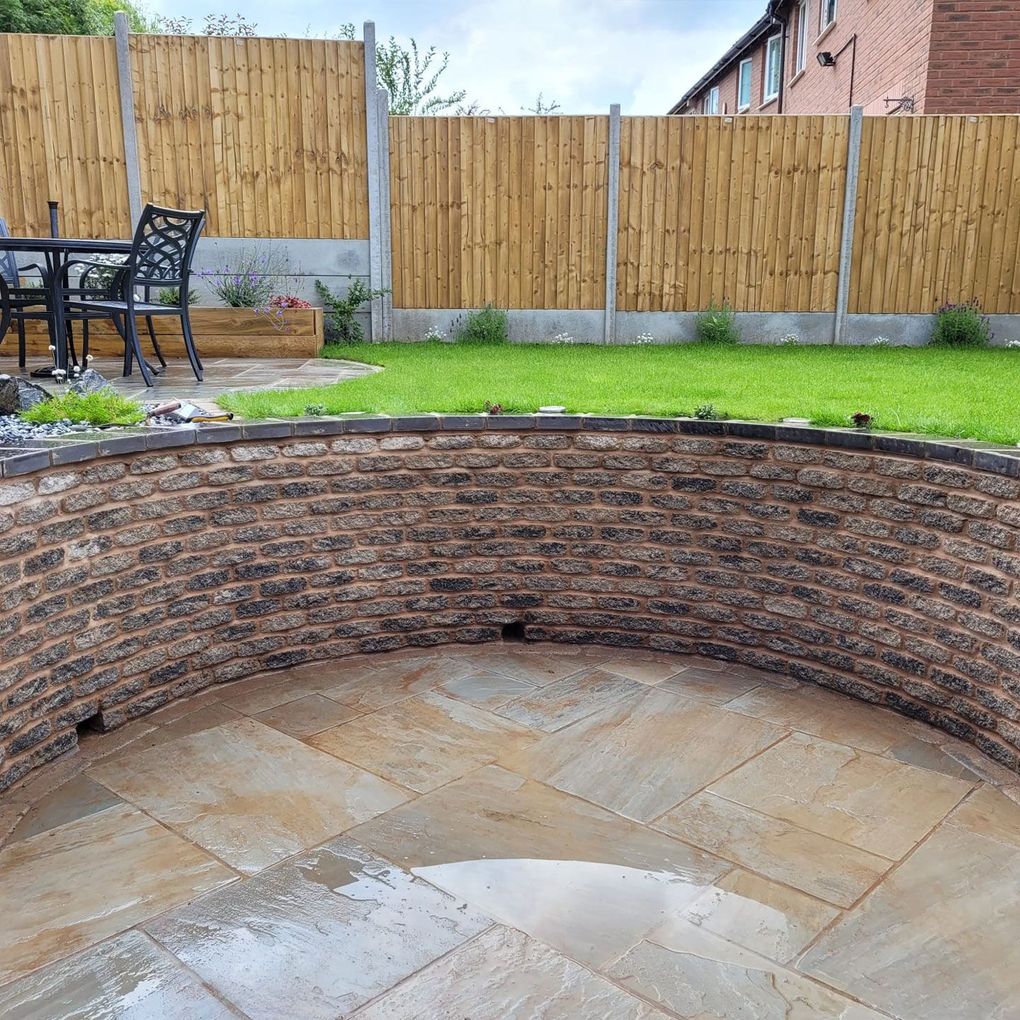
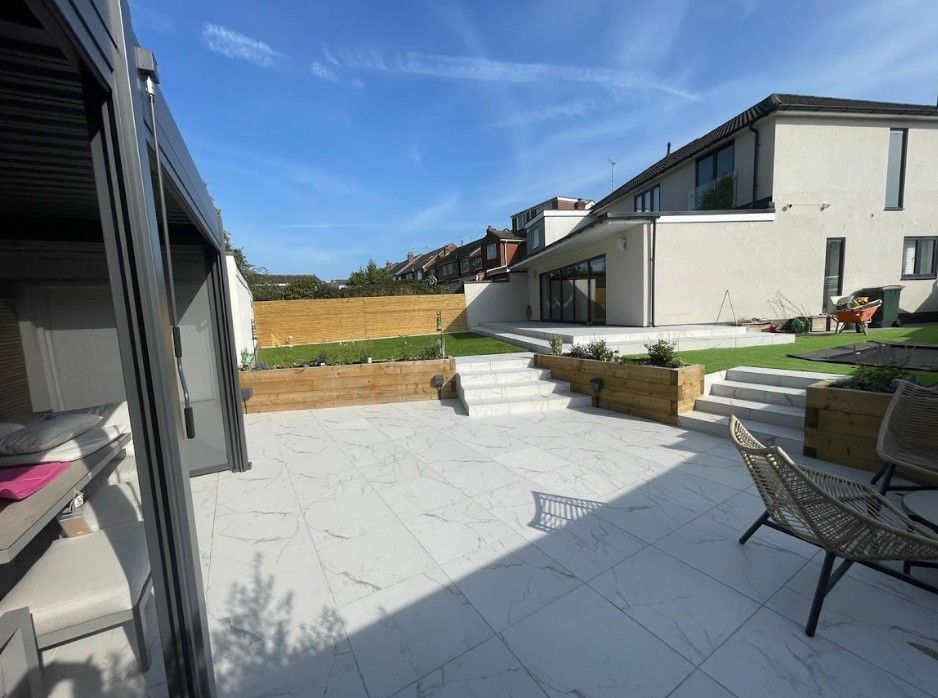
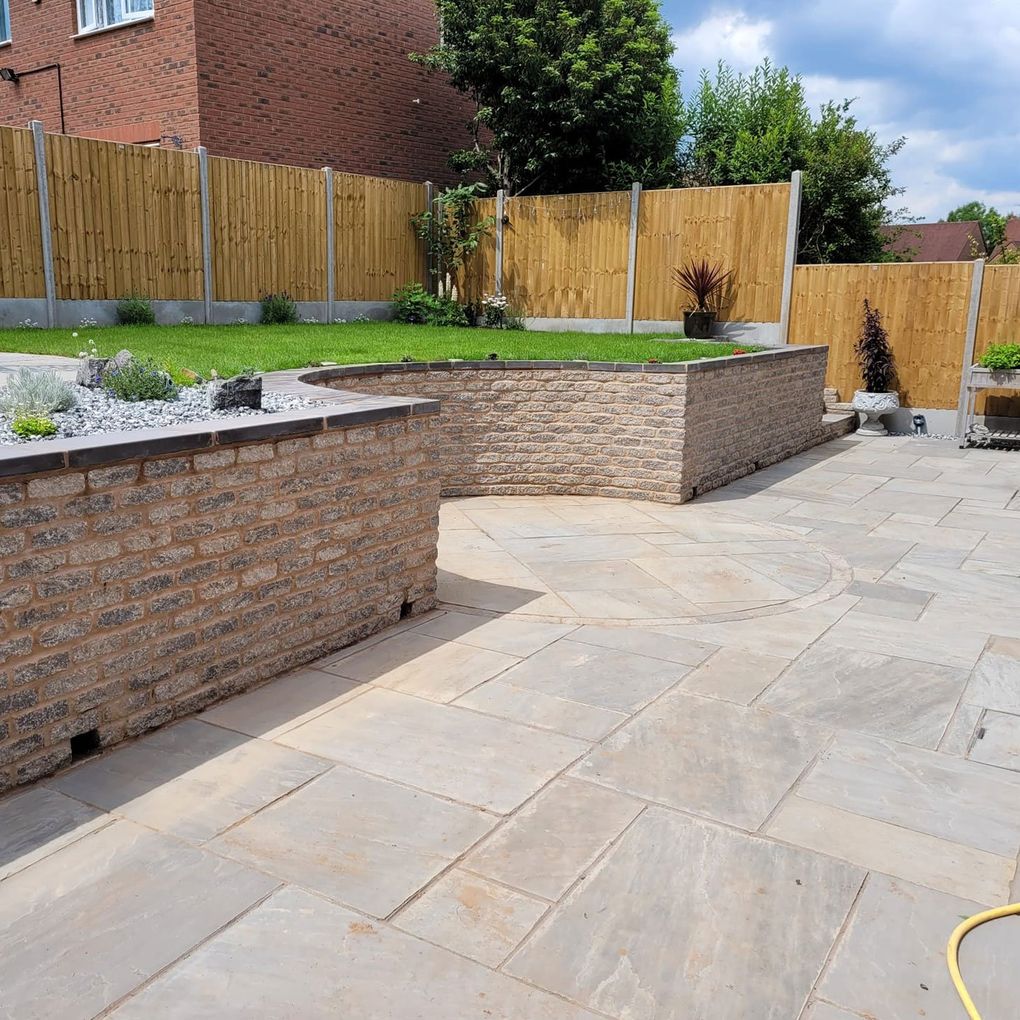
A few examples of finished work. All are our own gardens, photographed as they were handed over.
Why clients pick us for a Leamington garden
A town garden gives you very little room for error. These are the four things clients tell us mattered most.
The design comes first, always
Levels, drainage and materials are settled on paper and in 3D before a spade goes in, which is what keeps a build on programme.
Our own crew does the work
From groundworks to planting, it is our team on site. Where a specialist is needed we arrange and manage them.
A single agreed figure
Quoted once the design is signed off, covering plant, materials, construction, planting and clearing the site.
Careful around your neighbours
In terraced streets that means protected routes through the house, timed deliveries and a site left tidy every evening.
Other areas we work in
Frequently asked questions
Do you cover Leamington Spa and the surrounding area?
We do. Leamington itself, plus Lillington, Sydenham and Whitnash, and out towards Warwick, Kenilworth and Southam. Bear in mind that what we take on is whole-garden schemes, designed and built by us, rather than one-off tasks.
Do you take on garden maintenance, weeding or lawn treatment?
For the gardens we build, aftercare is available once the work is finished, and every build carries a 12-month workmanship guarantee. General weeding, lawn treatment and maintenance for other gardens are best left to a dedicated firm.
Can you work on a garden behind a Regency terrace?
Yes, and a good deal of our town work is exactly that. The constraints are access through the house, protecting the existing walls, and keeping the noise and mess within reasonable hours. Floors and hallways are sheeted and boarded, compact machinery replaces anything wide, and materials arrive in timed drops so neighbours are not living beside a blocked pavement.
Do I need to tell my neighbour before you start?
Sometimes it is a legal requirement rather than a courtesy. Work to a shared wall, or excavation within three metres of a neighbouring building that goes below their foundation level, generally requires formal notice under the Party Wall etc. Act 1996, with a notice period of one or two months. We will flag it if a design looks likely to trigger it; a party wall surveyor confirms the position.
The garden walls are old and bowing. Can they be kept?
Often, yes, and it is usually worth it. Old brick walls can frequently be repaired, repointed or partially rebuilt rather than replaced, and they give a garden something new work cannot buy. Where a wall is beyond saving, or where it is retaining ground, we will say so plainly, because a failing retaining wall is a safety matter rather than an aesthetic one.
How long does a full garden project take?
It depends on the size, the access and how much groundwork is involved, and we give a programme with the fixed price rather than a vague estimate. Town gardens with access through the house take longer than the same garden with a side gate, which is one of the reasons access is assessed carefully at survey.
What is included in the price?
Labour, machinery, groundworks, drainage, materials, hard landscaping, structures, planting and removal of spoil, as one fixed price agreed after the design. Coordination of any other trades is included, so you are not managing a sequence of contractors yourself.
Thinking about your Leamington garden?
Tell us what the garden needs to do and what is standing in the way. We will show you the answer in 3D before anything is built.
