
CLAY SOIL GARDEN SOLUTIONS IN COVENTRY & WARWICKSHIRE
Professional drainage and soil improvement services for heavy clay gardens
Call DNA Landscapes: specialists in garden drainage solutions for clay soil
Garden Drainage Solutions Clay Soil
If you've moved into a property in Coventry, Warwickshire, or the wider Midlands and discovered your garden turns into a boggy, waterlogged mess after every rainfall, you're not alone. Heavy clay soil is the single most common cause of garden drainage problems across our region, and it can make your outdoor space virtually unusable for much of the year.
The good news? Clay soil gardens can be transformed into beautiful, functional spaces with the right professional solutions. At DNA Landscapes, we've spent over 25 years helping homeowners across Coventry and Warwickshire overcome clay soil challenges, installing comprehensive drainage systems that deliver permanent results.
Whether your lawn is squelching underfoot, your plants are drowning, or you're simply tired of looking at standing water, understanding your clay soil problem is the first step toward reclaiming your garden.
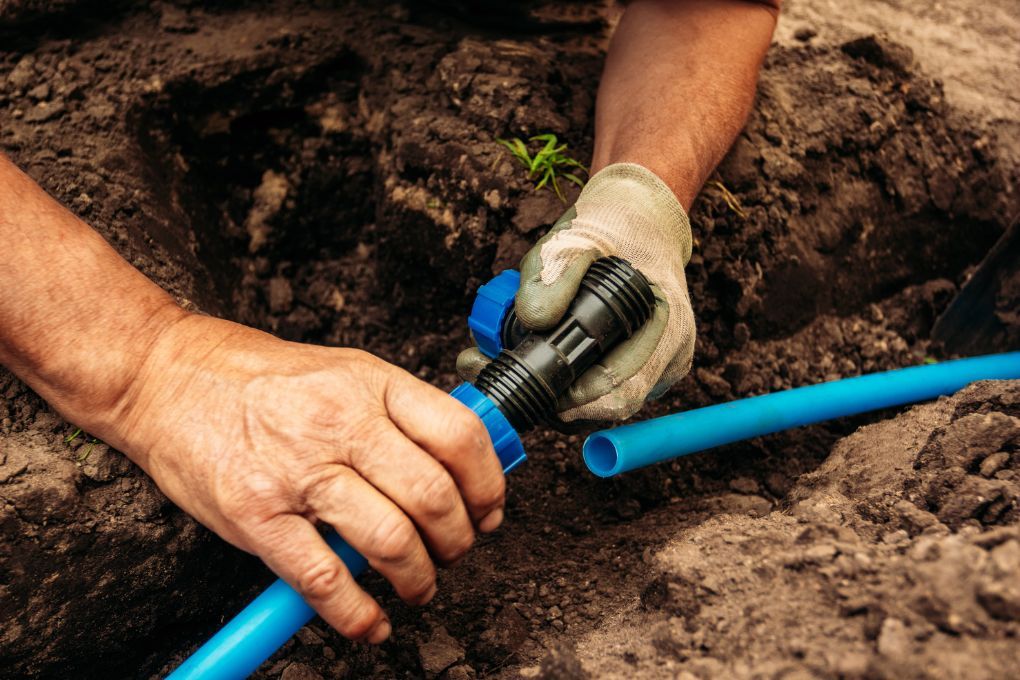
Understanding Clay Soil in Your Garden
Clay soil is characterized by extremely fine particles that pack tightly together, creating a dense, heavy material that holds water rather than allowing it to drain through. Think of clay as millions of tiny, flat plates stacked on top of each other—there's simply very little space between them for water or air to move.
Why Clay Soil Causes Such Severe Drainage Problems
The Midlands, including Coventry, Warwickshire, Rugby, Kenilworth, and Leamington Spa, sits on geological formations rich in clay. This means heavy clay soil isn't an isolated problem—it's a regional characteristic that affects thousands of gardens. Here's what makes clay soil so problematic:
Impermeability: Clay's fine particle structure creates an almost waterproof barrier. When rain falls, it simply sits on the surface because it cannot infiltrate through the compacted clay layers below.
Water retention: Even when clay does absorb some moisture, it holds onto it tenaciously. This means your garden stays saturated long after rainfall has stopped.
Compaction susceptibility: Clay soil is easily compacted by foot traffic, machinery, or construction work. Once compacted, the problem becomes even worse as any remaining pore space is squeezed out.
Seasonal extremes: Clay behaves differently throughout the year. In winter and spring, it becomes waterlogged and almost impossible to work with. In summer, it dries hard as concrete and develops deep cracks. Neither condition is ideal for a healthy garden.
Slow to warm: Clay soil takes longer to warm up in spring compared to other soil types, which delays plant growth and extends the period when your garden is too wet to use or work on.
How to Identify Clay Soil in Your Garden
Not sure if you have clay soil? Here are some simple identification methods:
The ribbon test: Take a handful of moist soil and try to roll it between your palms into a sausage shape. If you can roll it into a long, smooth ribbon that holds together without cracking, you have clay soil. Sandy or loamy soils will crumble and refuse to hold this shape.
The squeeze test: Squeeze moist soil in your hand. Clay soil forms a dense ball that holds its shape and feels smooth, almost slippery. When you press your thumb into it, it takes a clear thumbprint.
Visual observation: Clay soil has a distinctive appearance—when wet, it's sticky, heavy, and clings to your boots and tools. When dry, it becomes pale, hard, and develops characteristic cracks across the surface.
The drainage test: Dig a hole approximately 30cm deep and 30cm wide. Fill it with water and observe. If water is still sitting in the hole after 4 hours, you have poor drainage, almost certainly caused by clay.
Seasonal indicators: If your garden is unusable from October through April due to waterlogging, but hard and difficult to dig in summer, clay soil is the likely culprit.
Existing Clay Soil Garden, prone to waterlogging
Drainage solutions in progress
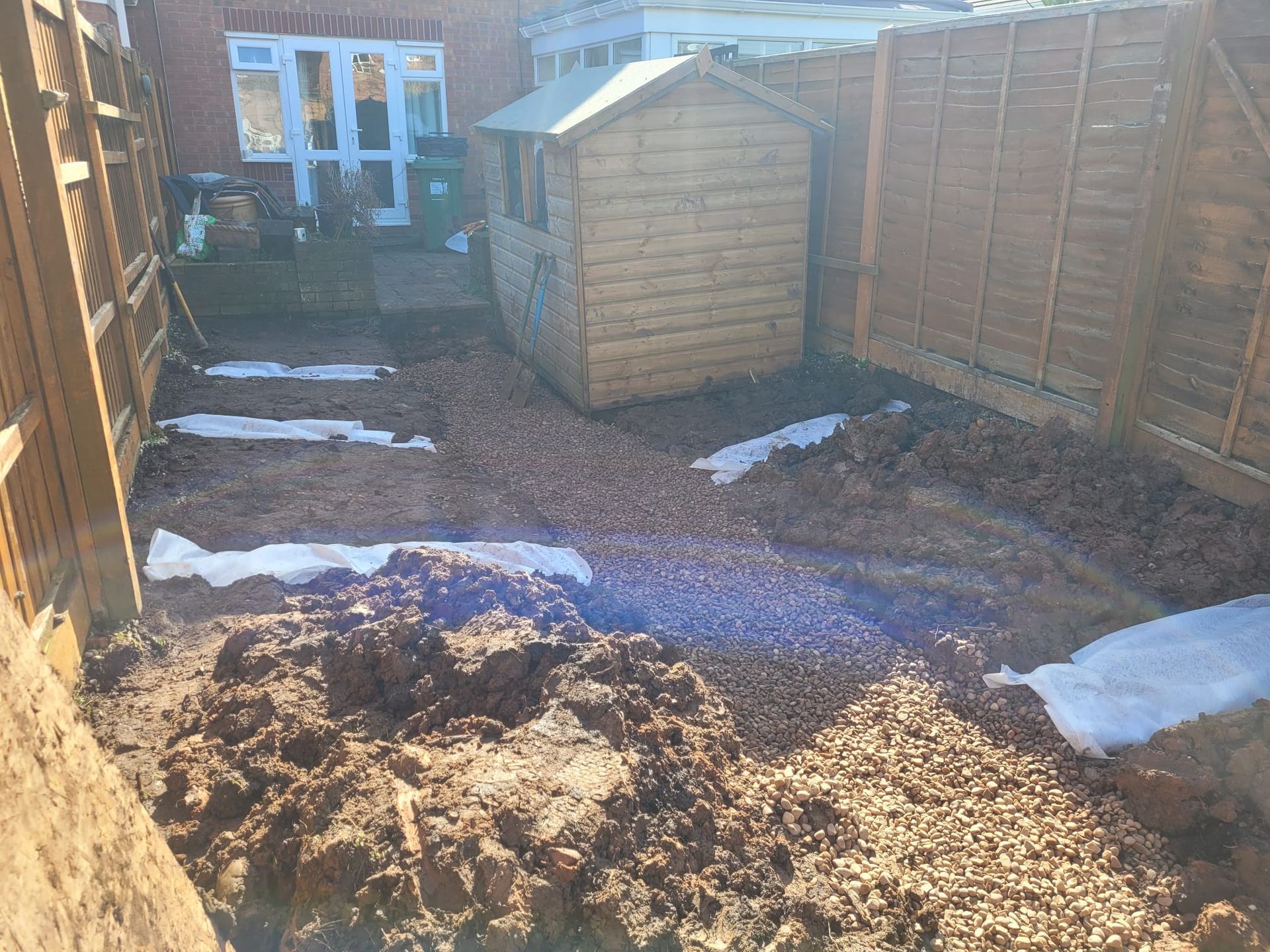
The finished result with new turf laid
Signs Your Garden Has Clay Soil Drainage Problems
Recognizing the symptoms of clay soil problems helps you understand the severity of your situation and why professional intervention may be necessary:
Standing water that persists for 24 hours or more after rainfall. This is the most obvious sign. Sandy or loamy soils drain within hours, but clay gardens can hold water for days or even weeks.
A squelchy, boggy lawn that feels like walking on a sponge. Your feet sink with each step, and water oozes up around your shoes. The lawn may develop a slimy, algae-covered surface.
Plants showing signs of stress, including yellowing leaves, stunted growth, or complete failure to establish. Most plants cannot tolerate waterlogged roots, and clay soil suffocates them by preventing oxygen from reaching the root zone.
Difficulty digging, especially when the soil is dry. Clay becomes rock-hard in summer, making it nearly impossible to push a spade through. When it's wet, it sticks to everything and becomes heavy and unmanageable.
Surface cracking during dry periods. Those characteristic cracks that appear in summer are clay shrinking as it dries. When rain returns, the soil swells again, creating a cycle of movement that can damage plant roots and hardscape features.
Moss taking over your lawn. Moss thrives in damp, compacted conditions where grass struggles. Extensive moss coverage is a clear indicator of poor drainage and heavy clay.
Pools of water collecting in low spots. Clay soil's poor drainage means water has nowhere to go, so it collects wherever the ground dips slightly.
A garden that's unusable from autumn through spring. If you can only really enjoy your outdoor space during summer, clay soil is restricting your garden's potential for three-quarters of the year.
New plants dying despite careful planting and watering. You're doing everything right, but plants still fail because their roots are sitting in saturated clay.
The Real Cost of Ignoring Clay Soil Issues
Many homeowners try to live with clay soil problems, hoping they'll improve or that minor interventions will help. Unfortunately, clay soil issues don't resolve themselves, and the longer they're left unaddressed, the more damage they cause.
Failed Landscaping Investments
If you install a beautiful new patio without addressing the clay soil beneath and around it, water will pool against it, potentially causing the paving to sink, shift, or become uneven. The same applies to paths, driveways, and retaining walls—all can be compromised by waterlogged clay.
Plants, shrubs, and trees represent a significant investment, but in waterlogged clay soil, most will struggle or die. Root rot sets in quickly when roots are constantly saturated, and you'll find yourself replacing the same plants year after year with no improvement.
Turf is particularly vulnerable. Laying new turf over clay soil without drainage is almost guaranteed to fail. The grass will yellow, thin out, and eventually die back completely, leaving you with a muddy, moss-covered mess. You've wasted money on the turf itself, plus the labour to install it.
Structural Risks to Your Property
While not common, severe waterlogging near your house foundations can pose risks, particularly in areas with clay soil. Clay soil expands when wet and shrinks when dry. This movement, known as "clay heave" and "subsidence," can affect foundations over time if water is consistently pooling near the property.
Water finding its way into basements, cellars, or through exterior walls is more likely when the ground around your home is saturated. Damp issues inside the property can be expensive to remediate and may affect your home insurance.
Wasted Time and Repeated Failed Attempts
Many homeowners spend years trying various "solutions" they've read about online—aerating with a garden fork, adding sand, spreading compost, choosing different grass seed. Each attempt costs time and money, and each failure adds to the frustration.
The reality is that severe clay soil problems require comprehensive professional drainage solutions. Simple amendments work for minor issues in small areas, but they cannot resolve the fundamental problem of impermeable clay preventing water from draining away.
Unusable Garden Space
Perhaps the most frustrating cost is the lost use of your outdoor space. If your garden is only usable for three or four months of the year, you're missing out on the majority of what should be a valuable extension of your home. Family activities, entertaining, children's play, or simply relaxing outside—all are impossible when your garden resembles a swamp.
For new homeowners who've just invested in a property, discovering severe clay soil issues can feel like a betrayal. You imagined using your garden, but instead, you're staring at a waterlogged disappointment.
Clay Soil Solutions: From Simple to Comprehensive
The appropriate solution for clay soil depends on the severity of the problem, the size of the area affected, and how you want to use your garden. Here's an honest assessment of what works, what doesn't, and when professional intervention becomes necessary.
Minor Waterlogging: DIY Approaches
For very mild clay soil issues in small areas, some homeowners can achieve limited improvement with these methods:
Aeration: Using a garden fork or hollow-tine aerator to create holes in the lawn allows some air and water to penetrate the surface. For this to be even marginally effective, you need to aerate to a depth of 10-15cm and repeat the process several times a year. Aeration works best on mildly compacted soil, not severe clay.
Organic matter incorporation: Adding well-rotted compost or manure annually can gradually improve soil structure over many years. The organic matter helps create some pore space and encourages beneficial soil organisms. However, this is a very slow process and won't resolve significant drainage issues.
Clay-tolerant planting: Choosing plants that naturally thrive in heavy, wet soils—such as willows, dogwoods, or moisture-loving perennials—accepts the problem rather than solving it. This approach works for planting beds but doesn't help with lawns or usable lawn space.
Raised beds: Building raised beds filled with imported, free-draining soil effectively places your planting above the clay problem. This works well for vegetable gardens and flower beds but isn't a solution for lawns or large areas. You're also raising your ground level, which may not be desirable.
When these approaches work: If you have very mild surface waterlogging in a small area, perhaps just one corner of the garden, and you're prepared to invest ongoing effort with limited results, these methods might be acceptable. However, for the majority of clay soil problems across Coventry and Warwickshire, they simply won't deliver the transformation you're hoping for.
Moderate Clay Issues: Semi-Professional Solutions
For moderate waterlogging, some homeowners attempt:
Incorporating sharp sand and grit: The theory is that sand particles will separate clay particles and improve drainage. In practice, this requires massive quantities—you need to add at least 50% sand by volume and mix it thoroughly to a depth of 30cm or more. Done incorrectly, mixing small amounts of sand with clay can actually create a concrete-like mixture that's worse than the original problem. This is rarely a practical solution.
Installing perforated pipes in problem zones: Some DIY enthusiasts dig trenches and lay perforated land drainage pipe surrounded by gravel. If done correctly with proper falls (gradients) and a suitable outfall point, this can work. However, most DIY attempts fail because the fall is insufficient, the pipe diameter is too small, or there's nowhere for the water to drain to.
Substantial soil replacement: Removing clay to a significant depth (30-45cm) and replacing it with quality topsoil creates a new growing medium. This is expensive in terms of labor and materials, generates significant spoil to dispose of, and doesn't address the clay below—water can still become trapped above the clay layer.
When these approaches have limitations: These semi-professional methods can work in specific circumstances, but they require considerable skill, effort, and expense. For most homeowners dealing with severe clay soil across an entire garden, they remain insufficient.
Severe Clay Soil: Professional Drainage Solutions
When clay soil is affecting your entire garden or large sections of it, when waterlogging persists for days or weeks, when plants repeatedly fail, and when your outdoor space is unusable for much of the year, comprehensive professional drainage is the only permanent solution.
This is where DNA Landscapes' expertise becomes essential. We've installed drainage systems in hundreds of clay soil gardens across Coventry and Warwickshire, and we understand both the challenges and the solutions.
Why professional drainage is necessary for severe clay:
Clay soil doesn't improve on its own. Without removing the water that cannot drain through the clay, your garden will remain waterlogged indefinitely. Professional drainage systems intercept water before it creates problems and channel it away to an appropriate outfall point.
French Drain Systems: These are our most commonly installed solution for clay soil gardens. A French drain consists of a trench dug to a specific depth (typically 60-90cm) and laid with a gradient to ensure water flows by gravity toward an outfall point. The trench is lined with permeable membrane, partially filled with clean gravel, then a perforated pipe is laid, covered with more gravel and membrane before being backfilled.
Water percolates down through the soil profile until it hits the French drain, where it enters the perforated pipe and is carried away to a storm drain, soakaway, or other suitable discharge point. French drains are particularly effective in clay soil because they intercept water at depth, before it reaches the surface to cause waterlogging.
See our detailed guide: French Drain Systems Explained
Soakaway Crate Systems: When there's no existing storm drain to connect to, a soakaway provides an underground storage area where water can be held temporarily and released slowly into the ground. Modern soakaway systems use plastic crate modules that create a large underground void wrapped in permeable membrane.
The key to soakaways in clay soil is positioning them below the clay layer, where soil permeability is better, or making them large enough to hold sufficient water volume that slow percolation is acceptable. DNA Landscapes calculates the required soakaway size based on your garden area, local rainfall data, and soil conditions.
Learn more: Soakaway Installation Guide
Herringbone Drainage Configurations: For large lawns or expansive areas suffering from clay soil waterlogging, a herringbone system provides comprehensive coverage. This design uses a main central drain (the "spine") with multiple branch drains feeding into it at angles, resembling a fish skeleton.
The branch drains intercept water across the entire area and feed it to the main drain, which carries everything to the outfall. Herringbone systems are more complex to install but offer the most thorough solution for extensive clay soil problems.
Combination Approaches: Many of our clay soil projects use multiple drainage methods. For example, a French drain around the perimeter of the garden to intercept water flowing from neighboring properties, combined with a herringbone system under the lawn, all feeding into a soakaway crate system. This comprehensive approach addresses water from all sources and ensures complete protection.
Integration with soil improvement: Once drainage is installed and functional, there's an opportunity to improve the soil itself. With water being removed efficiently, incorporating organic matter becomes more effective. New topsoil can be added without fear of it becoming waterlogged. The entire garden environment becomes more hospitable to plant life.
DNA Landscapes' Clay Soil Assessment and Installation Process
We understand that deciding to invest in professional drainage represents a significant commitment. That's why we've developed a thorough, transparent process that ensures you understand your clay soil problem and the solution we're proposing before any work begins.
Stage 1: Initial Garden Survey and Consultation
When you contact DNA Landscapes about clay soil problems, we begin with a detailed conversation about what you're experiencing. How long has the problem existed? Where is waterlogging most severe? What have you already tried? What are your plans for the garden?
We then arrange a site visit at a time that suits you. This initial assessment typically takes 60-90 minutes and involves:
Soil investigation: We dig test pits at multiple locations to understand the depth of clay, the soil profile, and where the clay layer begins. This reveals whether you have clay right to the surface or topsoil over clay, and how deep the clay extends.
Water flow analysis: We identify where water enters your garden, where it collects, and where it might naturally drain to if it could. Observing your garden during or shortly after rainfall provides the most valuable information.
Gradient and level assessment: Understanding the natural fall of your land helps us design drainage systems that work with gravity rather than against it.
Existing feature identification: We note where existing paths, patios, flower beds, trees, and other features are located, as our drainage solution must integrate with these.
Outfall options: We identify whether you have access to storm drains, ditches, or suitable locations for soakaways. The outfall point determines which drainage solutions are viable.
Stage 2: Tailored Solution Design
Based on our survey findings, we design a drainage system specifically for your garden. This isn't a one-size-fits-all approach—every clay soil garden is different, and the solution must match your specific conditions and requirements.
Our design considers:
- The depth and extent of clay in your garden
- The volume of water that needs to be managed
- The most suitable drainage methods for your situation
- Integration with your existing or planned landscaping
- Minimal disruption during installation
- Long-term reliability and maintenance requirements
For new build gardens with clay soil problems, we often recommend comprehensive solutions that address not just drainage but soil replacement too. Read more: New Build Garden Problems & Solutions
Stage 3: Clear Proposal and Fixed Pricing
We provide a detailed written proposal that explains:
- Exactly what work will be carried out
- The materials and equipment we'll use
- The timeline for installation
- A fixed price with no hidden costs
- Warranties on materials and workmanship
There's no pressure to commit immediately. We want you to understand what we're proposing and feel confident in your decision.
For clay soil drainage projects, comprehensive systems typically represent an investment of several thousand pounds. This reflects the scope of work involved—excavation, materials, skilled installation, and site restoration. However, it's a one-time investment that permanently resolves your drainage problem and protects all future landscaping work.
Stage 4: Professional Installation
When you decide to proceed, we schedule the work at a time that minimizes disruption to your household. Our experienced team arrives with all necessary equipment and materials.
Typical installation process:
Day 1-2: Excavation of drainage trenches according to the design. We use both manual digging for sensitive areas and mechanical excavators for main trenches where appropriate. Spoil is carefully managed.
Day 2-3: Installation of drainage pipes, gravel, and membranes. All components are properly bedded, connected, and tested. We ensure adequate falls throughout the system and secure connections to the outfall.
Day 3-4: Backfilling trenches, compacting where necessary, and preparing for surface restoration.
Day 4-5: Turf reinstatement or topsoil spreading and seeding, depending on your preference and the season. We restore your garden to a condition ready for use.
Most clay soil drainage projects are completed within 5-7 working days, though larger or more complex gardens may take longer.
Stage 5: Post-Installation Support
Once installation is complete, we provide guidance on:
- How your new drainage system works
- What maintenance is required (typically minimal)
- When to re-turf or seed if we've installed topsoil
- How to get the best results from your improved garden
We warranty our workmanship and the materials we've used. If any issues arise, we're a local company and we'll return to address them.
The most rewarding part of our work is hearing from clients months or even years later, telling us how transformative the drainage has been. Gardens that were unusable swamps are now beautiful lawns where children play and families gather.
Real Results: Clay Soil Garden Transformations
While every project is different, here are examples of clay soil problems we've solved across Coventry and Warwickshire:
Case Study: Severe Waterlogging in a Kenilworth New Build Garden
The problem: A family contacted us within six months of moving into their new build property. The rear garden, approximately 100 square meters of lawn, became completely waterlogged after any rainfall. Water sat on the surface for a week or more, making the space unusable. Children couldn't play outside, and the poor-quality builder's turf was dying.
Our assessment: Test pits revealed just 50mm of topsoil over heavily compacted clay subsoil. The builder's construction traffic had compressed the clay to the point where it was almost impermeable. With no existing drainage and a slight gradient toward the house (concerning for the property), the garden had nowhere for water to go.
The solution: We installed a comprehensive French drain system around the perimeter of the lawn, with additional branch drains running across the garden in a herringbone pattern. All drains connected to a new soakaway crate system positioned in the corner of the garden below the clay layer.
We then removed the failed turf, added 150mm of quality blended topsoil over the entire area, and laid new Rolawn turf.
The investment: £6,800 for complete drainage, soil improvement, and turf installation.
The result: Two years later, the garden has never been waterlogged, even during the wettest winter months. The lawn is thriving, and the family uses their outdoor space year-round. The investment has transformed an unusable disappointment into the garden they'd hoped for.
Case Study: Established Garden in Leamington Spa with Worsening Clay Problems
The problem: An older property had a garden that had been functional for years but was progressively worsening. The lawn was becoming increasingly boggy, plants in the borders were failing, and the homeowners were concerned about water near their house foundations.
Our assessment: The garden had heavy clay soil throughout, but decades of foot traffic and lack of soil management had increased compaction. There was no existing drainage system, and the natural fall of the garden was minimal.
The solution: A targeted French drain system along the most problematic edge of the lawn, with a connecting drain running to an existing storm drain at the front of the property. We also aerated and top-dressed the lawn with sharp sand and compost to improve the surface layer.
The investment: £3,200 for drainage installation and lawn improvement.
The result: Immediate improvement. Water no longer pools, and the lawn has regained its health. The homeowners were particularly pleased that we could solve the problem without completely replacing the established lawn.
Case Study: New Garden Design with Clay Soil Preparation in Rugby
The problem: Clients were planning a complete garden redesign including a new patio, raised beds, and lawn. They knew they had clay soil and wanted to address drainage before investing in the new garden.
Our assessment: Extensive clay to significant depth, but the advantage of a blank canvas meant we could design drainage optimally from the start.
The solution: We integrated drainage installation with the broader landscaping project. French drains were installed around the perimeter before any other work began. The patio was designed with falls toward linear channel drains that connected to the main drainage system. The lawn area received both drainage and soil improvement before turf installation.
The investment: Drainage was part of a £15,000 complete garden transformation.
The result: A beautiful garden that functions perfectly in all weather. Because drainage was addressed first, every subsequent element—patio, planting, lawn—is protected and performing as intended.
Clay Soil Frequently Asked Questions
Transform Your Clay Soil Garden with DNA Landscapes
Clay soil doesn't have to mean a compromised garden. With professional drainage solutions, proper soil preparation, and expert installation, your Coventry or Warwickshire garden can become the beautiful, functional outdoor space you deserve.
At DNA Landscapes, we've spent over 25 years transforming clay soil gardens across the region. We understand the local geology, the challenges heavy clay presents, and most importantly, the solutions that deliver permanent results.
Whether you're dealing with:
- A waterlogged new build garden that's never been right
- An established garden where clay problems are worsening
- Plans for new landscaping that need drainage addressed first
- Frustration after years of failed DIY attempts
We can help.
Our comprehensive approach combines expert assessment, tailored drainage design, quality materials, and professional installation. We don't just install pipes and hope for the best—we engineer solutions that work with your garden's specific conditions and your long-term vision.
Take the First Step Today
Contact DNA Landscapes to book a drainage assessment. We'll visit your property, investigate your clay soil situation, and provide honest advice about the best solution for your garden.
Call us on: 0247 512 2714
Email us through our contact form: Available 24/7
Call us at 0247 512 2714 or complete our enquiry form 24/7
Areas where garden drainage solutions are provided by DNA Landscapes:
Garden Drainage Solutions
Coventry, Garden Drainage Solutions Balsall Common, Garden Drainage Solutions Bedworth, Garden Drainage Solutions Bulkington, Garden Drainage Solutions Burbage, Garden Drainage Solutions Cawston, Garden Drainage Solutions Dunchurch, Garden Drainage Solutions Binley, Garden Drainage Solutions Ryton-on-Dunsmore, Garden Drainage Solutions Hinckley, Garden Drainage Solutions Kenilworth, Garden Drainage Solutions Leamington Spa, Garden Drainage Solutions Long Itchington, Garden Drainage Solutions Long Lawford, Garden Drainage Solutions Nuneaton, Garden Drainage Solutions Warwick, Garden Drainage Solutions Rugby, Garden Drainage Solutions Southam,
