
Garden Drainage and Soakaways in Long Itchington
Village drainage, and why the canal is not a drainage option
Long Itchington has water on three sides of the problem: the canal, the brook, and heavy clay in between. It makes for a village where the obvious destinations for surface water look plentiful and are, in practice, the ones most tightly controlled. Knowing which you may use is the first thing to settle.
Drainage work we carry out in Long Itchington
Soakaways
The option that needs no application at all, where a measured percolation rate will support one.
Trenches cut to a fall, lined, filled with stone and piped, taking water off the ground that holds it.
A branched layout for the bigger village plots, collecting across the width rather than at one point.
An intercepting line where water arrives from a lane, a field or a neighbouring boundary.
Ditch outfalls
Where a watercourse is the right destination, built properly and with consent in place first.
Soakaway replacement
A failed pit taken out in full, rather than a second one dug beside it and hoped for.
Levels and falls
Terraces and paths regraded so they carry rainfall clear of the walls.
Grass, planting and stonework returned to the state they were found in.
How the work is built
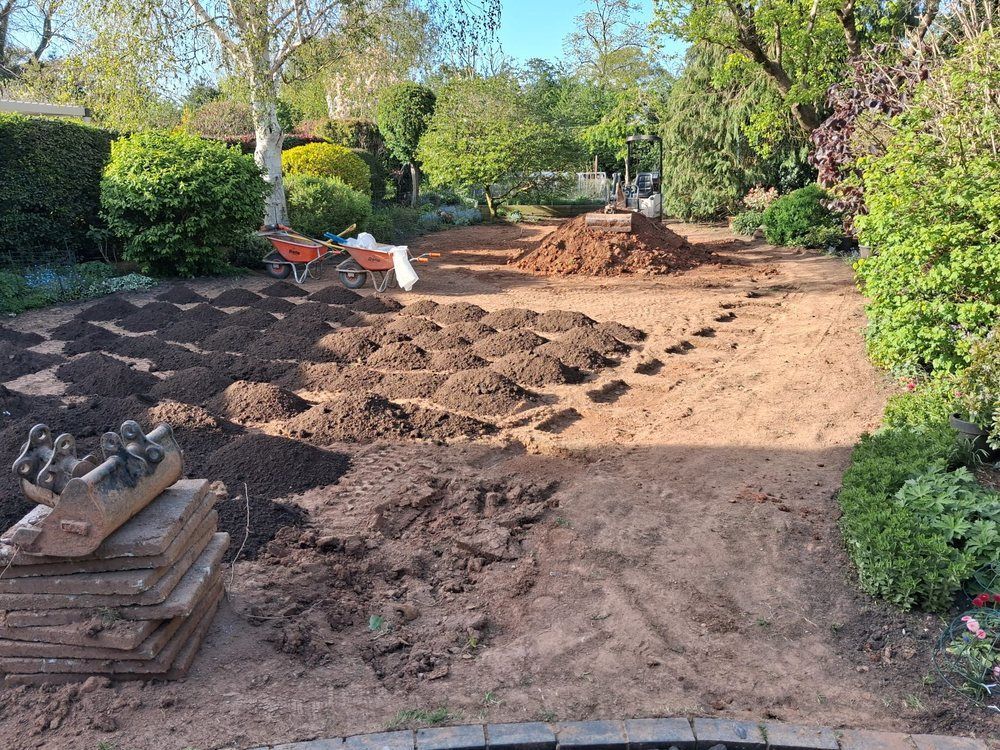
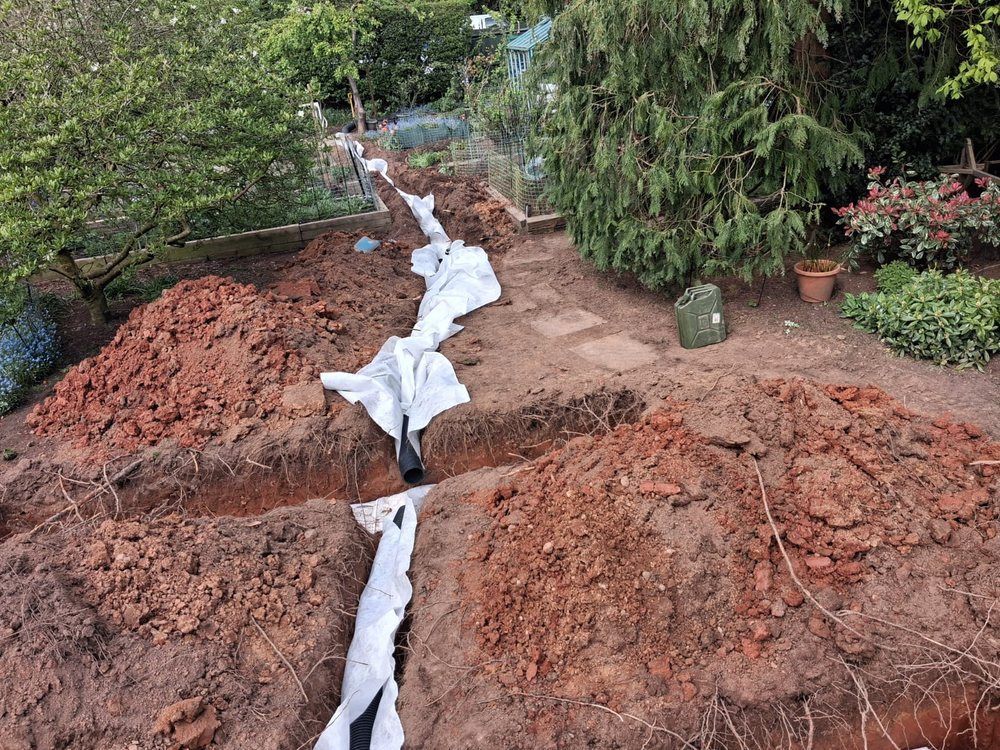
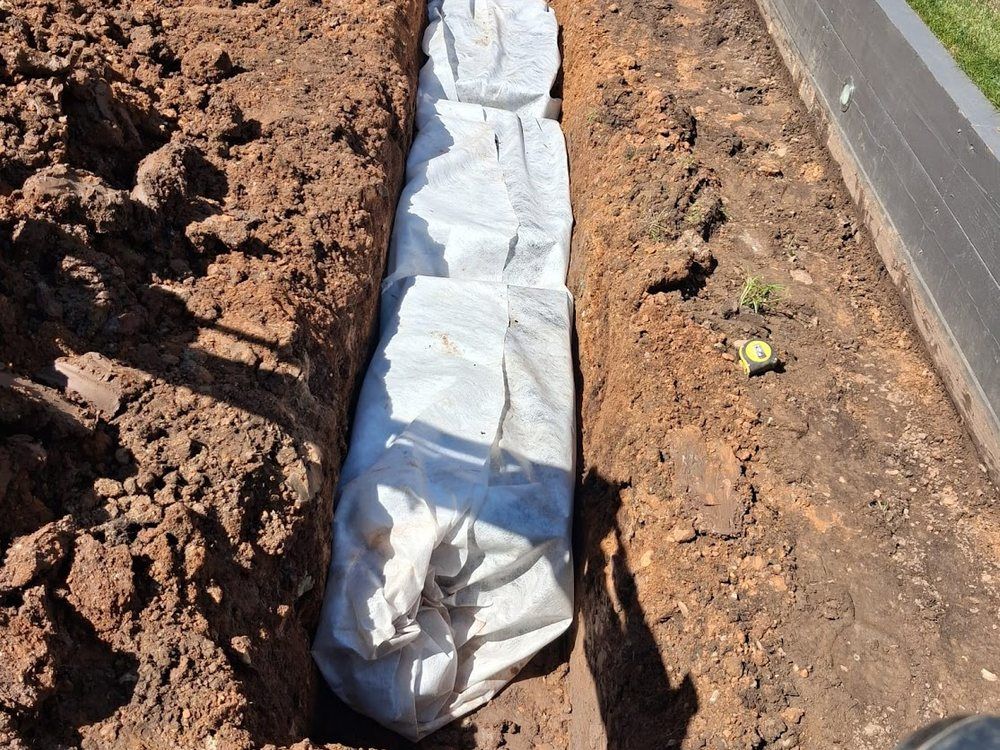
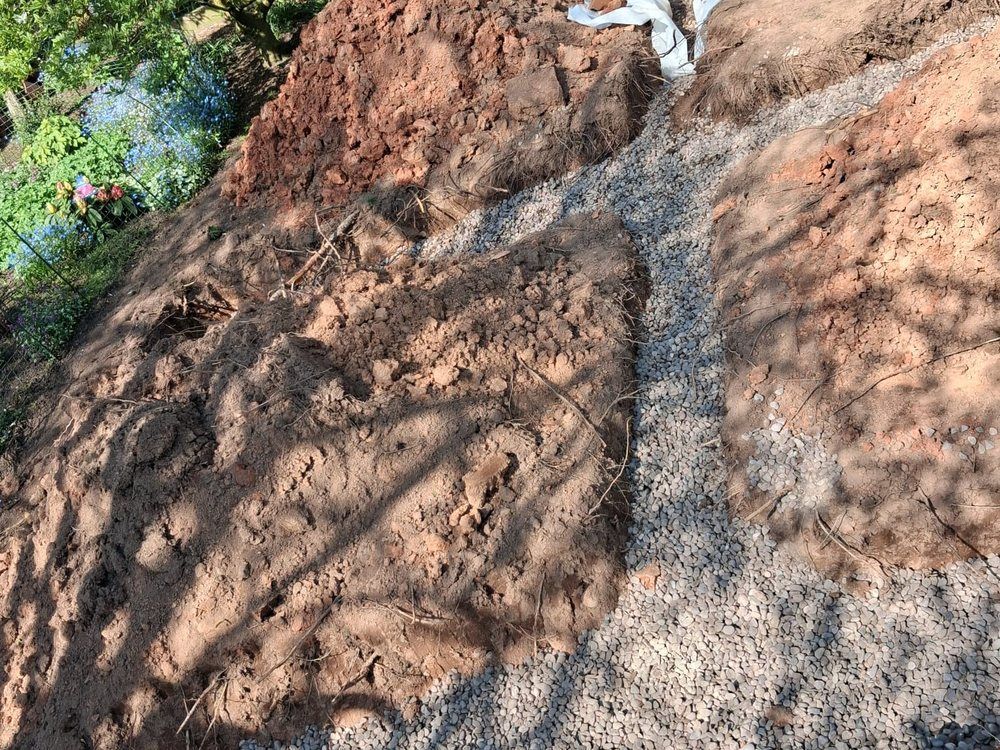
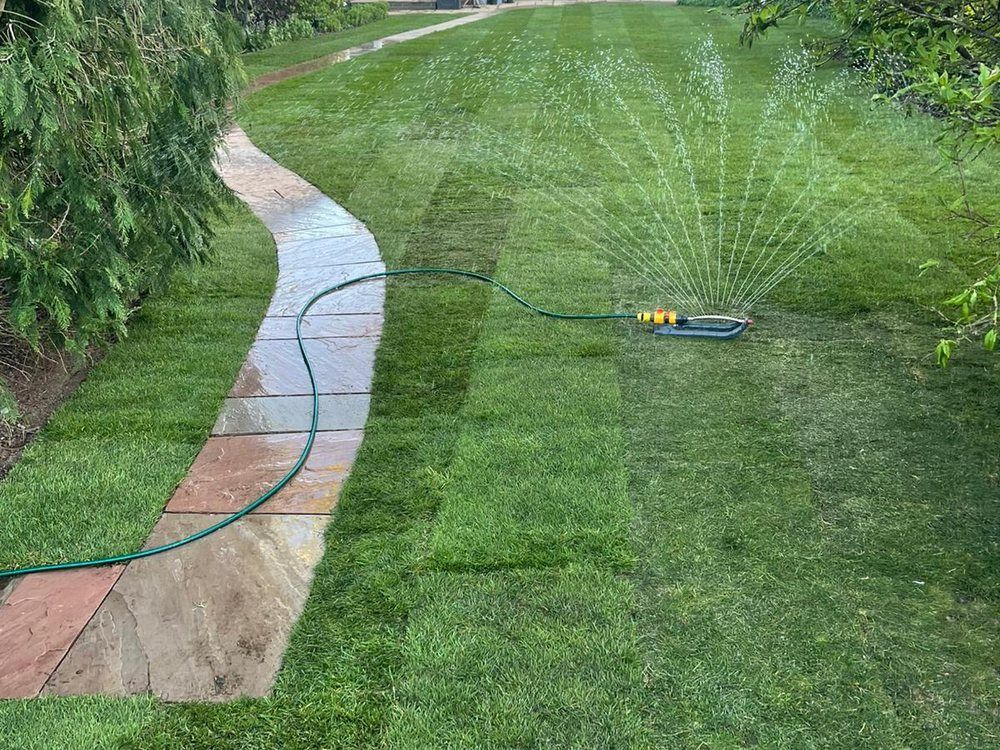
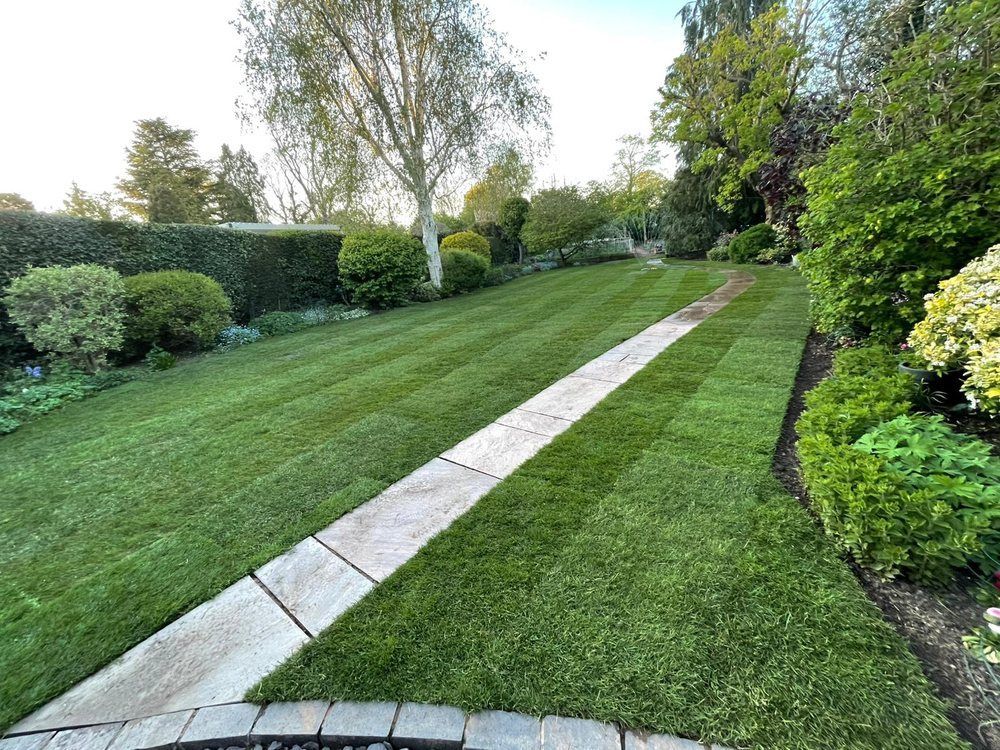
Photographs from a recent scheme at Kenilworth. Comparable ground, and the whole sequence from open trench through to a finished lawn.
The canal belongs to somebody, and so does the brook
This comes up here more than almost anywhere else we work, because so many properties are close to one or the other.
The general position
- A canal is privately owned water. The waterway, its bed and its banks belong to the navigation authority — on the Grand Union that is the Canal & River Trust — and putting a discharge into it requires their agreement. It is not a public drain and proximity does not confer a right to use it.
- A brook or ditch is its own permission. Putting a new outfall into an ordinary watercourse calls for land drainage consent, issued by whichever authority holds the flood-risk role for the area, and that consent is never backdated.
- A watercourse on your boundary brings duties as well. If a ditch or brook runs along or through your land you are likely a riparian owner, which means letting water pass without obstruction and keeping the channel clear, as well as not polluting it.
- Infiltration is still the first option. Part H expects surface water to soak into the ground before a watercourse is considered, so a soakaway on your own land is where the design starts if the ground will take it.
We are landscapers rather than drainage consultants or solicitors, and this is the general position rather than advice on your property. What we will do is establish which outlet is genuinely available before pricing a scheme around it, because that decision governs everything else.
What applying for a consent actually involves
People hear the word consent and picture something far worse than it is. For a domestic outfall into a ditch or brook it is a short application rather than an ordeal, but it does have a timetable, and that timetable rather than the digging is usually what sets the start date.
- It goes to the flood authority, not the council planning department. For an ordinary watercourse that means the lead local flood authority for the area.
- They want to know what and where. Typically a location plan, a description and a drawing of the proposed structure, the invert level relative to the channel, and an idea of the flow being discharged.
- There is a statutory fee per structure, set nationally and modest by the standards of anything else in construction.
- Allow weeks rather than days. A determination period applies, and building before it concludes is not an option worth taking.
- It cannot be obtained afterwards. Consent is not granted retrospectively, and an unconsented outfall can be required to be removed at the owner’s cost.
We deal with this as part of the scheme rather than leaving it with the client, and we raise it at survey so the programme reflects it. If the timetable does not suit, that is a reason to look harder at whether infiltration on your own ground will work after all.
What a proper outfall looks like
An outfall is a small structure and it is treated as one. The pipe arrives above the normal water line rather than below it, so the channel cannot back up into the system. It terminates in a headwall rather than projecting from a bank, because an unsupported pipe end erodes the ground around itself until it drops out. The bank either side is protected, and the invert level is set from the channel rather than from the garden.
Upstream of that the work is ordinary: runs cut to a steady gradient, geotextile separating soil from aggregate, washed stone around slotted pipe, and a silt trap where the incoming water will be carrying material. Where infiltration turns out to be viable after all, a wrapped soakaway on your own ground is simpler and needs no application at all. The drainage service page covers the construction, and the clay soil guide explains the ground.
What the quotation depends on
- Which permission the scheme needs. A soakaway on your own ground needs none. An outfall needs an application, a fee and a wait.
- The structure at the end. A headwall, protected banks and a correctly set invert are proper construction rather than a pipe pushed through a bank.
- How much has to be gathered. A single catch line and a full branched layout are different orders of work.
- What the machine can reach. Where plant can get to the working area the excavation moves fast, and here it usually can.
- Putting it back. Grass goes down quickly; mature planting and laid stone do not.
Everything sits in one quoted figure once the ground has been seen: the team, the machinery, the digging, the components, the application where one is needed, and the garden left as it was.
Why clients here use us
Where the obvious destinations for water all belong to somebody else, the paperwork is as much of the job as the pipe.
We handle the application
The consent is submitted by us as part of the scheme rather than handed to you as a task once the quote is accepted.
The timetable is in the programme
You are told at survey how long a determination takes, so the start date is realistic rather than optimistic.
Outfalls built as structures
Headwall, correct invert level and protected banks, so the thing is still there and still working in a decade.
A decade of village jobs
Trading here from 2015, insured to £1M, and no stranger to an authority's application form.
Drainage in the nearby villages
Frequently asked questions
Is Long Itchington within your area?
It is. Our patch takes in the village itself along with Ufton, Bascote, Stockton and Southam, reaching out to Leamington Spa, Warwick and Rugby beyond that.
Can we drain into the canal?
Not without the navigation authority’s agreement, and it is not something to assume. A canal is privately owned water, including the bed and banks, and on the Grand Union that means the Canal and River Trust. Being next to it confers no right to discharge into it, and an unauthorised connection is their matter to pursue.
What about the brook at the bottom of the garden?
That needs land drainage consent from the lead local flood authority under the Land Drainage Act 1991, obtained before the outfall is built rather than after. If the brook runs along or through your boundary you are also likely a riparian owner, which brings responsibilities to let water pass and keep the channel clear.
How long does a consent take to come through?
Weeks rather than days. A determination period applies once the application is complete, so on a scheme that depends on a ditch outfall it is the consent timetable rather than the excavation that sets the start date. We apply early and build the programme around it, and we will tell you at survey if that timing is going to be inconvenient.
What happens if somebody builds an outfall without consent?
It cannot be regularised after the event, which is the part that catches people out. The authority can require the watercourse to be put back as it was, at the owner’s expense, and the structure removed. Given that the application itself is short and the fee is modest, doing it in the right order is considerably cheaper than the alternative.
Why does the pipe have to come out above the water line?
So the channel cannot back up into your system. An outfall set at or below the normal level of the watercourse will take water in as readily as it lets it out whenever the channel is running high, which is precisely when you need it working. Setting the invert correctly is one of the things the consent application asks about.
What does garden drainage cost in Long Itchington?
It depends most on which outlet is available and whether water arrives from outside the boundary. We survey, test the ground, establish the permitted destination and then give one figure covering everything through to reinstatement.
Village garden in Long Itchington holding water?
Tell us what runs past the boundary. We will tell you which of it you may use, and deal with the application if you can.
