
Garden Drainage and Soakaways in Coventry
Land drainage and soakaways across the city, from the Victorian terraces to the postwar estates
Coventry is our home city and the one we dig in most. It also has a more complicated below-ground story than anywhere else we work: Victorian suburbs with combined drainage, whole districts rebuilt after the war on made-up ground, and postwar estates where the gardens were levelled with whatever was to hand.
Drainage work we carry out across Coventry
Membrane-lined trenches, washed stone and perforated pipe, laid to a fall and taken to a permitted outlet.
For a lawn that holds water across its whole area. Branch runs collect, a spine carries it off.
Soakaway installation
Crate systems sized from a percolation test, set at the right distance from the house and the boundary.
Soakaway replacement
Brick-rubble pits and silted crates dug out and rebuilt, which is what most failed soakaways actually need.
Downpipe and gully work
Roof water put somewhere sensible rather than against a wall or into a drain it should not be in.
Patio and driveway falls
Hard surfaces reset so they shed water away from the building instead of holding it against the brickwork.
Getting the water away is half the job. Ground that will grow something afterwards is the other half.
Screened soil, fresh turf, borders and paths put back, so the garden does not look recently excavated.
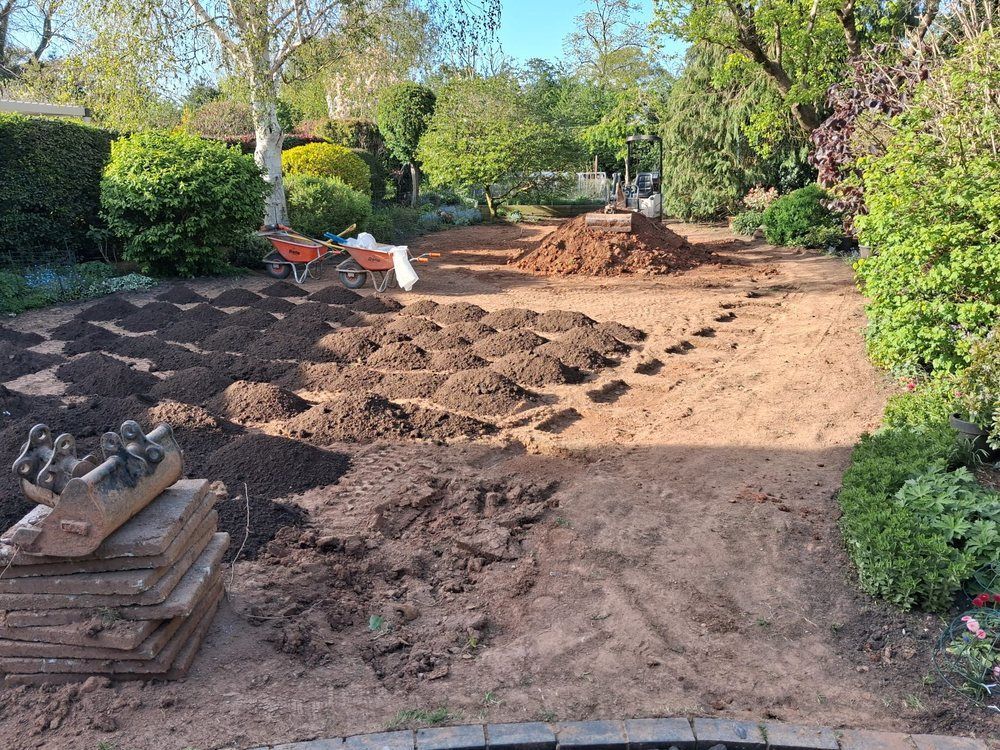
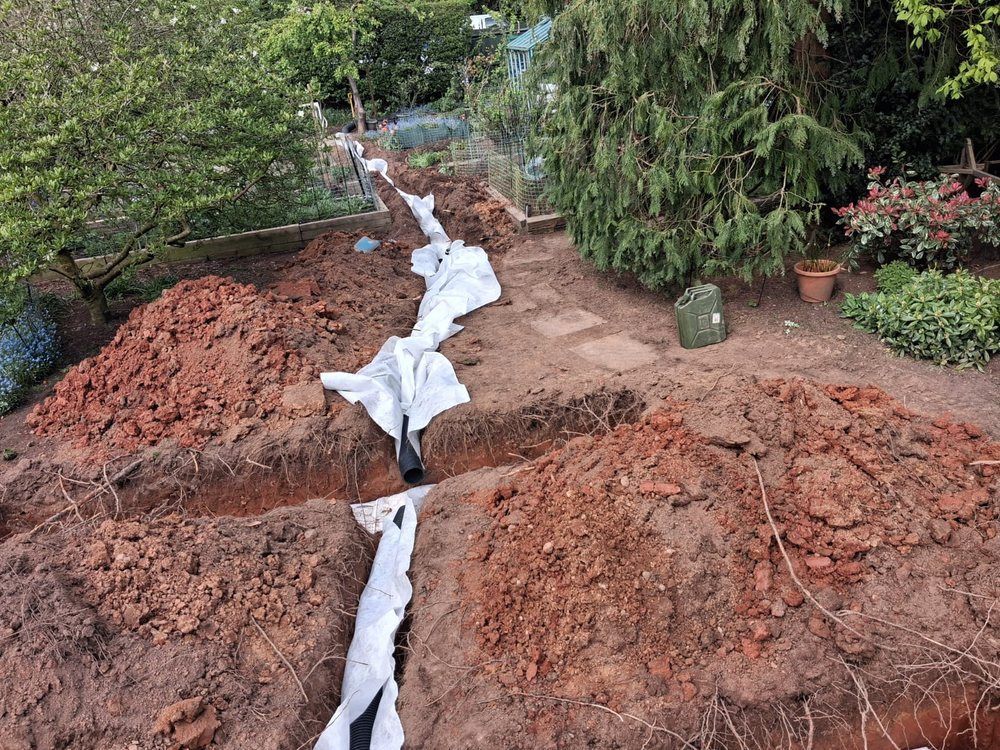
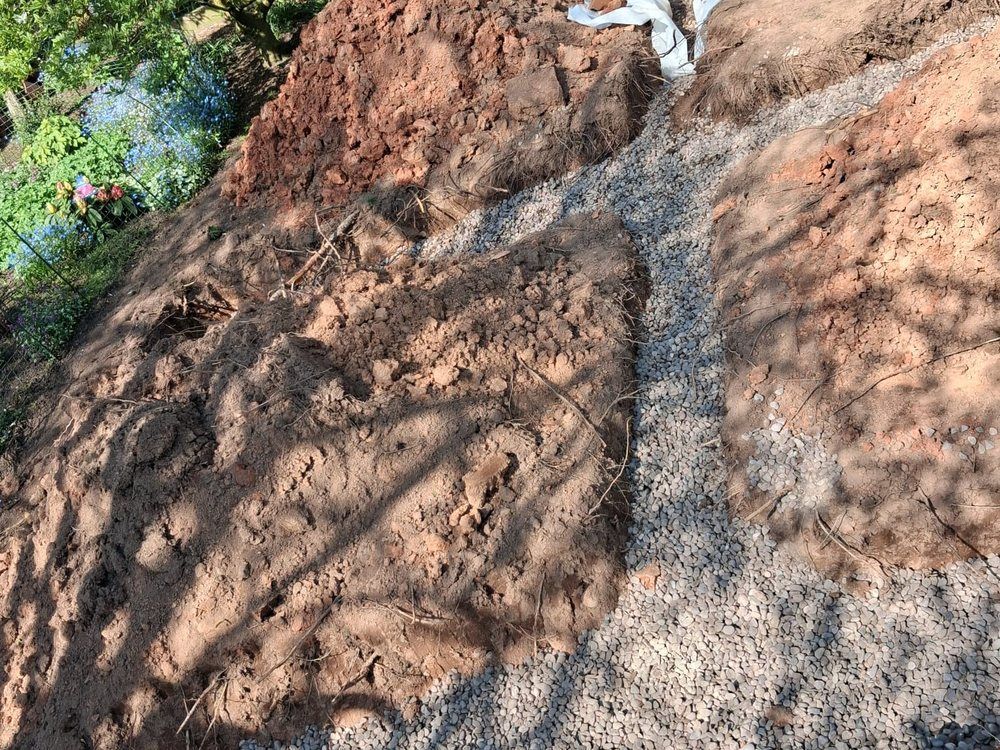
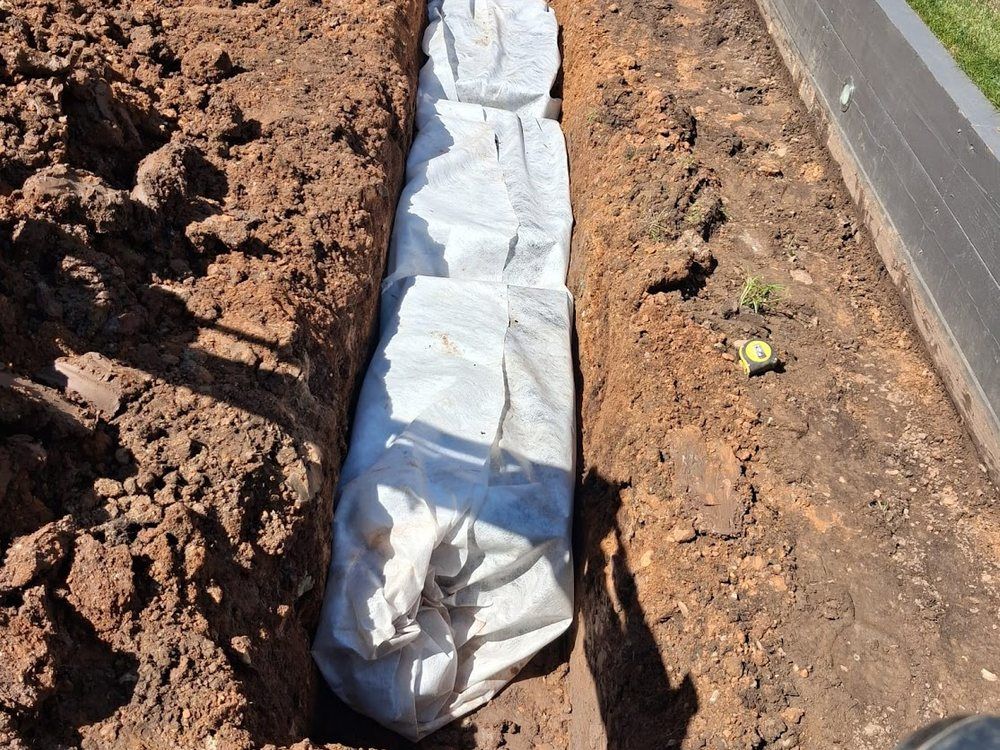
A drainage scheme through the build
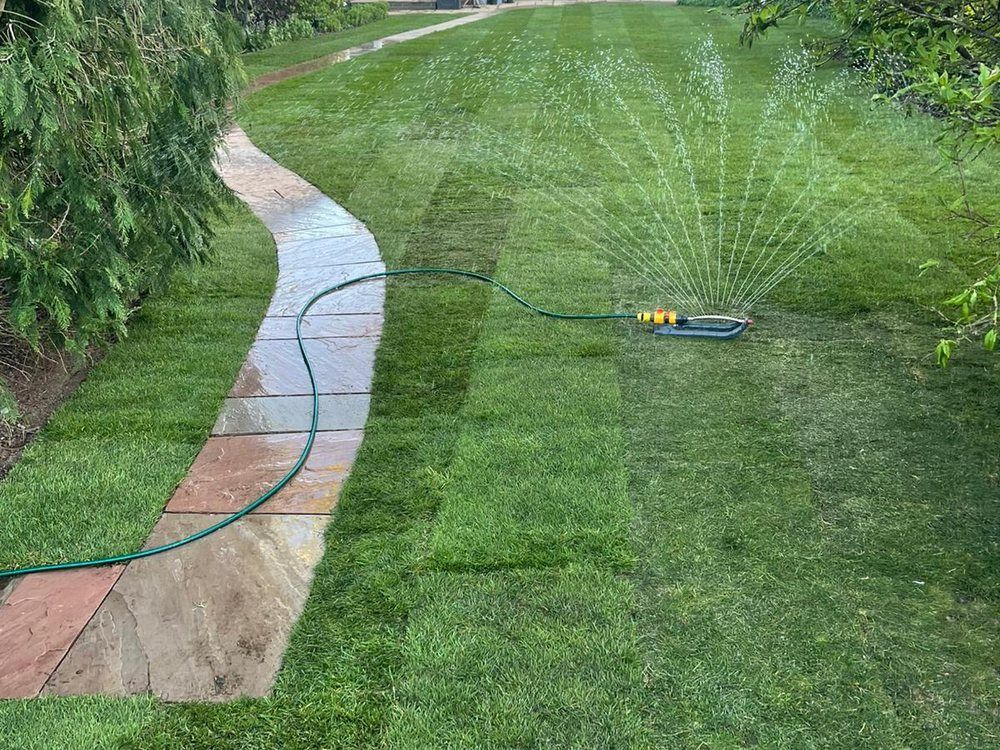
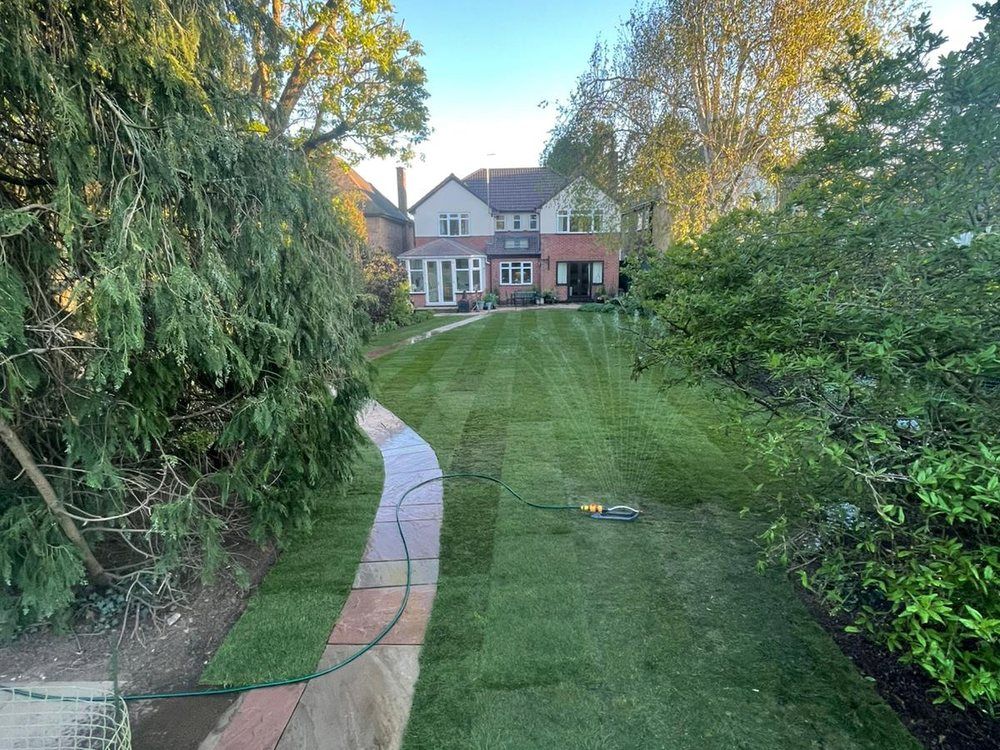
Photographs from a recent job at Kenilworth, a few miles out of the city. Same clay, same methods, and the clearest record we have of what the work involves.
Three different Coventrys, three different drainage problems
It is worth being specific about which part of the city a garden sits in, because the ground is not the same across it.
The Victorian and Edwardian suburbs
Earlsdon, Chapelfields, Stoke and the older parts of Foleshill were built when surface water and foul water went down the same pipe. Combined drainage is still normal in these streets, and that has two consequences: there is frequently no separate surface water drain for a garden scheme to use, and the gully by the back door may be foul rather than surface water. Guessing wrong turns a wet lawn into a considerably worse problem.
The rebuilt districts
Large parts of the centre and the inner ring were cleared and rebuilt after the war, and the ground reflects it. Made-up levels, buried footings and imported fill are all common, which means what a trench meets at 600mm is genuinely unpredictable and worth establishing with a trial hole rather than an assumption.
The postwar and modern estates
Tile Hill, Wyken, Binley, Allesley Park and the newer developments on the city edge share the familiar pattern: compacted clay subsoil, a thin skim of topsoil, turf straight over the top. The soil is not the problem so much as what was done to it before the garden was handed over.
How we approach a city garden
The survey establishes three things: how fast the ground takes water, where the existing drainage goes, and what access there is. On Coventry properties the second is often the interesting one, because on older houses nobody has a plan and the assumption in the deeds is frequently wrong.
From there the build is conventional and the detail is what matters: trenches cut to a consistent fall, geotextile between soil and stone so clay cannot migrate in, washed aggregate around perforated pipe, and a discharge point that can genuinely take what is delivered to it. There is a fuller account of the methods on our garden drainage service page.
Because we are landscapers rather than a drainage contractor, reinstatement is part of the same job. Topsoil, turf, planting and paving go back, and our Coventry garden design page covers the wider work if the garden needs more than drainage.
Coventry is its own flood authority, which matters more than it sounds
In the Warwickshire towns around the city, drainage permissions run through the county council. Coventry is a unitary authority, so it is its own lead local flood authority and handles those matters directly. It is a small distinction that saves a wasted phone call.
The general position in England
- Surface water has an order of preference. Part H of the Building Regulations expects infiltration first, then a watercourse, then a sewer, and each option ruled out before the next is used.
- Land drainage does not go into a foul sewer. In the combined-drainage suburbs this is the rule most easily broken by accident, because the only convenient pipe may be the wrong one.
- A sewer connection is an application. Section 106 of the Water Industry Act 1991 sets out the route, and Severn Trent are the undertaker here.
- An outfall into a watercourse needs consent under Section 23 of the Land Drainage Act 1991, from the lead local flood authority — which within the city boundary is Coventry City Council rather than Warwickshire.
- Soakaways have setbacks and need sizing — roughly five metres from a building, two and a half from a boundary, with capacity from a BRE Digest 365 percolation test.
That is the general position and not advice on a particular property; we lay pipe rather than practise law. Anything a scheme needs is identified at survey and dealt with before work starts.
What changes the price in the city
- Whether the existing drainage can be used. Where a separate surface water drain exists and is available, a scheme can be relatively modest. In the combined-drainage streets it usually cannot be used at all.
- What the trial hole finds. Clay is predictable. Made ground, old footings and buried hardcore are not, and they cost time and lorries.
- Access. A terraced house with no rear entry means every barrow goes through the hallway. A semi with a side gate is a different job entirely.
- The layout. One intercepting line against a fence, or a full branched system across the lawn.
- Putting it back. Turf is quick; mature borders and laid paving are not.
After the survey the quotation covers the crew, the plant, the excavation, all materials, every load of spoil removed and the garden reinstated.
Why Coventry clients use us for drainage
We have been working on this city's gardens since 2015, which mostly means we have already met whatever is under yours.
We find out what the drains actually do
On older Coventry properties the below-ground layout is rarely recorded and often not what the owner believes. Establishing it is part of the survey.
Trial holes, not assumptions
Across a city rebuilt in patches, what is under one garden tells you very little about the next street.
The detail that decides longevity
Membrane, washed stone and a true fall on every run. The failure mode is gradual and invisible, which is exactly why it gets skipped.
Established and insured
Trading since 2015, £1M public liability, and more than 40 years of combined experience across the team.
Drainage in the surrounding towns
Frequently asked questions
Which parts of Coventry do you cover?
All of it, and the surrounding towns and villages. Most of our work is in the city and the ring around it, from Earlsdon and Coundon through Wyken, Binley, Tile Hill and Allesley, and out to Kenilworth, Balsall Common and Bedworth.
Our street has combined drains. Can garden drainage still connect to something?
Not to the combined drain, no. Clean water in a foul or combined sewer is exactly what causes sewer flooding, and in the older suburbs that pipe may be the only one there. The usual answer is to deal with the water on your own land through a soakaway where the ground allows, or to reduce and redirect what is arriving. We establish which pipes exist and what they are before proposing anything.
How do I know whether my drain is surface water or foul?
Sometimes from the cover and what is under it, sometimes only by tracing it. What you cannot rely on is the assumption that the gully nearest the problem is the right one, particularly on a property built before the two systems were routinely separated. We check rather than guess, because the consequences of getting it wrong land on the homeowner.
We are on a postwar estate and the whole street floods. Is my garden fixable on its own?
Often yes, though it is worth being realistic. If water is arriving from higher ground across several gardens, a scheme confined to your plot has to intercept it at the boundary and take it away rather than simply drain the middle of your lawn. That is a design question, and it is one we can answer once we have seen the levels.
Do you deal with water coming off the roof as well?
Yes, and it is frequently part of the problem. A downpipe discharging at the base of a wall, or into a drain that no longer runs anywhere, puts a surprising volume of water into the ground right next to the house. Sorting that out is sometimes most of the fix.
Can you work in a terraced garden with no rear access?
Yes. It is hand dug, the route through the house is boarded and sheeted, spoil is barrowed out and deliveries are staged so nothing sits on the street. It takes longer and the price reflects that, but the finished system is the same.
What does garden drainage cost in Coventry?
It depends far more on what the survey finds than on the size of the garden. A scheme that can use an existing surface water drain is modest; one that needs a tested soakaway and excavation through made ground is not. We give one figure after the survey, covering everything through to reinstatement.
Garden in Coventry that will not drain?
Tell us where the water sits and what the garden backs onto. We will come out, open the ground and tell you what is actually wrong.
