
Garden Drainage and Soakaways in Cawston
Estate drainage, and finding out what you are allowed to connect to
Modern estates like Cawston were built with engineered drainage: basins, swales, filter drains and underground storage designed as a system for the whole development. That is good news for the estate and confusing for the householder, because a lot of what is in the ground around you is not yours to use, alter or connect into.
Drainage work we carry out in Cawston
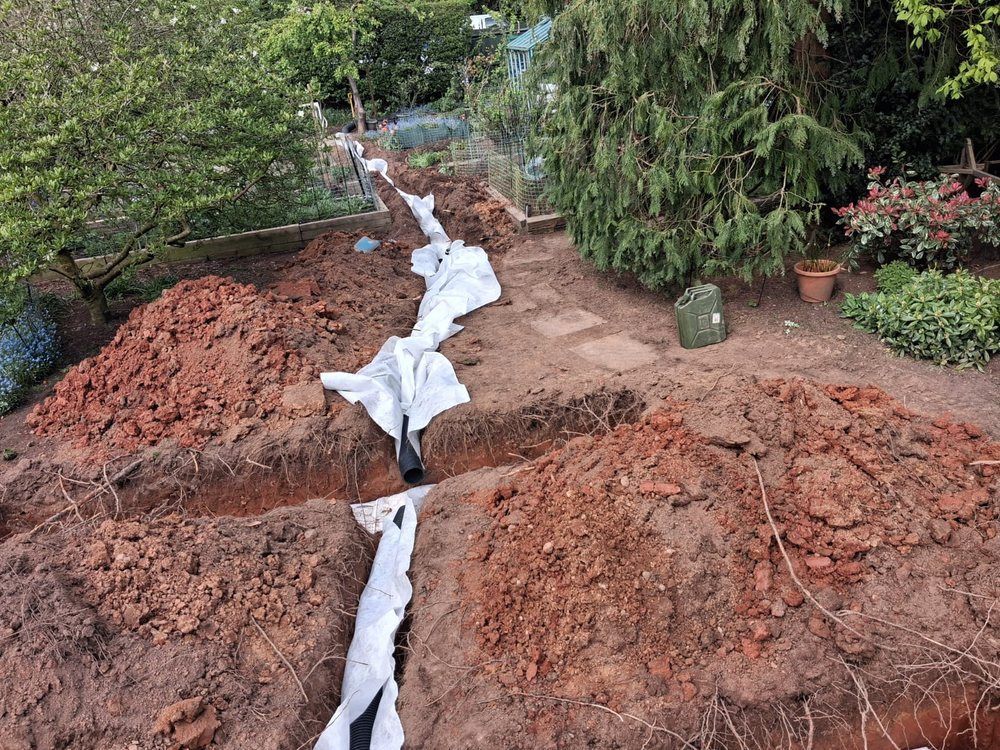
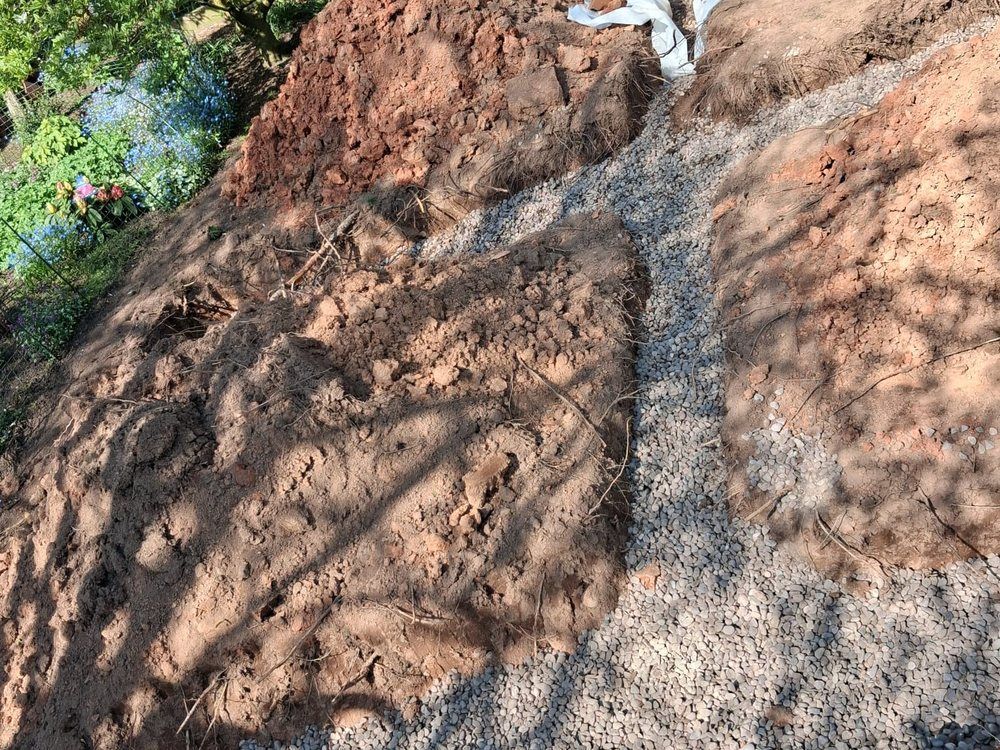
Stone-filled runs behind a geotextile lining, gathering water off ground that has stopped absorbing it.
Soakaways
Built inside your own boundary, at a volume the measured percolation rate supports.
Branch runs into a central spine, where the whole lawn sits wet rather than one patch.
A single intercepting run where water arrives from one direction, such as a neighbouring plot.
Subsoil decompaction
Breaking up the layer left by construction plant, which frequently is the problem.
Drainage investigation
Establishing what is in the ground near your plot and who is responsible for it.
Levels and falls
Patios and paths reset so they shed water away from the house rather than towards it.
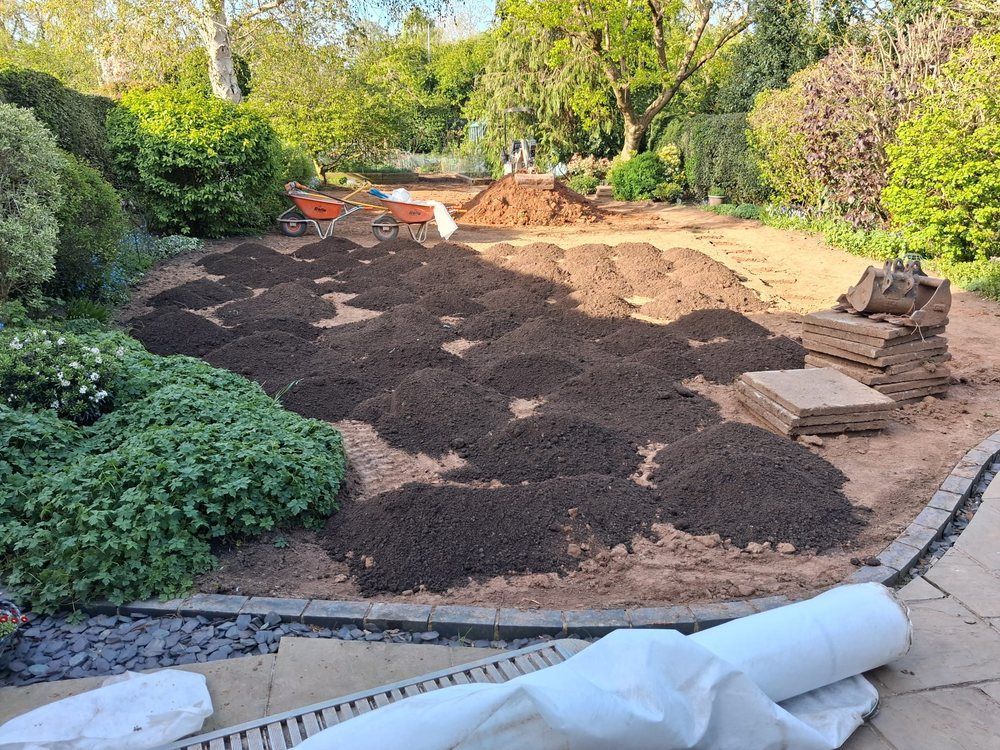
Screened soil, new turf and borders restored as part of the job.
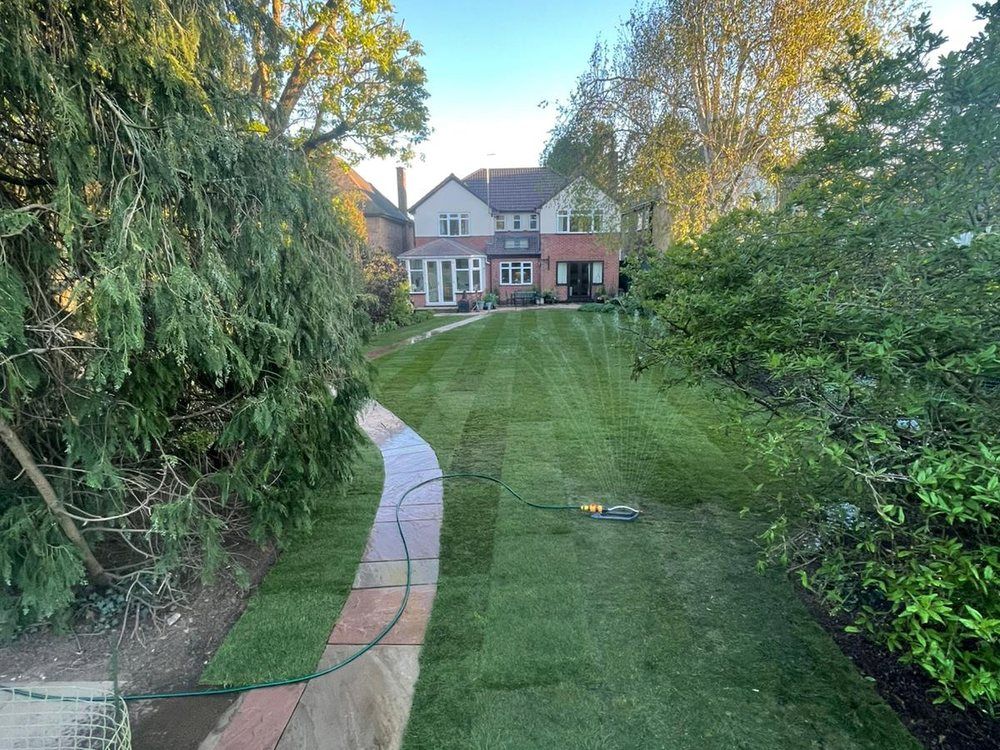
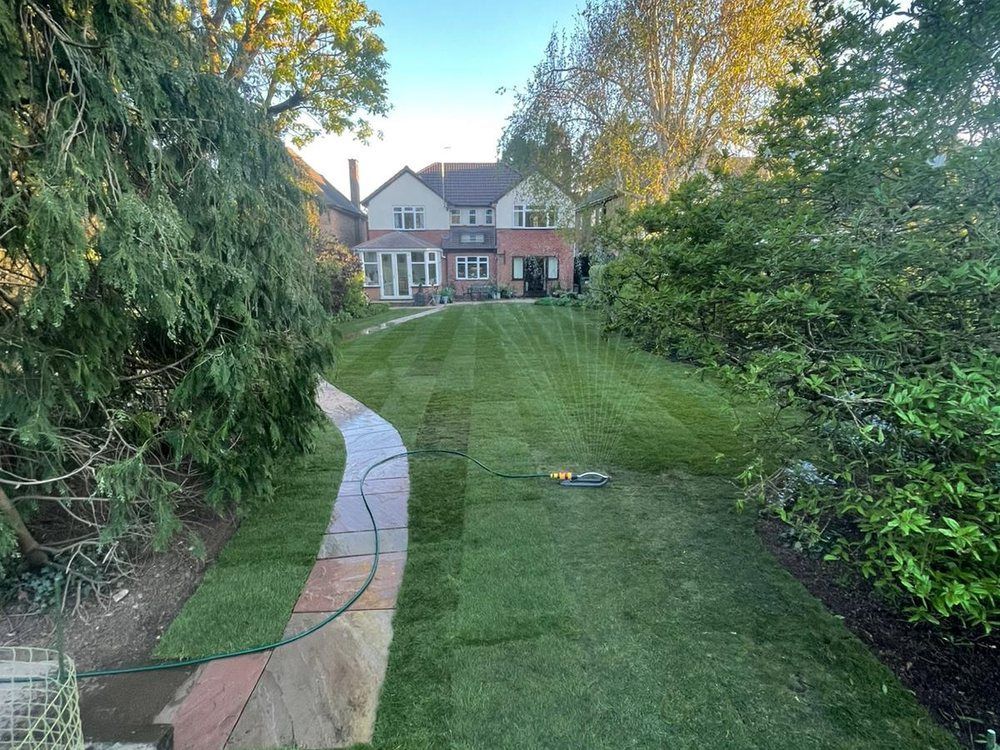
A drainage scheme through the build
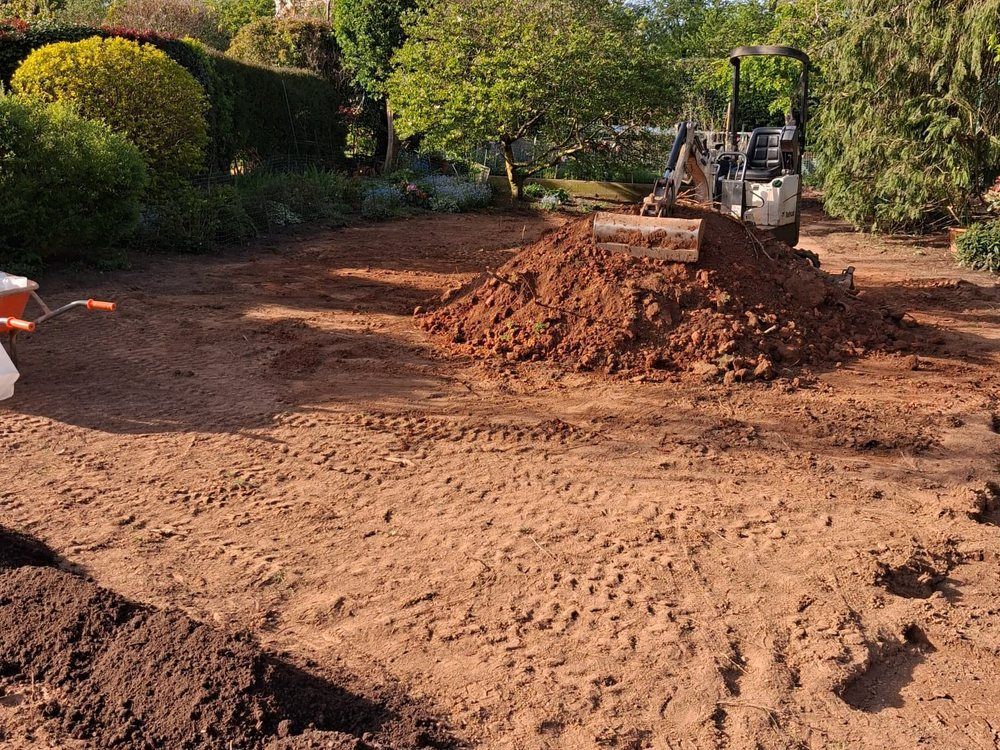
Photographs from a recent job at Kenilworth. A larger garden than most estate plots, and exactly the same sequence of work and the same construction details.
The drainage on your estate is probably not yours
This is the question to settle before anyone designs anything, because the answer decides what is possible.
Who typically holds what on a modern development
- Engineered drainage features are managed, not ownerless. Basins, swales, filter drains and underground storage on an estate are normally held by the developer, a management company, the water company or the local authority, depending on what has been adopted.
- A management company often means a service charge. If communal drainage is maintained privately, householders usually contribute, and the company is the body to raise a problem with.
- You cannot connect into it on your own initiative. Altering or discharging into an estate drainage feature is a decision for whoever holds it, and doing it anyway can make you responsible for consequences downstream.
- Your own plot is a different matter. A soakaway built within your boundary and discharging into your own ground is generally yours to install, subject to the usual setbacks and sizing.
- The developer may still be on the hook. On a recent build there is usually a defects period, and a garden that has never drained may sit inside it.
We are landscapers rather than surveyors or solicitors, and who holds what on a given estate is a matter for the deeds, the transfer and the management company’s documents. What we will do is establish at survey whether a scheme can be built entirely within your boundary, which in practice it usually can.
What can be done entirely inside your own boundary
Once it is clear that the estate infrastructure is off limits, the useful question becomes what is achievable without it. The answer is more than most people assume, and it is worth going through in order of cost.
- Move the roof water. Two or three downpipes concentrate an enormous annual volume into a few square metres. Taking that to a properly sized destination, rather than to the base of a wall or a drain that no longer runs, is often the cheapest useful change available.
- Correct the falls. Builders set garden levels for speed rather than for drainage, and a patio shedding towards the house instead of away from it is common. Resetting it is modest work with a disproportionate effect.
- Let the hard surfaces take water. Permeable paving on a path, a patio edge or a parking area stores water in the sub-base and releases it slowly, which reduces what has to be collected at all.
- Improve the soil across the wet area. Deep cultivation and organic matter genuinely change how much a lawn will absorb, and on a plot where a piped system would be marginal it sometimes does the job on its own.
- Then build a system, sized properly. Collection runs and a soakaway, both within your boundary, designed from the measured rate at which your ground accepts water.
We would rather propose the first four and watch than sell the fifth and hope. Where a full scheme is needed we will say so plainly, and where it is not we will say that too.
Sizing a soakaway on a compact plot
On an estate garden the binding constraint is rarely the volume of water. It is geometry. Guidance keeps a soakaway roughly five metres from any building and about two and a half metres from a boundary, and on a plot the width of a modern garden those two numbers can between them eliminate most of the available ground before anything is calculated.
So the sequence is: establish where a soakaway could legally and sensibly sit, measure the area that would drain into it, test how fast the ground accepts water, and only then decide whether the volume the arithmetic demands will fit in the space the setbacks leave. Where it will not, the design moves to reducing what arrives and holding back what remains.
The construction itself is unremarkable and entirely dependent on detail: a consistent fall, geotextile separating soil from stone, clean washed aggregate around slotted pipe, and the soakaway wrapped on every face including its base. Our drainage service page covers it, and the clay soil guide explains what this ground does with water.
What the price turns on
- Whether decompaction is needed. On an estate plot this is frequently the largest element, and the one most quotes leave out.
- Soakaway size. Set by the area draining into it and the rate the ground accepts water once the pan is broken.
- Access. Estate gardens often have a narrow side passage, which decides whether a machine can work.
- Topsoil. Making a short depth up to something workable is an extra worth paying for.
- Spoil. Clay leaves by lorry; none of it stays on the garden.
One number once the garden has been seen, taking in the people, the machinery, the digging, the materials, the lorries and the making good.
Why Cawston clients use us
The two questions worth answering on an estate plot are what you are permitted to use and what will physically fit. Both can be settled before a penny is committed.
We find out what you can connect to
Before designing anything that assumes an outlet exists, we establish whether it is available to you at all.
Cheapest option first
If moving a downpipe and correcting a fall will do it, that is what we will recommend, even though it is a smaller job for us.
Geometry checked before volume
A soakaway that the clearances will not permit is not a design. We measure what fits before calculating what is needed.
A decade on Rugby estates
Trading since 2015, insured to £1M, and familiar with what these developments left in the ground.
Drainage in the surrounding area
Frequently asked questions
Do you cover Cawston and the rest of Rugby?
Yes. We work across Cawston, Houlton, Bilton, Coton Park and the rest of Rugby, and out to Dunchurch, Long Lawford and Ryton-on-Dunsmore.
There is a drainage basin near our house. Can we drain into it?
Almost certainly not without permission, and often not at all. Engineered drainage on an estate is held by the developer, a management company, the water company or the council depending on what has been adopted, and altering or connecting into it is their decision rather than a householder’s. It is worth establishing who holds it before any scheme is designed around it.
Who maintains the communal drainage on the estate?
It depends on what has been adopted and what has not. Where features remain in private hands they are usually managed by a company that householders contribute to through a service charge, and that company is the body to raise a problem with. The transfer documents for the property are where this is set out.
What is the cheapest thing worth trying first?
Almost always the roof water. A pair of downpipes delivers a very large annual volume into a small area, and if one of them is discharging beside the house or into something that has stopped working, redirecting it can change the ground near the building on its own. It costs a fraction of a full scheme and it is worth establishing before anything bigger is designed.
Would permeable paving actually help?
On a compact plot, frequently yes. A permeable construction holds water in the sub-base beneath the surface and lets it disperse gradually, which removes the sudden surge a sealed patio or parking area produces. Where the ground underneath accepts water at a reasonable rate it can remove the need for a separate soakaway altogether.
Is there room for a soakaway on a garden this size?
That is the first thing to measure rather than the last. The clearances expected around a soakaway can consume most of a modern plot before any calculation of volume begins, and a scheme designed on the assumption that one will fit is a scheme that may not be buildable. We work out what the geometry permits before pricing anything that depends on it.
What does garden drainage cost in Cawston?
Less than people expect where roof water and levels turn out to be most of the problem, and more where a full system has to be squeezed into a plot with tight clearances. We look, measure and test before quoting, and the resulting figure is inclusive through to reinstatement.
Estate garden in Cawston that will not drain?
Tell us where the water collects and what the plot backs onto. We will work out what you may use and what will actually fit.
