
Garden Drainage and Soakaways in Long Lawford
Drainage for properties with a ditch, a brook or a field on the boundary
If a ditch or a brook runs along the edge of your property, you are probably responsible for it — not just permitted to use it. That surprises most people, and it cuts both ways: there are duties attached, and there is also a legitimate route for surface water that many neighbouring properties do not have.
Drainage work we carry out in Long Lawford
Lined trenches of clean stone around slotted pipe, laid to gather water from the ground that will not shed it.
Ditch and outfall work
Outfalls built with a proper headwall, and only once the consent is in place.
An intercepting run catching water arriving from a field, a lane or a rising boundary.
Soakaways
Sized from a percolation test and set the required distance from house and boundary.
Branch runs into a central spine, where a whole lawn holds water rather than one patch.
Ditch clearance and reprofiling
Restoring flow through a channel that has silted, collapsed or grown over.
Levels and falls
Hard surfaces reset so they shed away from the building rather than towards it.
Soil, grass and borders restored as part of the same contract.
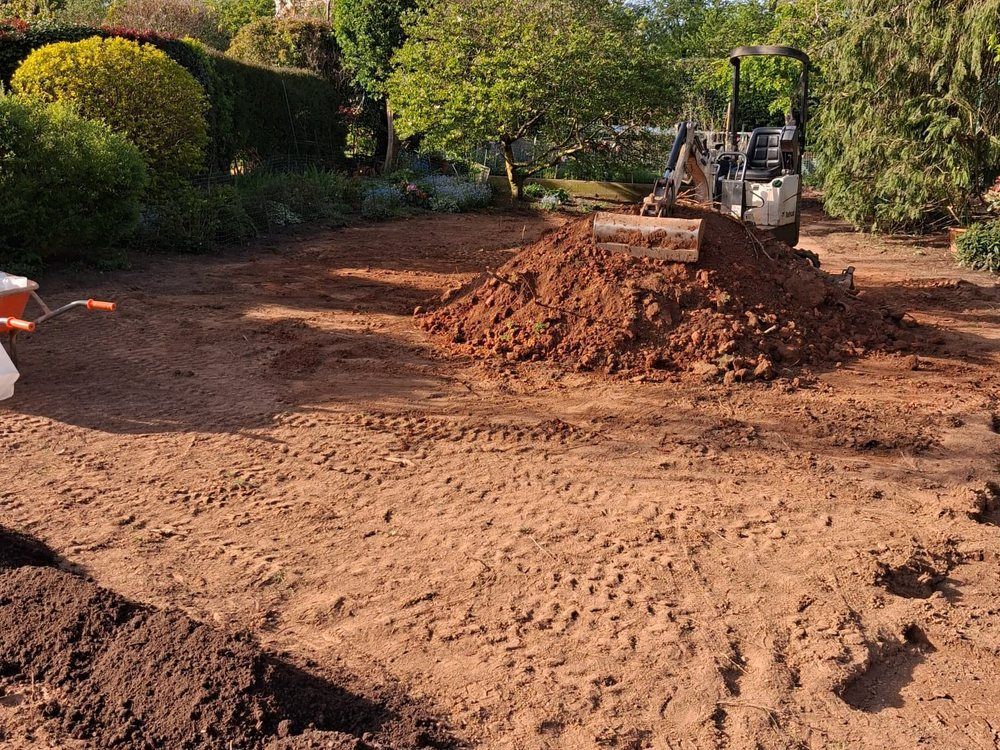
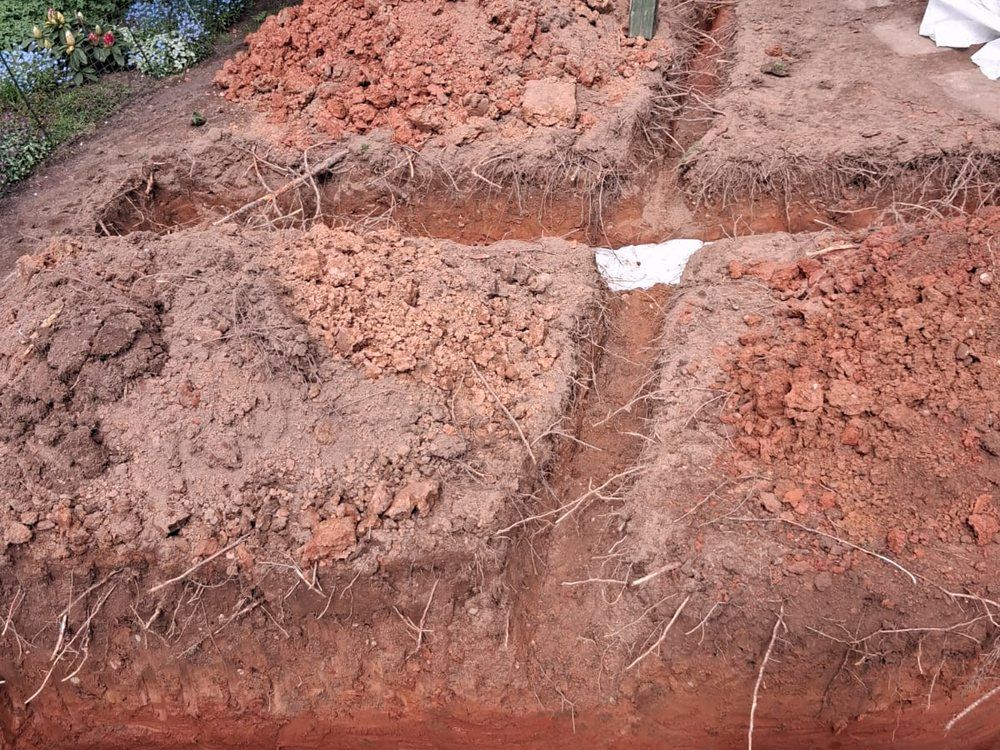
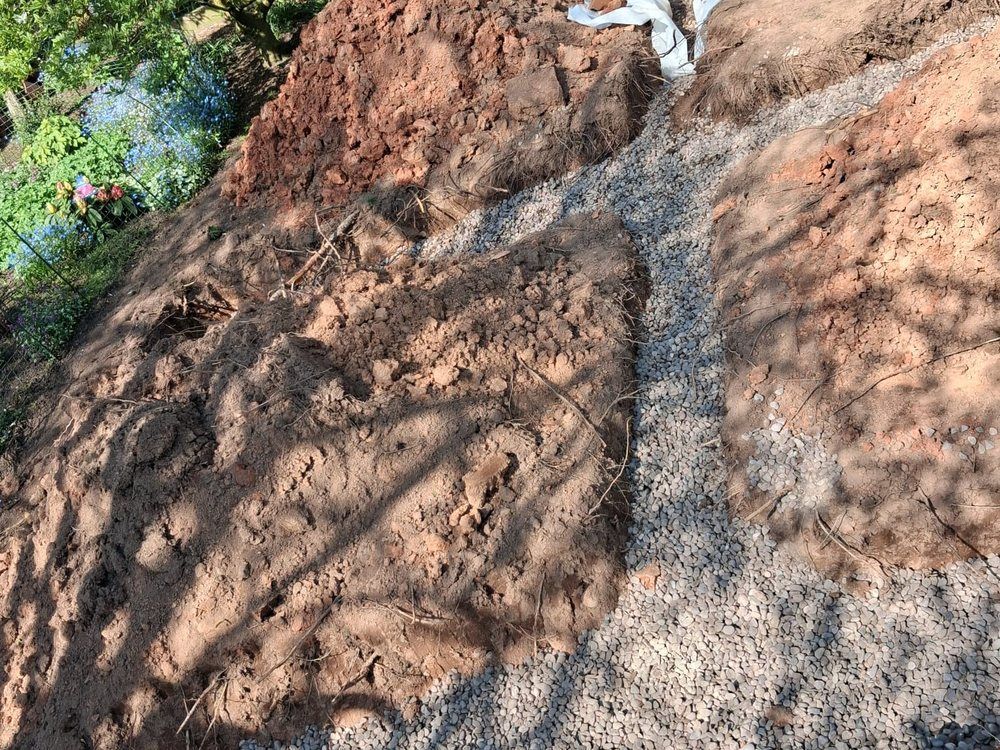
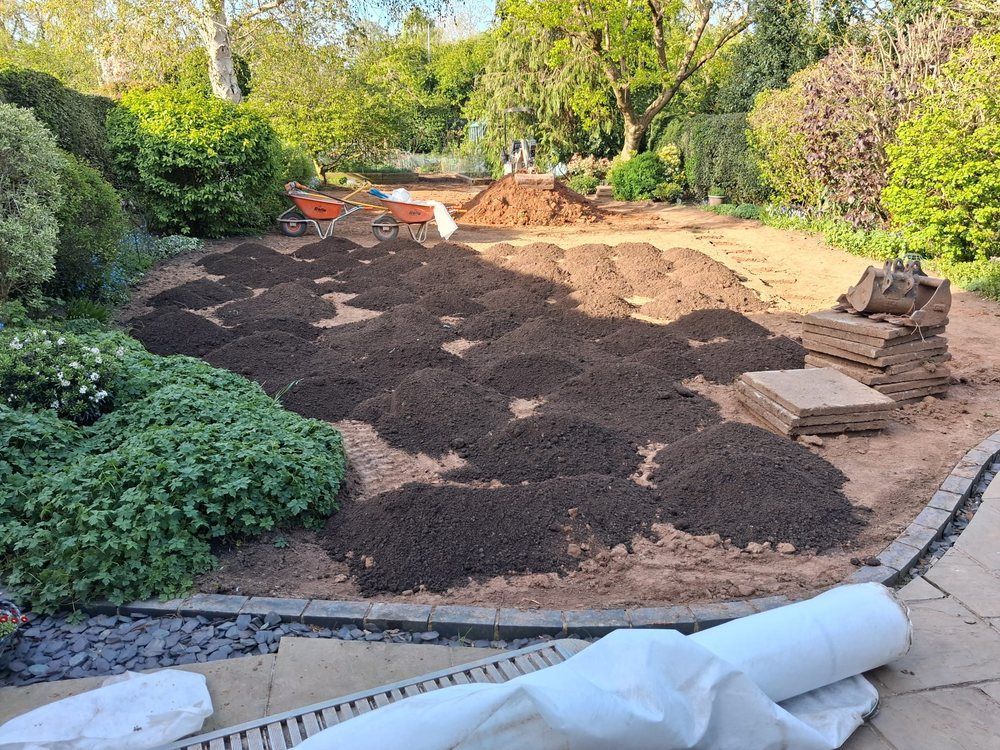
A drainage scheme through the build
Photographs from a recent job at Kenilworth, showing the sequence from first trench to finished lawn. The ground is the same clay we dig here.
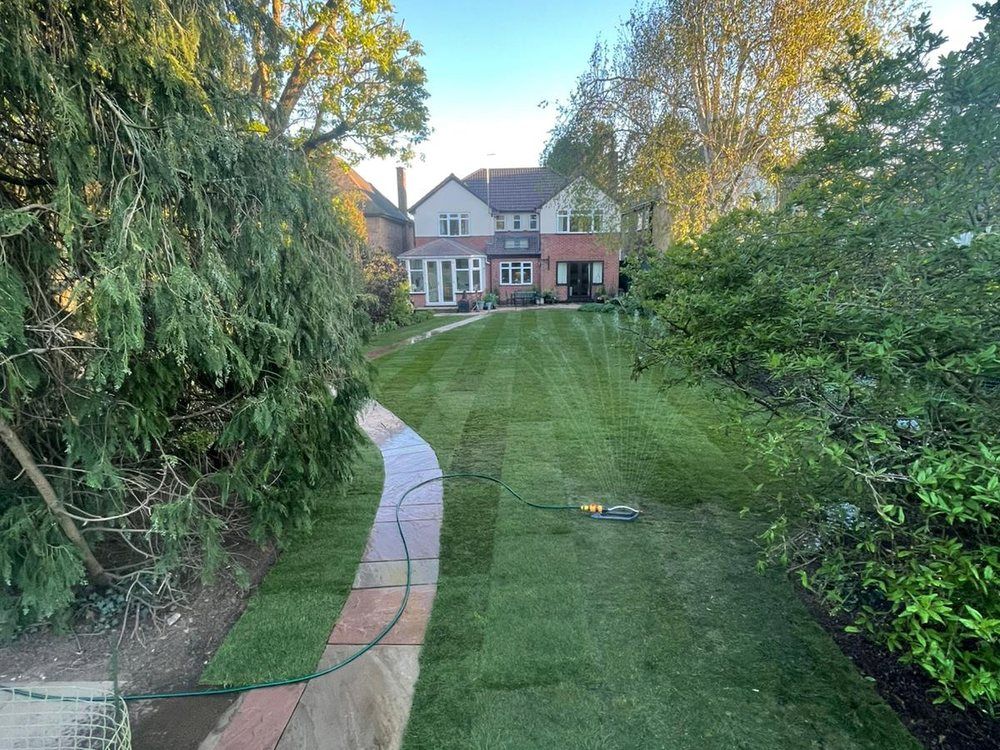
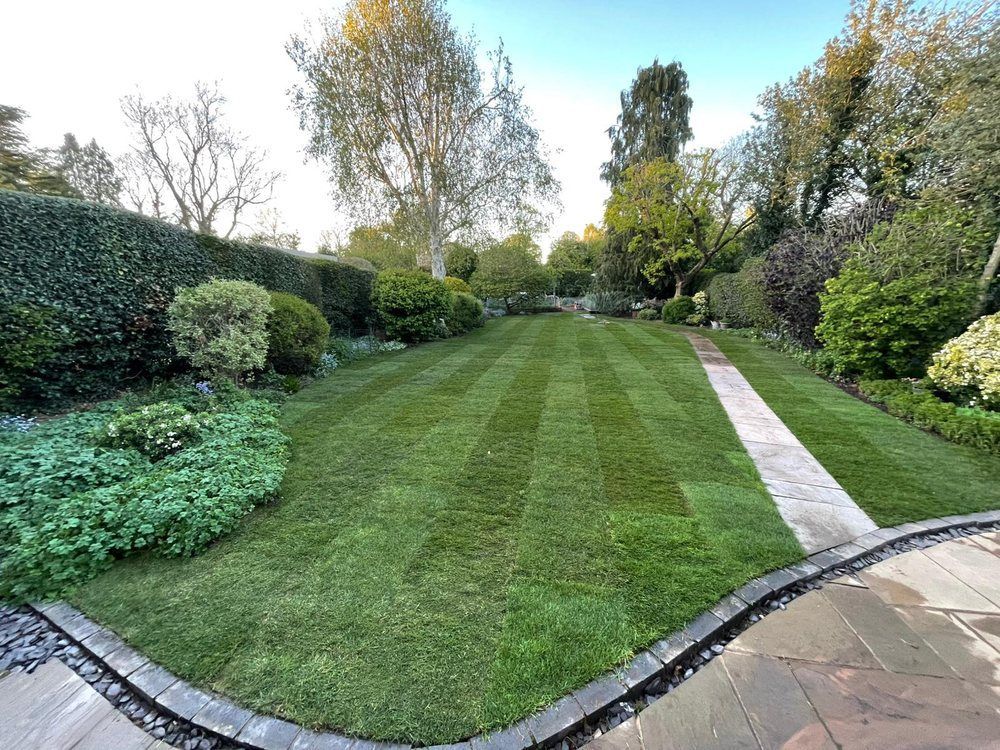
If a watercourse runs along your boundary, it is probably yours
This is the single most useful thing a property owner here can know, and almost nobody does until something goes wrong.
The general position in England
- Riparian ownership is the default. Where a watercourse runs through your land you normally own that stretch; where it runs along the boundary, you normally own up to the centre of it. The deeds are where this is confirmed.
- You must let water flow. A riparian owner is expected to keep the channel clear of obstructions and to remove blockages, fallen branches and debris that would impede flow or cause flooding to someone else.
- Maintenance comes with it. The bed and banks of your stretch are your responsibility, and so is not polluting what passes through.
- A structure still needs consent. Building an outfall, a culvert or anything else within the channel requires land drainage consent from the lead local flood authority, regardless of the fact that you own it.
We are landscapers rather than solicitors, and ownership in any particular case is a matter for the deeds. What we will do at survey is identify whether a boundary channel exists, whether it is flowing as it should, and whether it offers a legitimate route for surface water once the necessary consent is obtained.
Clay, field water and channels that have stopped working
The underlying ground is the familiar stiff clay, and on its own it explains most wet lawns. What makes properties on the village edge distinctive is what arrives from beyond the fence.
Agricultural land sheds a great deal of water, and the field drainage that used to manage it is frequently a century old. Where a field drain has collapsed or silted, water that once left quietly now emerges somewhere unhelpful. Meanwhile the ditches that were dug to take it have often stopped functioning — silted, grown over, or blocked by something that fell in years ago and was never cleared.
The useful intervention is frequently not more pipe in the garden. It is restoring flow through the channel that was always meant to take the water, and intercepting what arrives at the boundary before it spreads across the lawn.
Making use of a boundary channel properly
Where a ditch is the right destination, the work has two halves. The channel itself may need clearing and reprofiling so that it carries water rather than holding it, which is maintenance a riparian owner is expected to do in any case. And the connection into it has to be built as a structure rather than improvised: a headwall, a proper invert level above the normal water line, and protection against the bank eroding around it.
Upstream of that, the collection is conventional. Trenches cut to a consistent fall, geotextile between soil and stone, washed aggregate around perforated pipe, and an interception run along the high boundary where water is arriving from adjoining land. The drainage service page covers the methods in more depth.
What the price turns on
- Whether the ditch needs work. Clearing and reprofiling a silted channel is sometimes the majority of the fix and sometimes a morning.
- The outfall. A properly built headwall with the consent in place, rather than a pipe end in a bank.
- Interception length. Catching field water along a boundary is usually the longest run on the job.
- Access. Village plots often take a machine, which keeps the labour down.
- Reinstatement. Lawn, borders and any hard surfaces disturbed, all put back.
Surveyed first, then one number covering the team, the machinery, the excavation, all components, the lorry loads and the reinstatement.
Why Long Lawford clients use us
On a property with a watercourse, the cheapest improvement is often the one nobody has looked at for twenty years.
We look at the ditch before the lawn
A blocked channel is frequently the cause rather than a coincidence, and clearing it may be most of the answer.
Consents dealt with before digging
An outfall built without land drainage consent cannot be regularised afterwards, so it gets applied for first.
Interception where it belongs
Catching field water at the boundary works; draining the middle of a lawn that is being fed does not.
Familiar with the village edge
Long Lawford and the lanes round Rugby since 2015, insured to £1M, ditches included.
Drainage in the nearby area
Frequently asked questions
Do you cover Long Lawford and the villages around Rugby?
Yes. We work across Long Lawford, Newbold, Church Lawford and the villages west of Rugby, as well as Rugby itself, Cawston, Dunchurch and out towards Coventry.
There is a ditch along our boundary. Whose is it?
Most likely yours, at least up to the centre of the channel. Where a watercourse runs along a boundary the default position is that the adjoining owners each own to the midpoint, and where it runs through a property the owner has that whole stretch. Your deeds are what confirm it, and it is worth knowing because responsibilities come with the ownership.
What am I actually responsible for?
Broadly, letting water flow. That means keeping the channel free of obstructions, clearing blockages and fallen branches that would impede flow or flood someone downstream, maintaining the bed and banks of your stretch, and not polluting what passes through. It is less onerous than it sounds, and mostly amounts to looking at it occasionally.
Can I put my garden drainage into it?
Potentially, and it is one of the better options where it exists. Building an outfall into the channel is a structure, so it needs land drainage consent from the lead local flood authority even though you may own the ditch. That consent has to be obtained before the work rather than after, and we would apply for it as part of the scheme.
The ditch has silted up and does not flow. What can be done?
Clearing and reprofiling it, which is maintenance you are expected to do in any case. On a good number of properties this is most of the fix on its own, because the channel that was always meant to take the water simply stopped being able to. It is worth looking at before committing to a piped system in the garden.
Water comes off the field behind us. Can that be intercepted?
Yes, and it is usually the right approach. A run along the high boundary catches flow before it spreads across the garden and takes it to the ditch or another permitted outlet. Trying to drain the middle of a lawn that is being continuously fed from above will always look like it is not working.
What does garden drainage cost in Long Lawford?
It varies more here than in town, because the answer might be a morning clearing a ditch or a full scheme with a consented outfall. We survey, look at the boundary channel as well as the garden, and then give one figure covering everything through to reinstatement.
Ditch, field or brook causing trouble?
Tell us what runs along the boundary and where the water sits. We will look at the channel as well as the lawn.
