
Garden Drainage and Soakaways in Burbage
Drainage for gardens, drives and everything the hardstanding sheds
Drive water and garden water are not the same problem, and treating them as if they were is how a drainage scheme disappoints. A block-paved drive sheds almost everything that lands on it, all at once, carrying silt and whatever else was on the surface. It needs handling differently from a lawn that is simply slow to drain.
Drainage work we carry out in Burbage
Driveway drainage
Channel drains, silt traps and soakaways sized for the surge a hard surface produces.
Perforated pipe in membrane-lined, stone-filled trenches, collecting from the wet ground.
Soakaways
Sized against a percolation test, with separate provision where hardstanding feeds them.
Soakaway replacement
Silted crates and rubble pits dug out and rebuilt, usually with a silt trap added.
Branch runs into a spine, where the whole lawn holds water rather than one corner.
Permeable surfacing
Drives and paths built to let water through rather than send it somewhere else.
Levels and falls
Resetting hard surfaces so they shed away from the house instead of against it.
Soil, grass, borders and paving put back as part of the same job.
How the work is built
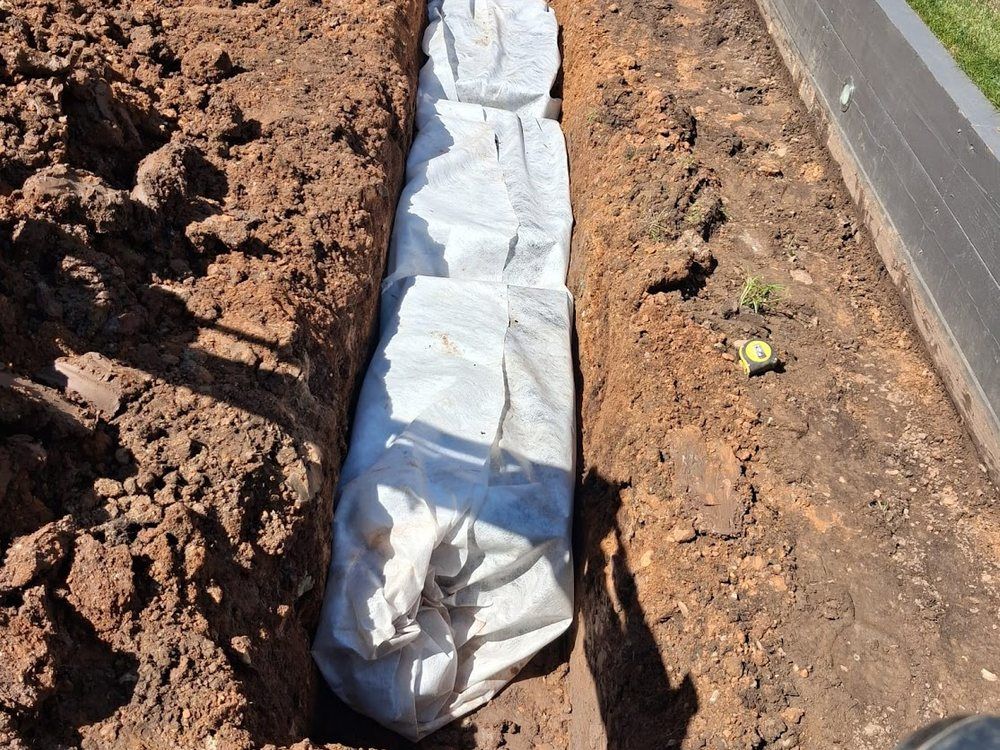
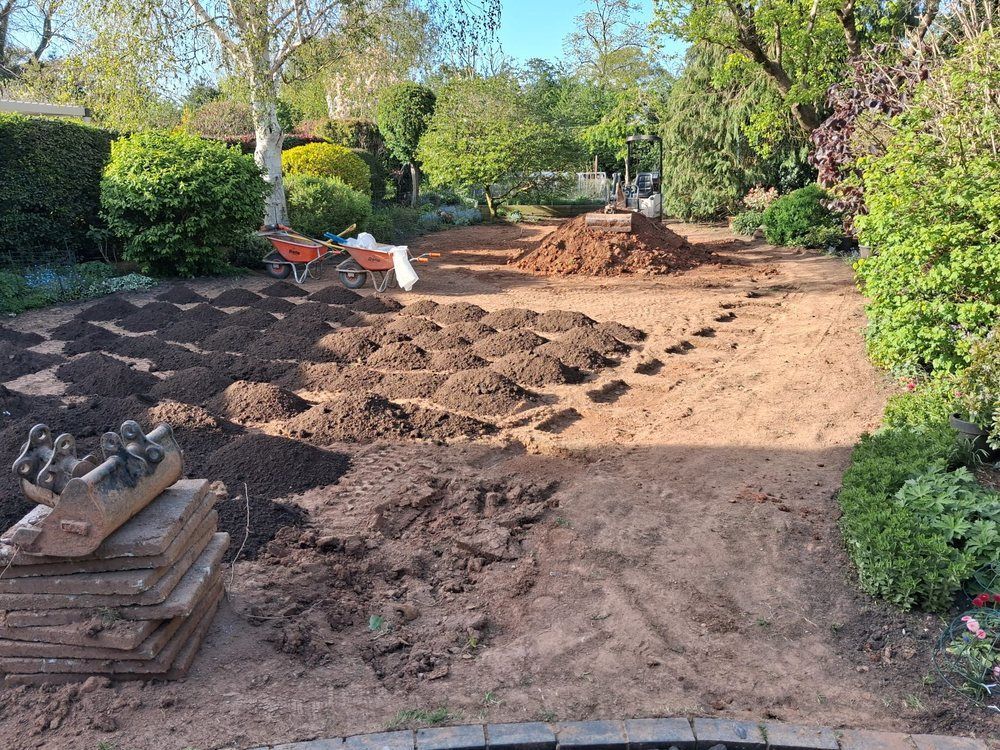
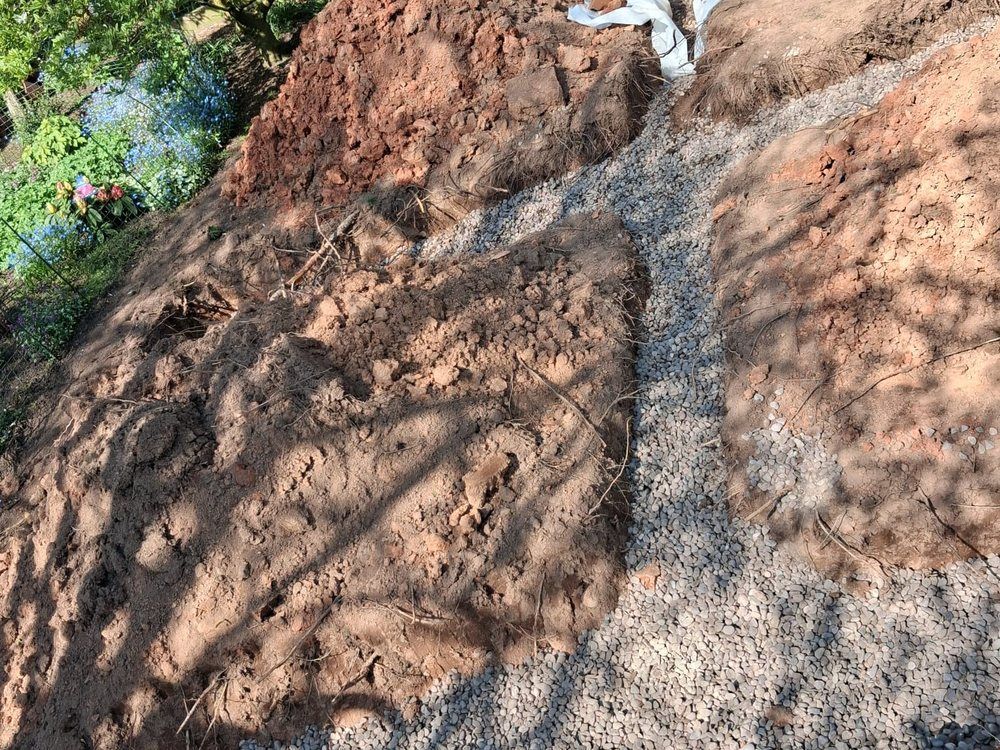
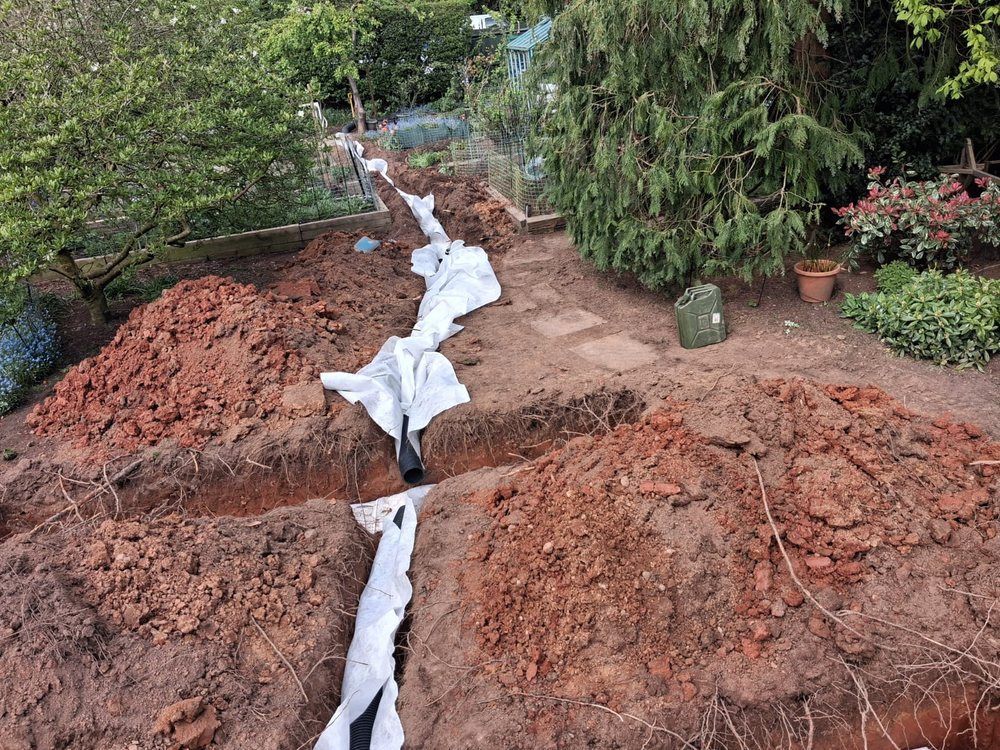
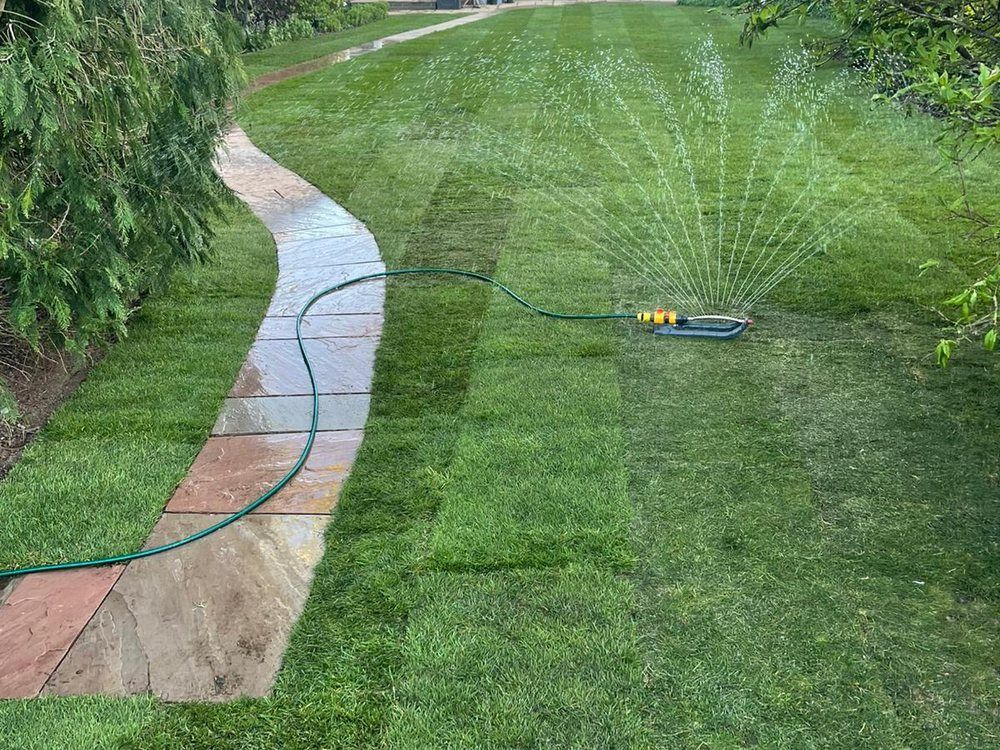
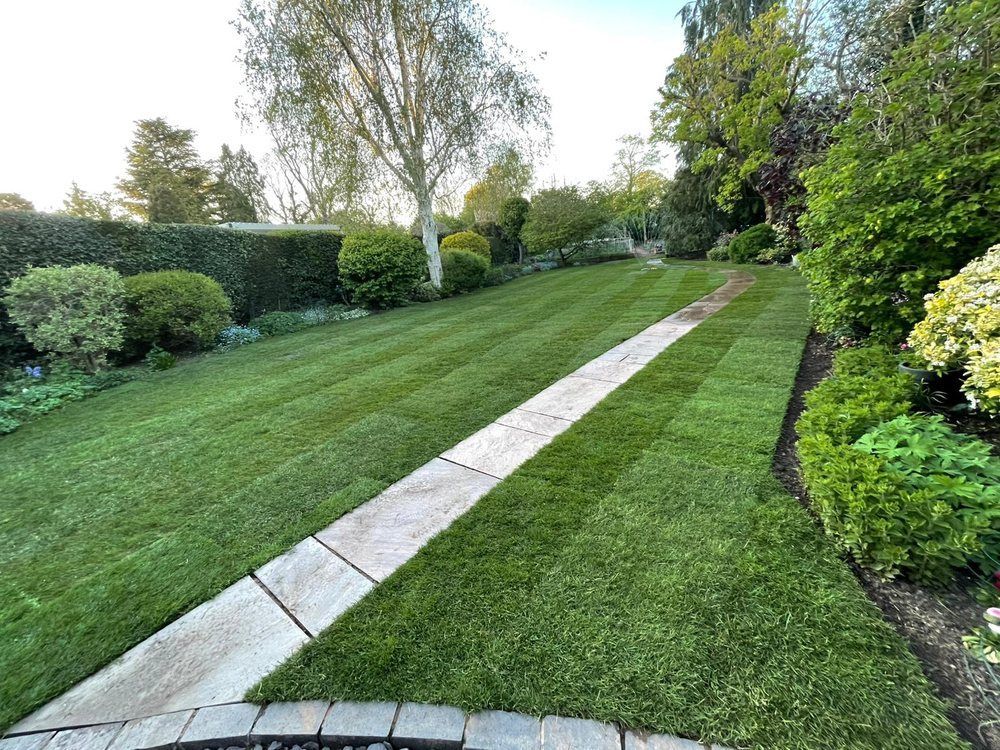
Photographs from a recent scheme at Kenilworth. The trench detail, the membrane and the wrapped crate are the same whether the water comes off a lawn or off a drive.
Why drive water needs handling differently
A lawn absorbs some of what falls on it even when it drains badly, and releases the rest slowly. A block-paved or tarmac drive absorbs essentially nothing and releases all of it immediately. Three consequences follow.
Volume arrives all at once
A drive of average size can shed a remarkable quantity of water within minutes of heavy rain starting. A soakaway sized for a lawn will be overwhelmed by the same rainfall falling on hardstanding, and will surcharge rather than fail gracefully.
It carries silt
Grit, sand from the jointing, leaf litter and road dirt all wash off a drive and into whatever receives the water. Fed straight into a soakaway, that material fills the voids from the inside, which is why drive-fed soakaways silt up faster than garden ones. A silt trap or catchpit in the line is the answer, and it can be cleaned, which a buried soakaway cannot.
It is not always yours to send anywhere
Water leaving a drive and running onto the footway or into the road is a common consequence of a poorly detailed hard surface, and it is the kind of thing that eventually gets noticed.
Hard surfaces, permeability and the local authority
The general position
- Front garden hard surfacing has a permeability expectation. Laying a significant area of impermeable surfacing in a front garden generally requires the water to be managed within your own boundary, whether by using permeable materials or by draining to a border or lawn inside the property.
- Burbage is in Leicestershire. Anything requiring the local authority goes to Hinckley and Bosworth Borough Council, and flood risk matters sit with Leicestershire County Council as lead local flood authority, not with a Warwickshire body.
- A dropped kerb is a separate application to the highway authority, and is not covered by anything agreed about the surfacing itself.
- Soakaways taking hardstanding water still need sizing and setbacks — the usual guidance is five metres from a building and about two and a half metres from a boundary, with the volume from a BRE Digest 365 percolation test.
This is the general position rather than advice on a specific property, and we build drives and drainage rather than administer planning. Where a scheme looks like it needs an application we will say so at survey.
Building a system that copes with a surge
Where hardstanding is involved, the design starts from the area of hard surface and the rate the ground will accept water, not from what looks like enough. Channel drains intercept at the point water would otherwise leave the property, a silt trap takes out the material that would otherwise choke the system, and the soakaway is sized to hold a downpour rather than an average.
The construction detail is the same as any other run: geotextile between soil and stone, washed aggregate, perforated pipe, a consistent fall, and a soakaway wrapped on every face including the base. Where permeable surfacing is the better answer, the sub-base does the storage and the surface simply lets water through.
What the quotation depends on
- The area of hard surface feeding it. This sets the volume, and volume sets the excavation.
- Whether the ground will take it. The percolation test decides whether infiltration is available at all.
- Channel drainage and silt traps. Modest items individually, and the difference between a system that lasts and one that blocks.
- Whether the surface itself is being replaced. Permeable construction costs more up front and can remove the need for a separate soakaway.
- Spoil and reinstatement. Clay leaves by lorry, and everything disturbed goes back.
The figure that follows the survey takes in labour, machinery, the digging, every component, the removal of what comes out and the restoration of what was disturbed.
Why Burbage clients use us
Most drive drainage problems are sizing problems, and sizing is arithmetic rather than opinion.
Sized from the area, not from the hole
The hard surface feeding a soakaway sets how big it has to be. We measure it and test the ground before quoting.
Silt traps as standard where they are needed
The component that keeps a drive-fed system working, and the one most commonly left out.
Drives and drainage from one team
We build both, so the surfacing and the water it sheds are designed together rather than by two trades who never meet.
On both sides of the border since 2015
Leicestershire and Warwickshire alike, with £1M public liability behind every job.
Drainage in the surrounding area
Frequently asked questions
Do you cover Burbage and Hinckley?
Yes, and the villages around them, as well as over the county boundary into Nuneaton, Bulkington and Bedworth.
Water runs off our drive onto the pavement. Is that a problem?
It is worth dealing with. A hard surface that discharges onto the footway or the road is a common consequence of poor detailing, and the expectation is generally that water from a front garden surface is managed within your own boundary. The fix is usually a channel drain at the threshold taking water to a soakaway, or rebuilding the surface as permeable.
Why does a soakaway taking drive water block up faster?
Because a drive delivers silt as well as water. Jointing sand, grit and road dirt wash off the surface and into the system, and fine material fills the voids that were doing the work. A silt trap in the line collects it where it can be cleaned out, which is the difference between maintaining a system and replacing one.
Is a permeable drive better than a drive plus a soakaway?
Often, and it depends on the ground. A permeable construction stores water in the sub-base and lets it soak away across the whole area, which removes the surge problem entirely. Where the underlying ground will not accept water at a useful rate, that advantage disappears and a storage-and-release approach makes more sense.
Do I need permission to pave the front garden?
Generally not, provided the water is dealt with on your own land, either by using permeable surfacing or by draining to a border or lawn inside your boundary. A sealed surface draining onto the pavement is the one that causes difficulty. A dropped kerb is a separate application to the highway authority.
Which council covers Burbage?
Burbage is in Leicestershire, so planning matters go to Hinckley and Bosworth Borough Council and flood risk matters to Leicestershire County Council. It is worth knowing, because a lot of the local guidance people find online relates to Warwickshire authorities that have no jurisdiction here.
What does driveway drainage cost in Burbage?
It depends on the area being drained and whether the ground will accept water, which is why we measure and test before quoting. The figure after the survey covers the excavation, the drainage components, all materials, spoil removal and reinstatement.
Drive or garden shedding water in Burbage?
Tell us the area involved and where the water ends up. We will measure it and test the ground before quoting.
