
Garden Drainage and Soakaways in Balsall Common
Village drainage, where there is often no surface water sewer to connect to at all
Village properties come with a drainage constraint that town houses rarely face: there may simply be no public surface water sewer in the road. On a good many Balsall Common plots the options are not soakaway, watercourse or sewer — they are soakaway or watercourse, and if the ground will not take water the design has to work considerably harder.
Drainage work we carry out in Balsall Common
Soakaways
Sized against a percolation test, positioned to the setbacks, and built to be still working in twenty years.
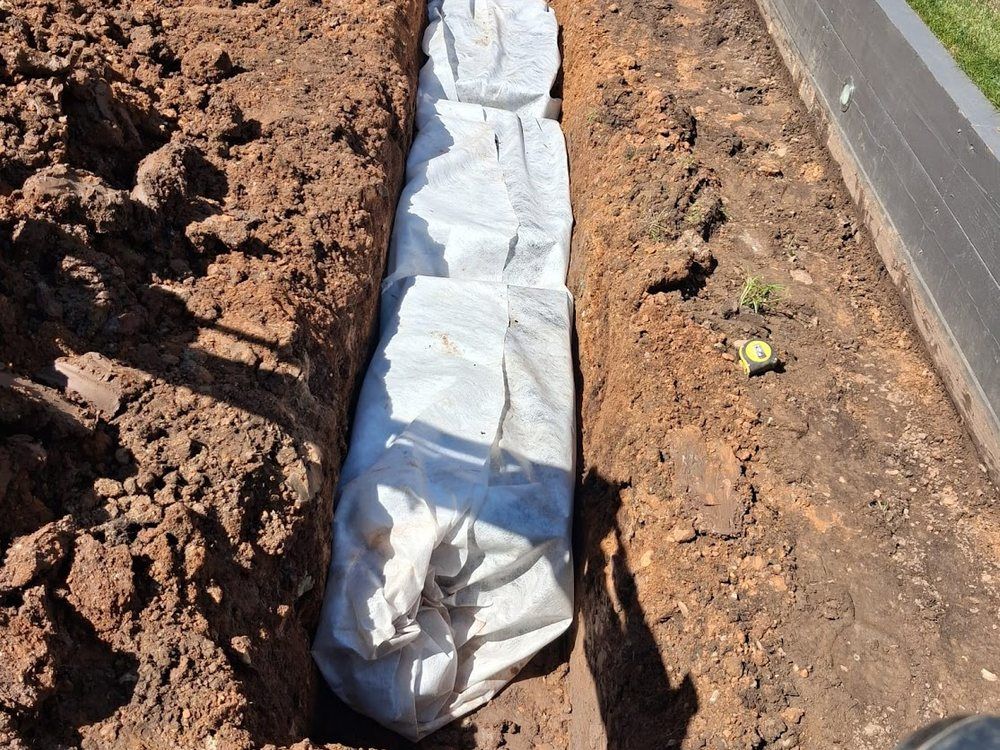
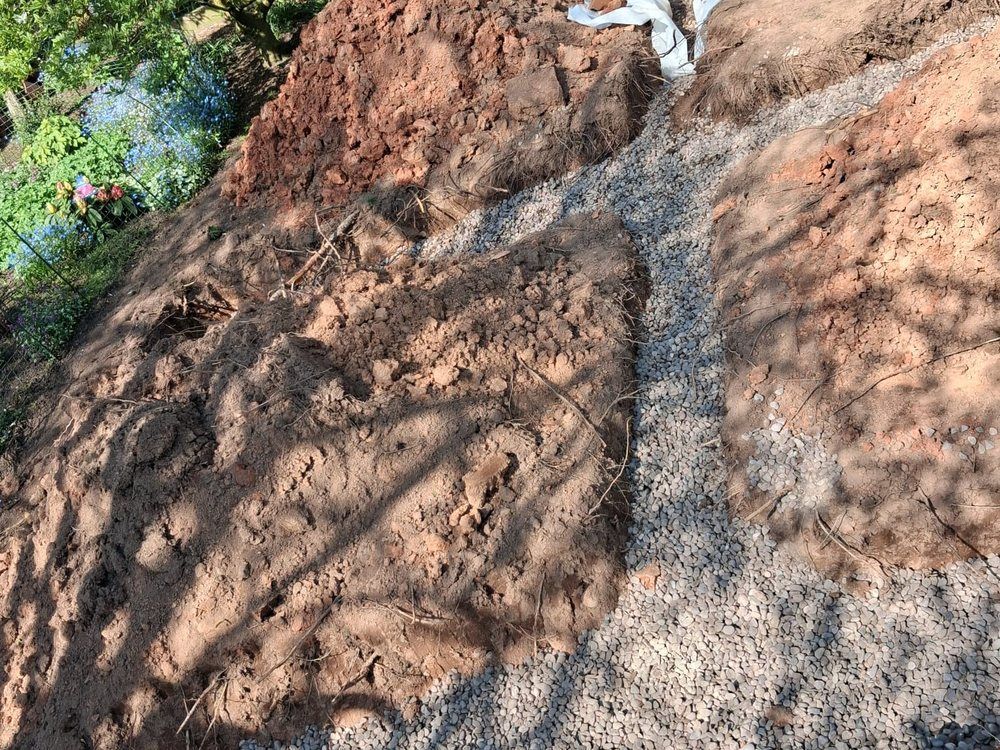
Membrane-lined trenches with washed stone and perforated pipe, collecting from across the wet area.
Branch runs into a central spine, for the larger lawns that sit wet across their width.
One intercepting run where water arrives from a field, a slope or a boundary.
Ditch and outfall work
Where a watercourse is the destination, the outfall built properly and with the right consent in place.
Soakaway replacement
Failed pits and silted crates excavated and rebuilt rather than topped up.
Levels and falls
Drives, paths and terraces reset so they shed away from the building.
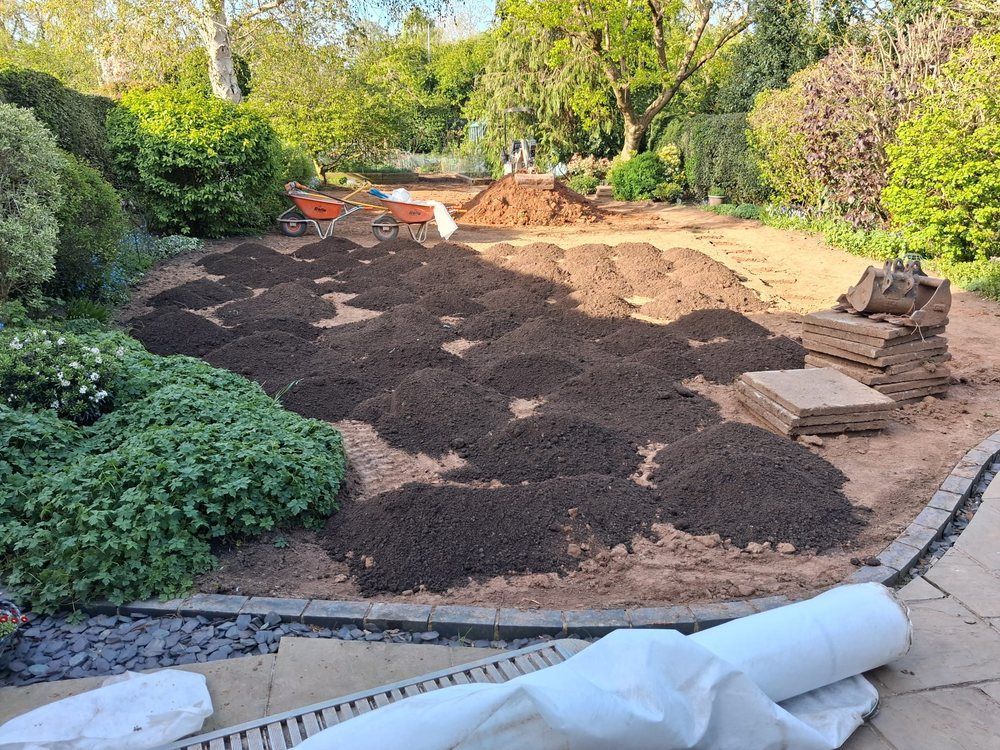
Soil, grass, borders and paving put back as part of the same contract.
What the work looks like
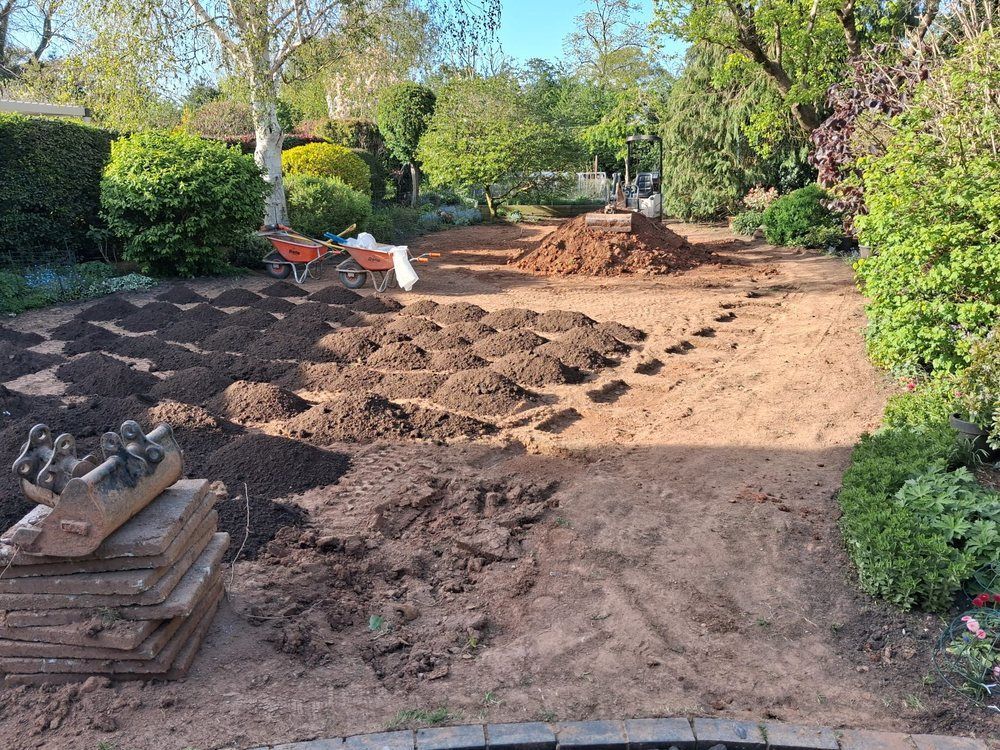
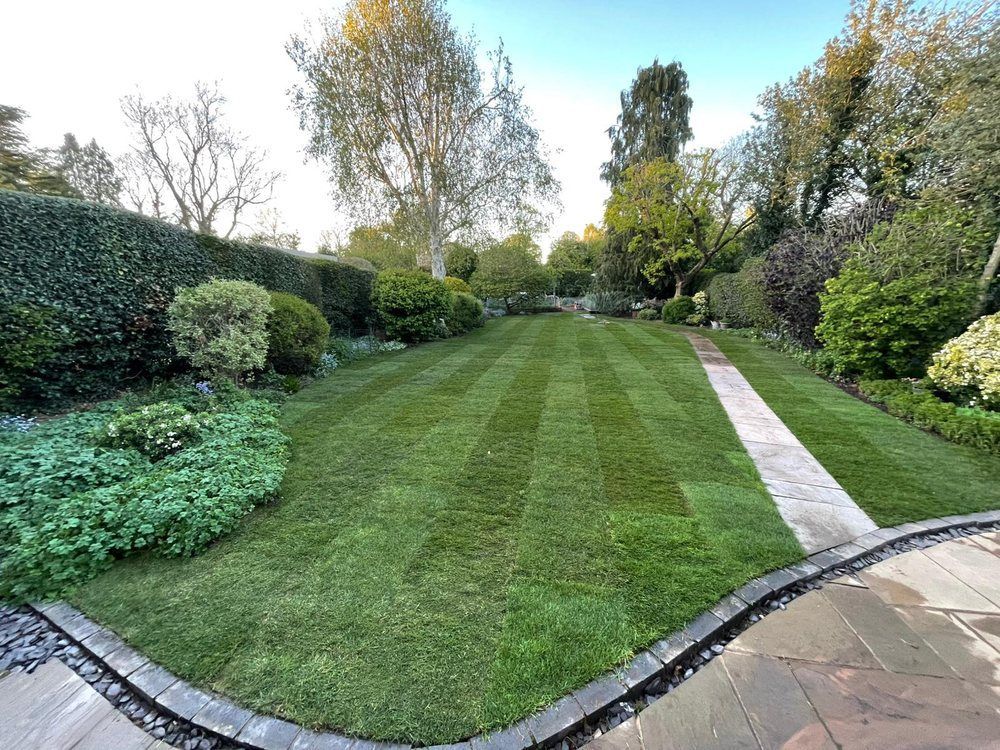
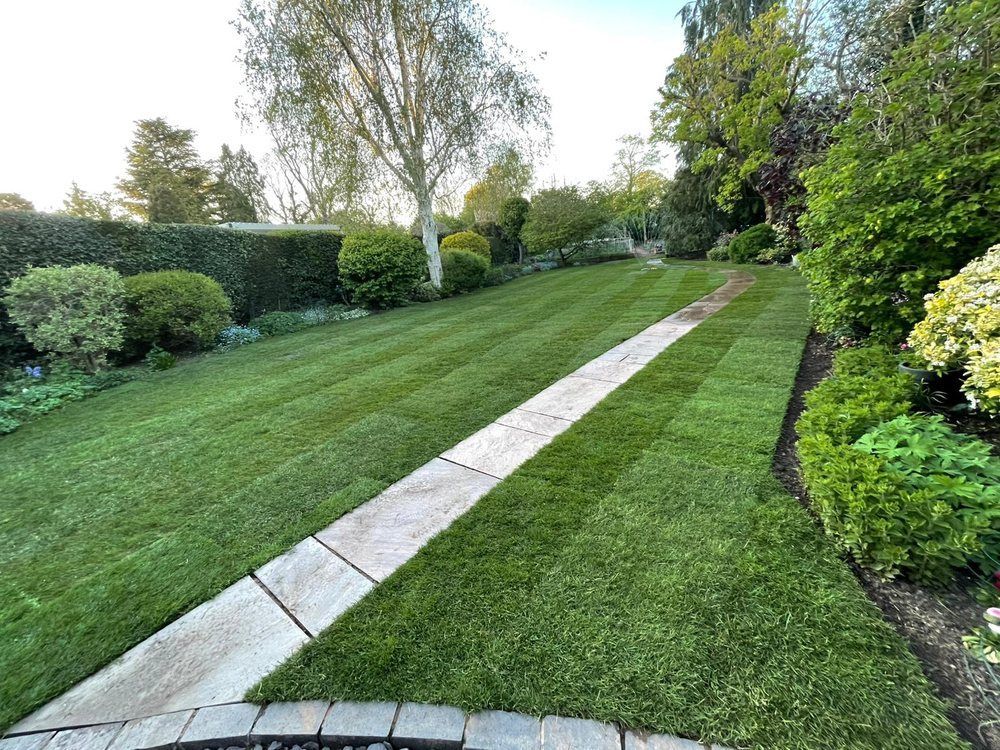
Photographs from a recent scheme at Kenilworth, a few miles down the road. Comparable garden, comparable ground, and the whole sequence from first trench to finished lawn.
Larger plots, heavier clay, fewer options
Balsall Common and the surrounding villages sit on the same stiff clay as the rest of the area, but with two differences that change the drainage picture. The plots are generally larger, so there is more area shedding water and more of it to deal with. And the public drainage infrastructure is thinner, because village streets were not built with the separate surface water networks that later urban development took for granted.
Several properties here also back onto agricultural land, which means water can arrive from outside the boundary entirely, particularly where a field has been worked or a field drain has fallen out of use. That is not a garden problem in origin, but it lands in the garden all the same.
The result is that the interesting question on a village job is usually not how to collect the water. It is where the water is allowed to go once collected.
What you do when there is no sewer to connect to
The Building Regulations set an order of preference for surface water — ground first, then a watercourse, then a sewer — on the assumption that all three exist. In a village they often do not.
Working through the options on a village plot
- Infiltration, if the ground will take it. A percolation test settles this. On stiff clay the answer is sometimes no, and a soakaway built anyway becomes a pond with a lid.
- A watercourse, with consent. A new outfall into a ditch or brook needs land drainage consent from the lead local flood authority under the Land Drainage Act 1991, and it cannot be obtained retrospectively.
- Reduce what arrives. Permeable surfacing, resetting falls and getting roof water somewhere sensible all cut the volume before anything has to dispose of it.
- Hold it back. Where an outlet exists but cannot take a downpour, attenuation stores water and releases it slowly, which is often the difference between a workable scheme and none.
- Improve the ground itself. On a large plot, deep cultivation and soil improvement across the wet area can genuinely change how much has to be piped away.
None of this is advice about a particular property and we are landscapers rather than drainage consultants. What we will do is establish at survey which of these are available to you, and price the scheme around the ones that are. Our drainage service page covers the methods in more depth.
Outlet first, then everything else
On a village job we work backwards. The survey establishes where water can legitimately be sent, because that decision governs everything upstream of it: how much collection is worthwhile, whether attenuation is needed, and whether reducing the volume arriving is a better use of the budget than piping it away.
Once that is settled the build is conventional. Trenches cut to a consistent fall, geotextile between soil and stone so clay cannot wash into the aggregate, washed stone around perforated pipe, and where a soakaway is used, wrapping on every face including the base. Where a watercourse outfall is involved the headwall is built properly rather than left as a pipe end in a bank, because an eroding ditch edge becomes somebody’s problem eventually.
What drives the price on a village plot
- The outlet, above everything. Infiltration on your own ground is the straightforward outcome. A consented outfall or an attenuation scheme is a larger piece of work.
- The area involved. Bigger gardens shed more water and need more collection, and the soakaway is sized from what feeds it.
- Water arriving from outside. Intercepting flow from adjoining land is extra length and usually deeper.
- Access, which is often good. Village plots frequently take a machine, and that works in your favour.
- Reinstatement. Lawn is quick; established borders and laid stone take longer.
Once the ground has been opened and tested, a single figure covers the crew, the machine, the excavation, materials, spoil removal and reinstatement.
Why village clients use us
Where there is no easy destination for the water, the design work matters more than the digging, and that is the part people get wrong.
We find the outlet before pricing the pipe
On a village plot that decision governs the entire scheme, and it cannot be made from the doorstep.
We will tell you a soakaway is the wrong answer
Stiff clay sometimes will not take water at any useful rate, and saying so costs us the straightforward sale.
Outfalls built to last
A proper headwall rather than a pipe poking out of a bank, because an eroding ditch edge eventually becomes an argument.
Established and insured
Working across Warwickshire and Solihull since 2015, with £1M public liability and 40+ years of combined experience.
Drainage in the surrounding villages
Frequently asked questions
Do you cover Balsall Common and the nearby villages?
Yes. We work across Balsall Common, Berkswell, Meriden, Hampton in Arden, Knowle and Lapworth, as well as into Solihull, Kenilworth and Coventry.
There is no surface water drain in our road. What are the options?
Infiltration into your own ground where the percolation test supports it, or a consented outfall into a watercourse if there is one available. Alongside those, reducing the volume that arrives in the first place through permeable surfacing and sorting out roof water, and attenuation where an outlet exists but cannot take a sudden downpour. Which of those apply is what the survey establishes.
Can I drain into the ditch at the edge of the property?
Possibly, but consent is needed first. A new outfall into an ordinary watercourse requires land drainage consent from the lead local flood authority under the Land Drainage Act 1991, and it is not granted after the event. If the ditch is on your boundary you may also have riparian responsibilities for keeping flow through it.
Water comes onto our garden from the field behind. Can anything be done?
Yes, by intercepting it before it spreads. A run along the boundary catching flow from the higher ground, taken to a legitimate outlet, deals with it far more effectively than trying to drain the whole garden. Where an old field drain has failed and is discharging in the wrong place, that is worth establishing first because it may be fixable at source.
Our garden is large. Is a soakaway big enough to cope?
Volume is rarely the limit; the rate the surrounding ground accepts water is. A soakaway is sized from the area draining into it and the measured percolation rate, and on heavy clay that calculation sometimes produces an excavation that is not practical. Then the water needs a different destination.
Is there anything that reduces how much drainage we need?
Often, yes, and it is usually cheaper than pipe. Getting roof water to a sensible destination, resetting falls so hard surfaces are not shedding into one soft corner, using permeable surfacing on drives and paths, and improving the soil across the wet area all reduce what has to be piped away.
What does garden drainage cost in Balsall Common?
Larger plots and fewer available outlets mean the range here is wider than in town. We survey, test the ground, establish where the water may go, and then give one figure covering excavation, materials, spoil removal and reinstatement.
Village garden that will not drain?
Tell us the plot, what it backs onto and where the water sits. The first thing we establish is where it is allowed to go.
