
Garden Drainage and Soakaways in Southam
Working out which kind of flooding you have, and who is responsible for it
Water in the wrong place is not one problem with one owner. Surface water, groundwater and sewer flooding look similar from a kitchen window and have completely different causes, different remedies and different bodies responsible for them. Establishing which one you are looking at is worth doing before anyone is paid to dig.
Drainage work we carry out in Southam
Slotted pipe bedded in clean stone behind a membrane, gathering water from wherever the ground holds it.
Soakaways
Volume calculated from a measured percolation rate, and sited where the distances actually allow one.
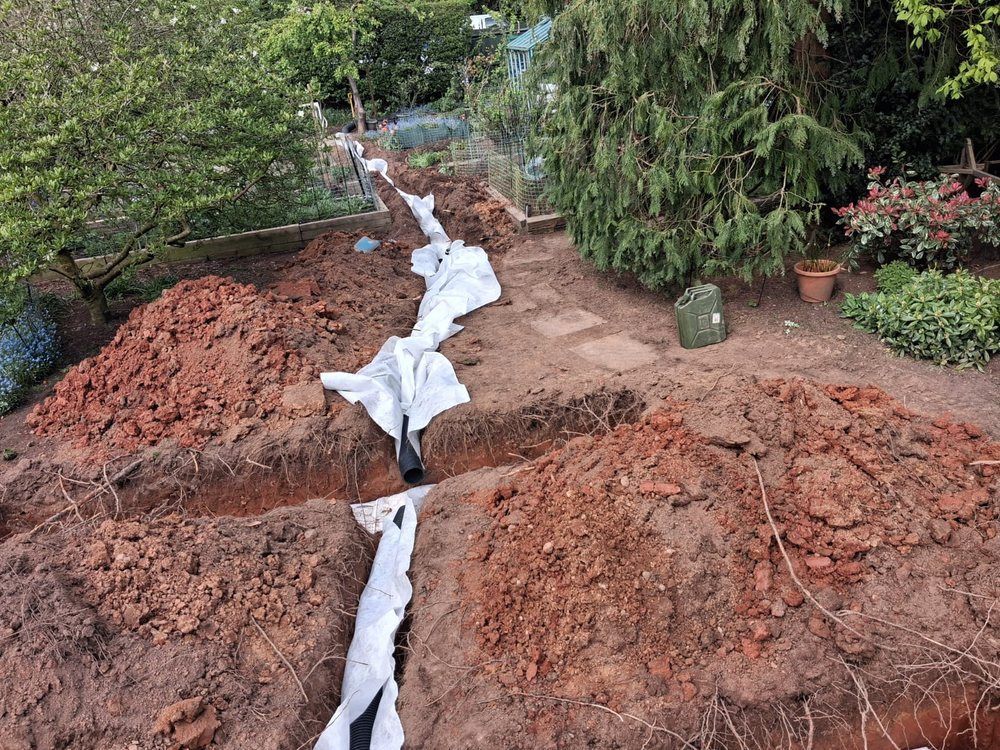
Branch runs feeding a central spine, for a lawn that sits wet across its whole width.
An intercepting line where water arrives from a single direction rather than everywhere.
Soakaway replacement
Old rubble pits and silted crates excavated and rebuilt to work properly.
Drainage investigation
Establishing what exists in the ground and which body is responsible for it.
Levels and falls
Paths and terraces reset so they carry water away from the building.
Soil, grass, borders and paving restored as part of the contract.
How a drainage scheme is built
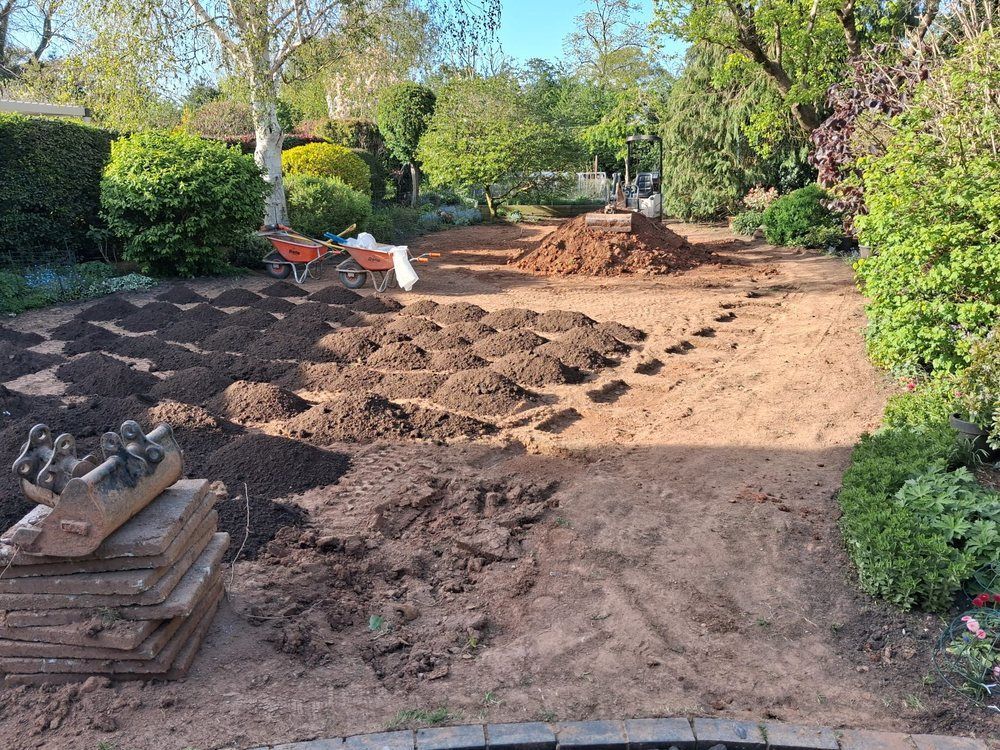
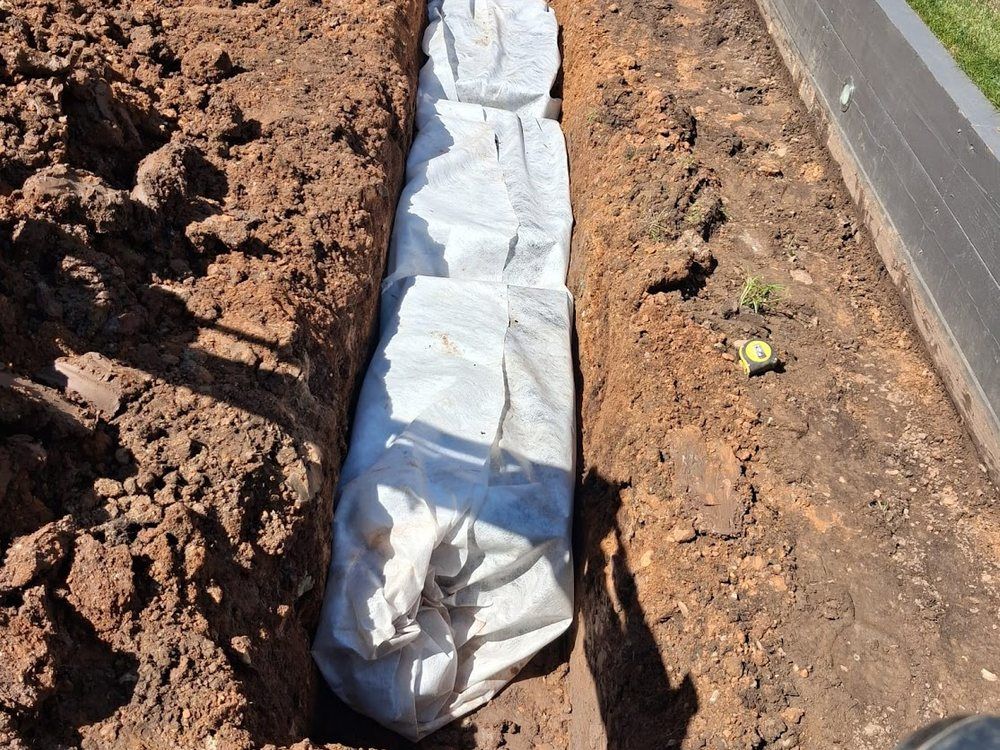
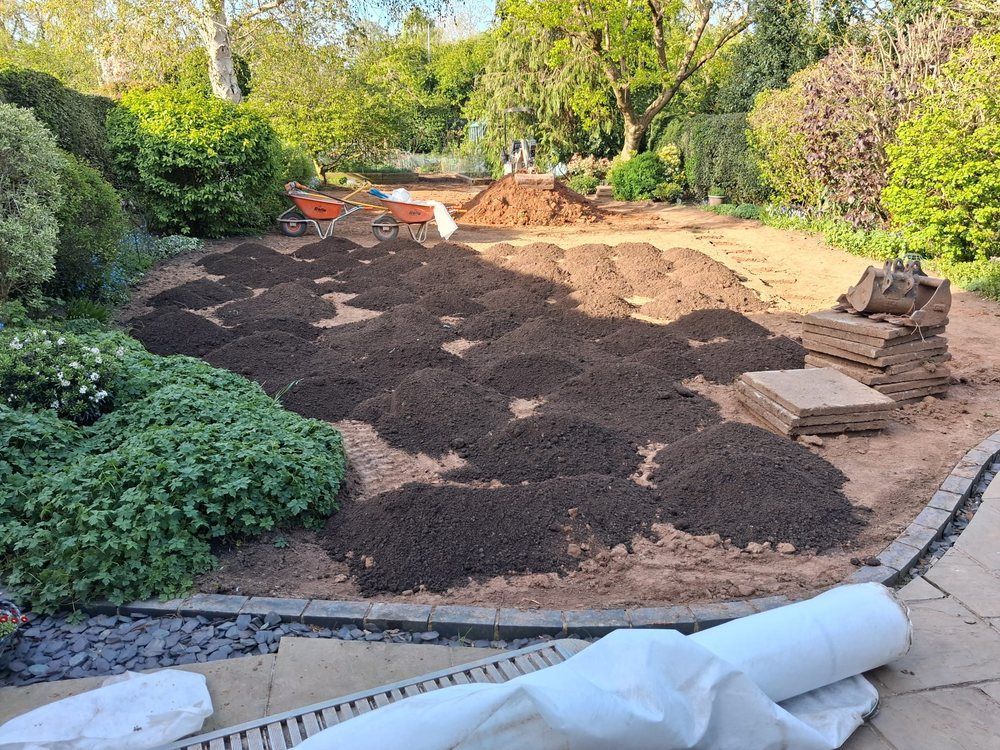
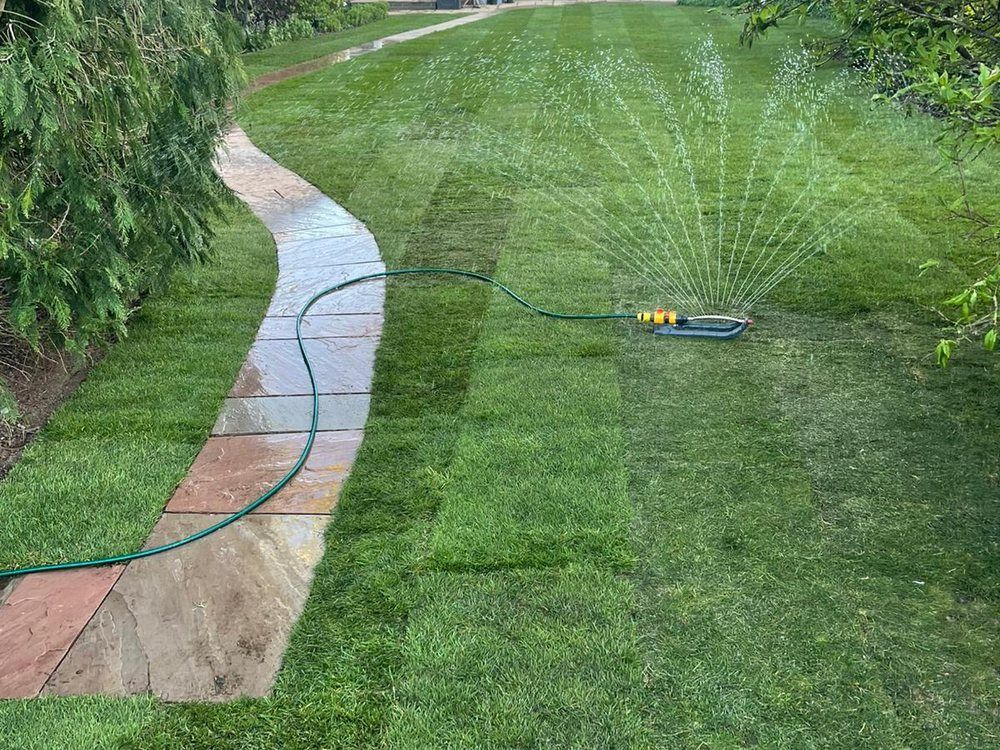
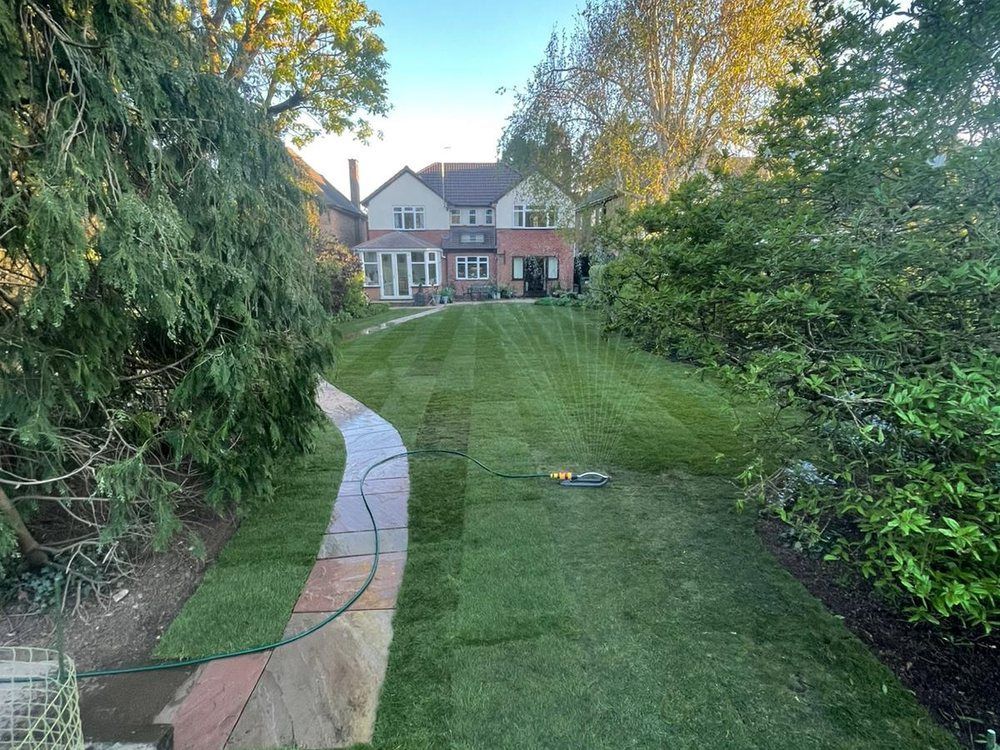
Photographs from a recent job at Kenilworth, showing the whole sequence from open ground through to a finished lawn. The clay is the same as Southam sits on.
Three kinds of water, three different answers
Surface water
Rain landing on ground, roofs and hard surfaces faster than it can get away. It appears during and after rainfall and recedes as the ground slowly lets it go. This is what most wet gardens are, and it is what a drainage scheme is designed for.
Groundwater
Water already in the ground, emerging at your property from elsewhere. The tell is that it is present in dry weather, when rainfall cannot account for it. It needs interception at depth rather than infiltration, and a soakaway will not touch it.
Sewer flooding
Water coming back out of the drainage system rather than failing to get into it. Gullies surcharging, covers lifting, or foul water appearing where it should not. This is the water company’s territory rather than a landscaper’s, and it should be reported rather than landscaped around.
The reason this matters is that the three are not equally your problem. Working out which one you have can be the difference between a scheme you pay for and a report somebody else acts on.
Who is responsible for what
The general position in England
- Surface water flooding sits with the lead local flood authority, which for Southam is Warwickshire County Council. They hold the strategic role for surface water, groundwater and ordinary watercourses.
- Sewer flooding is the water company’s. Here that means Severn Trent, and a surcharging public sewer should be reported to them rather than worked around.
- Highway drainage is the highway authority’s. A blocked road gully sending water into a driveway is reportable rather than something to pay a contractor about.
- What falls on your own land is generally yours to deal with, within your own boundary, and that is where a garden drainage scheme operates.
- A watercourse on your boundary brings riparian duties, including keeping the channel clear so water can pass.
This is the general position and not advice about a specific property; we install drainage rather than allocate responsibility. What we will do at survey is say honestly when something looks like a matter to report rather than a job to quote for.
Establishing what you have
The survey answers three questions in order. What does the ground do — a trial hole filled and timed establishes whether infiltration is available at all. Where does the existing drainage go — covers lifted and traced, because on older Southam properties nobody has a plan and the assumption is often wrong. And when is the garden wet — because a garden that is wet in June is telling you something a garden that is wet in January is not.
From there the construction is conventional: trenches cut to a consistent fall, geotextile between soil and stone so clay cannot migrate into the aggregate, washed stone around perforated pipe, and a destination that can genuinely take what is delivered. A soakaway wrapped on every face where the test supports one. More on the methods is on our garden drainage page, and the clay soil guide explains the ground itself.
What the figure depends on
- Which problem it turns out to be. Surface water is the ordinary job; groundwater is deeper and more expensive; sewer flooding should not be your bill at all.
- Where the water can go. An available outlet is the cheap outcome; a tested soakaway or a consented outfall is not.
- Length of collection. One intercepting line against a boundary, or a branched system across a lawn.
- Access. Whether a machine can reach the working area changes the labour more than anything else.
- Reinstatement. Lawn is quick; established borders and laid stone are not.
A single figure once the ground has been opened, covering the team, the machinery, the digging, every component, the muck away and the garden restored.
Why Southam clients use us
A fair proportion of drainage money gets spent on the wrong problem, by people who were never told there were three of them.
Diagnosis before design
Three questions at survey, and they decide whether you need us at all.
We will point you elsewhere
If a surcharging sewer or a blocked highway gully is causing it, that is a report to make rather than an invoice to pay.
Built so it keeps working
Membrane, washed aggregate and a true fall on every run, because the failure mode is silent.
Here since 2015
Southam, Long Itchington and the surrounding villages, with £1M public liability on every job.
Drainage in the nearby towns and villages
Frequently asked questions
Do you cover Southam and the surrounding villages?
Yes. We work across Southam, Long Itchington, Ufton, Harbury, Bishops Itchington and the villages around, as well as Leamington Spa, Warwick and Rugby.
How do I tell the difference between the types of flooding?
Surface water appears with rain and recedes afterwards. Groundwater is present even in a settled dry spell, because it is arriving from elsewhere in the ground rather than falling from the sky. Sewer flooding involves water coming back out of the drainage system: gullies surcharging, covers lifting, or foul water where it should not be. The third one in particular should be reported rather than landscaped around.
Who do I report a flooding problem to?
It depends which sort it is. Surface water, groundwater and ordinary watercourses sit with the lead local flood authority, which here is Warwickshire County Council. A surcharging public sewer goes to Severn Trent. A blocked road gully goes to the highway authority. What falls on your own land and stays there is generally yours to deal with.
Our drains are old and nobody knows where they go. Can you find out?
Usually, yes. Lifting covers and tracing what runs where is part of the survey, and on older properties it regularly turns up drainage that exists, was forgotten and has stopped working simply because it is blocked. That is a considerably cheaper outcome than a new system.
Is a soakaway possible on Southam clay?
Sometimes. The percolation test is what decides, and it is an hour’s work. Where the ground accepts water at a useful rate a soakaway is the simplest and the regulations’ preferred answer. Where it does not, we will say so rather than install one and hope.
Can you fix it without digging up the whole garden?
Frequently. A single intercepting run along the wet boundary, or sorting out where roof water goes, can deal with a surprising amount without a full system. We would rather propose the smaller scheme where it will work than sell the larger one.
What does garden drainage cost in Southam?
It depends entirely on which of the three problems you have and where the water may be sent. We survey, test, trace and then give one figure covering the excavation, all materials, spoil removal and reinstatement.
Not sure what kind of flooding you have?
Most people are not, and it changes who should be fixing it. Tell us what happens and when, and we will come and establish which it is.
