
Garden Drainage and Soakaways in Ryton-on-Dunsmore
Telling rainfall apart from groundwater, because the fix is completely different
There is one question worth answering before anything else on a wet garden here: is the ground wet in dry weather? If it is, rainfall does not explain it, and a soakaway will make no difference whatsoever. Plenty of money gets spent in this area on the wrong diagnosis, and the test that avoids it costs nothing but a bit of patience.
Drainage work we carry out in Ryton-on-Dunsmore
Groundwater interception
Cut-off drains at depth, for ground that is wet from below rather than above.
Shallow collection runs for rainfall that will not sink in, built to a gradient and taken off site.
Soakaways
Where the ground will genuinely take water, sized from a percolation test and set to the setbacks.
An intercepting run catching water arriving from a slope, a field or a lane.
Branch runs into a spine, where a whole lawn holds rainfall across its area.
Springs and seepage
Collecting and routing water that emerges from the ground rather than landing on it.
Levels and falls
Hard surfaces reset so they shed water away from the building rather than into it.
Soil, grass and borders put back as part of the same job.
What the work involves
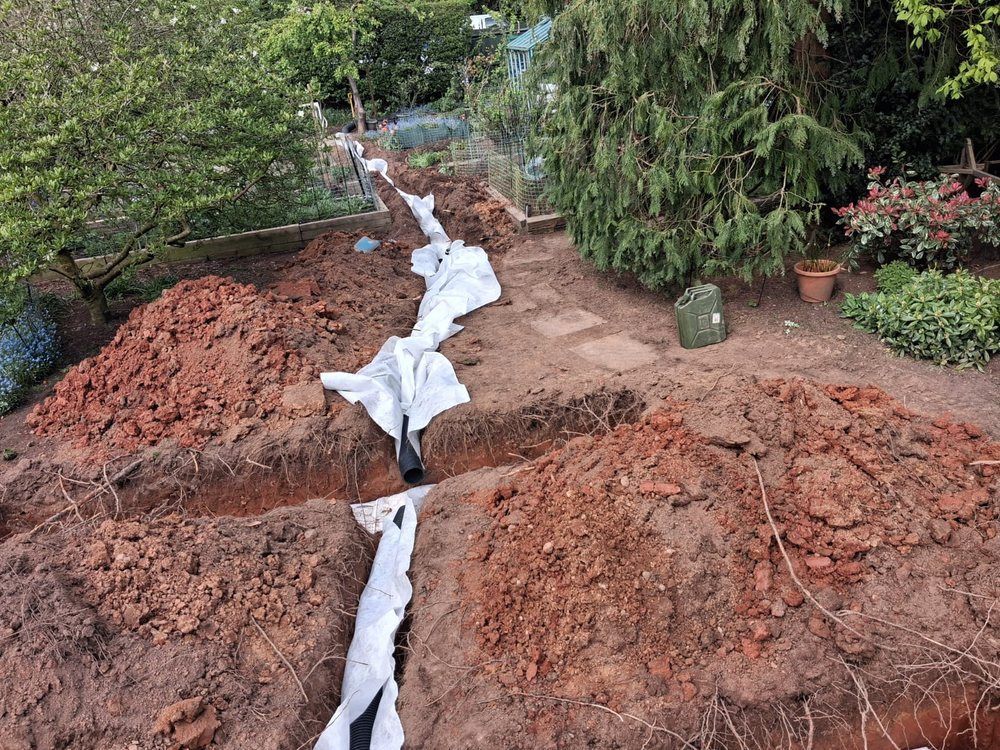
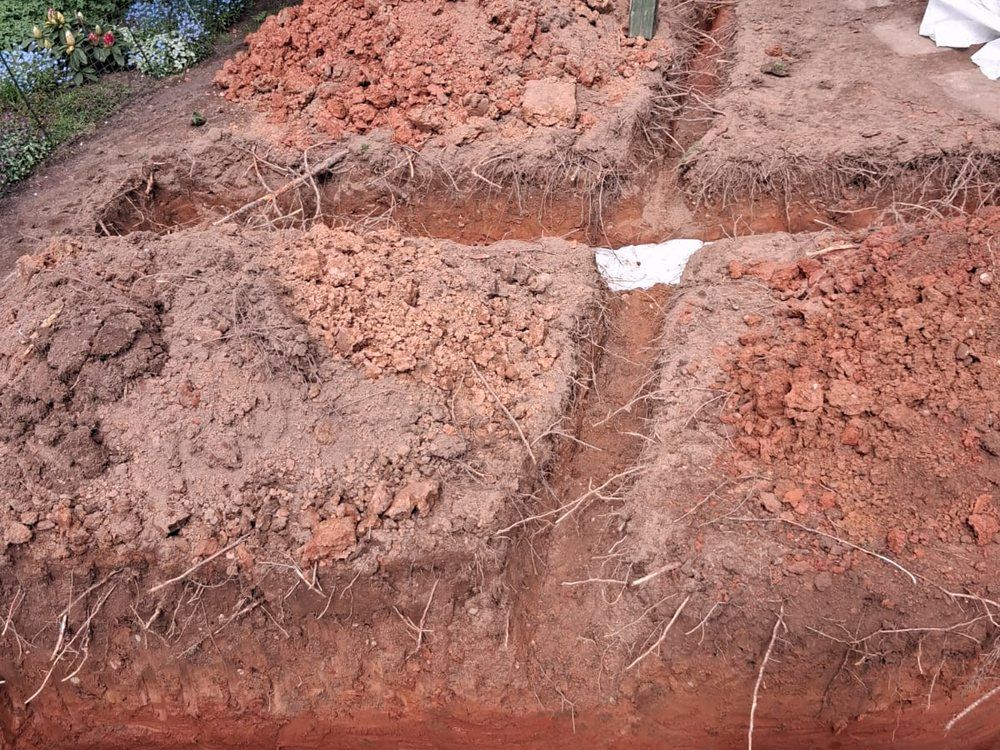
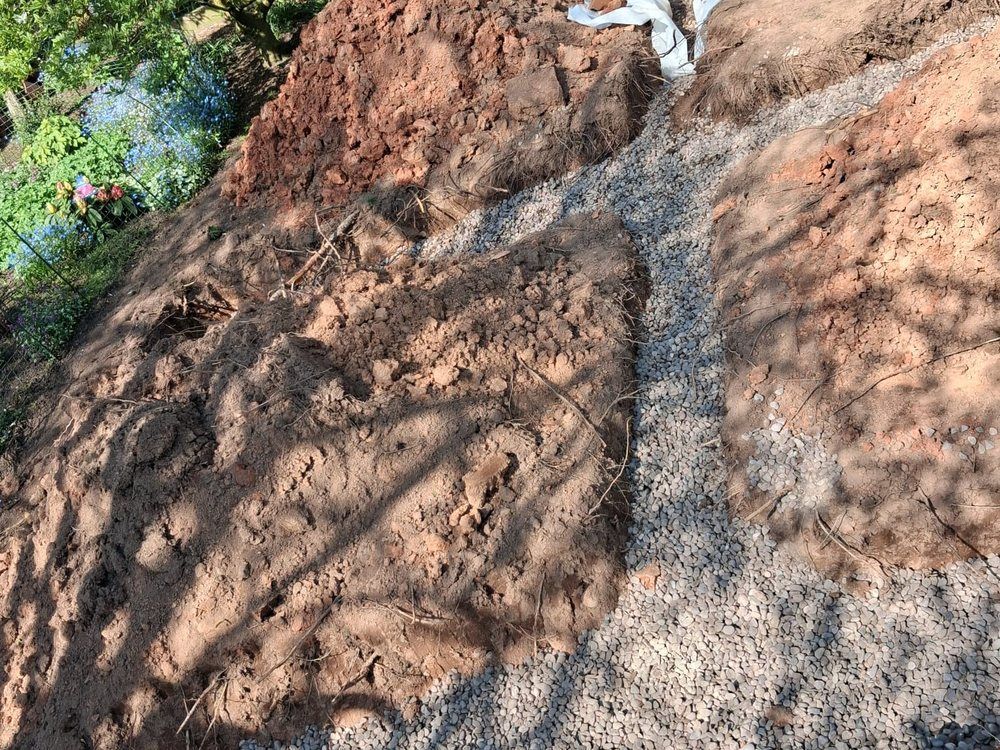
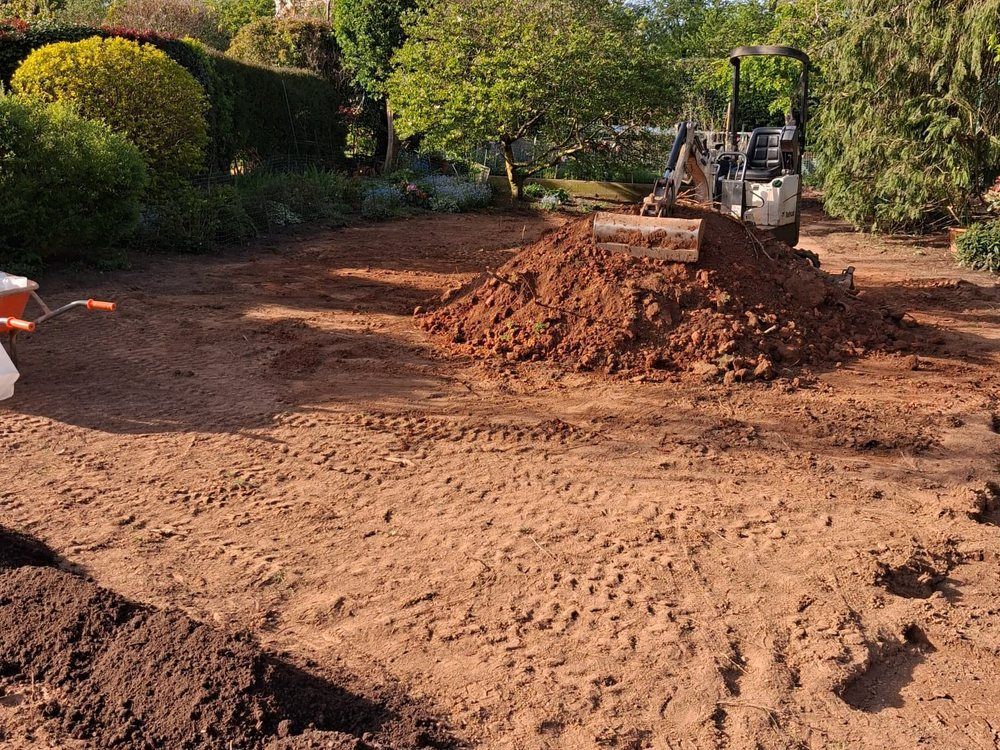
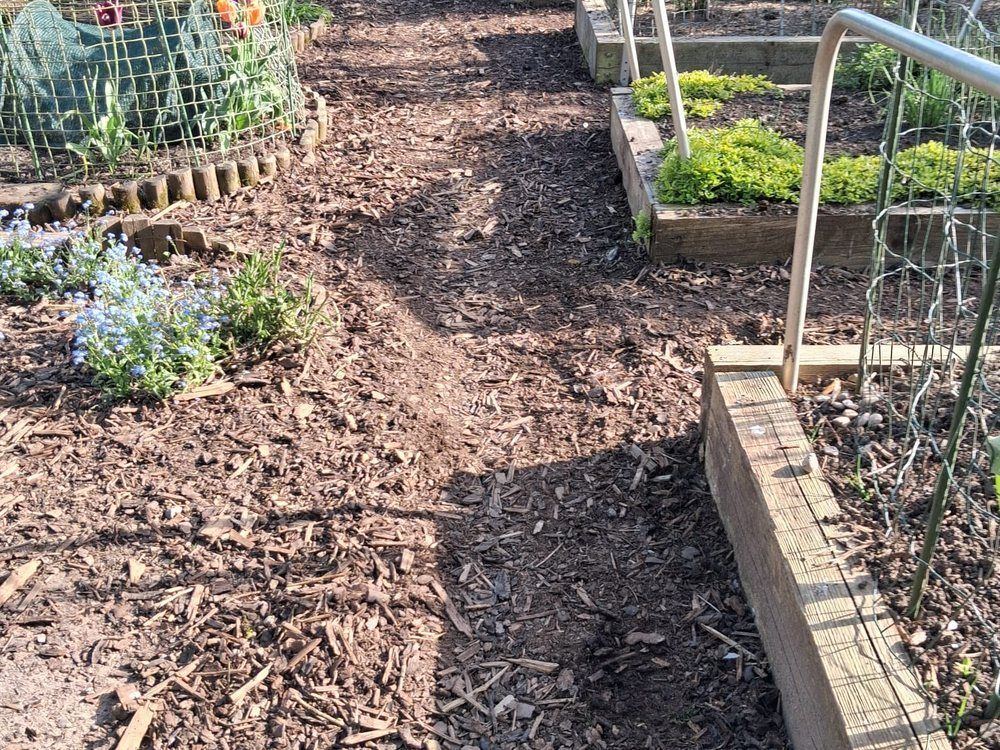
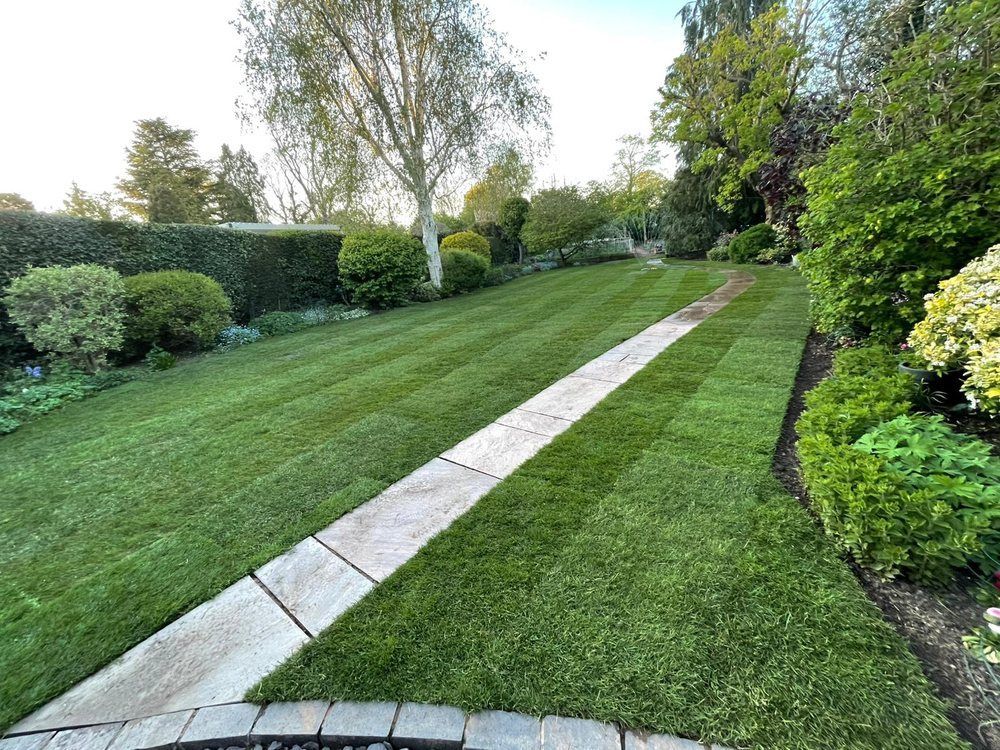
Photographs from a recent scheme at Kenilworth. The trench detail, the membrane and the aggregate are the same whether the water arrives from the sky or from below.
Water from above, water from below
These look identical in a wet garden in February and they need entirely different treatment, so it is worth learning to tell them apart.
Surface water
Rainfall that lands on the garden and cannot get away, because the soil will not accept it at a useful rate. It appears after rain, recedes slowly, and disappears in a settled dry spell. This is the ordinary problem, and collection plus a soakaway or another outlet solves it.
Groundwater
Water already in the ground, arriving from elsewhere and emerging at your property. The giveaway is that it is still there in a dry week in June. A spring, a perched water table sitting on a layer of impermeable material, or seepage from higher ground are all versions of this. A soakaway dug into ground that is already saturated does nothing at all: it fills from below and stays full.
Why it matters here
On sloping ground above and around the Dunsmore villages, a perched layer of water sitting on clay and emerging partway down a slope is not unusual. It can appear in one garden and not in the one next door, which is why a neighbour’s experience is a poor guide to your own.
What you build for groundwater
Groundwater is intercepted rather than infiltrated. The system is a cut-off: a drain taken down to below the level the water is travelling at, running across the line of flow, catching it before it reaches the area you want to keep dry and taking it somewhere it can be discharged.
That usually means going deeper than a surface water run would, which changes the excavation and sometimes the access requirements. It also means the destination matters more, because a cut-off drain runs for much of the year rather than only after rain, and a soakaway is rarely the right end point for a continuous flow.
Where both problems exist, and they often do, the two systems are designed together but kept separate in function. Surface collection at shallow depth, interception at depth, and each taken to a destination that suits it. The drainage service page covers the construction detail, and the clay soil guide explains the ground.
Where continuous flow is allowed to go
The general position
- Infiltration is the preferred route, where it works. Part H expects surface water to soak into the ground before a watercourse or a sewer is used. Groundwater is the case where infiltration frequently cannot work, and that is a legitimate reason to move down the list.
- A watercourse outfall needs consent from the lead local flood authority under the Land Drainage Act 1991, applied for before the work rather than after.
- Nothing goes into a foul sewer. A cut-off drain running for months of the year would be a particularly unwelcome contribution to one.
- Not onto a neighbour either. A continuous discharge across a boundary is more likely to cause difficulty than an occasional one, not less.
This is the general position rather than advice about your property; we install drainage rather than adjudicate on it. Where a scheme needs a consent, we identify it at survey and it forms part of the programme.
What a groundwater scheme costs more for
- Depth. A cut-off drain goes below the level the water is moving at, which is deeper than surface collection and produces more spoil.
- The destination. A continuous flow needs an outlet that can take it indefinitely, which a soakaway usually cannot.
- Length across the flow. The run has to cross the whole line of water arriving, not just the wet patch you can see.
- Access for a machine. Depth makes hand digging considerably less practical.
- Reinstatement. Deeper trenches mean more settlement to allow for and more making good.
Following the survey a single figure takes in labour, plant hire, the digging, every material, removal of the spoil and making the ground good.
Why clients here use us
The most expensive drainage mistake in this area is treating groundwater as if it were rainfall, and it is entirely avoidable.
We ask whether it is wet in June
One question, and it changes the entire design. Nobody should be quoting without knowing the answer.
We will decline the wrong job
If a soakaway cannot work on your ground, we will say so rather than build one and take the money.
Cut-off drains built at the right depth
Shallow is cheaper and useless. A drain above the flow catches nothing.
Ground we already know
Digging across this county since 2015, with £1M public liability and 40 years and more of combined experience.
Drainage in the surrounding villages
Frequently asked questions
Do you cover Ryton-on-Dunsmore and the nearby villages?
Yes. We work across Ryton, Bubbenhall, Stretton-on-Dunsmore, Wolston and Brandon, as well as Coventry, Rugby and Kenilworth.
How do I know whether I have groundwater or surface water?
Look at the garden in a settled dry spell. If the ground is still wet after a week without rain, rainfall is not the explanation and you are dealing with water arriving from elsewhere in the ground. If it dries out and only returns after rain, it is surface water. That single observation changes the whole design, and it costs nothing to make.
Will a soakaway help with a spring?
No. A soakaway disposes of water by letting it soak into the surrounding ground, and ground that is already producing water is by definition not going to accept more. Installing one in that situation produces a hole that fills up and stays full. What is needed instead is interception at depth and a destination that can take a continuous flow.
What is a perched water table?
A layer of water sitting on top of an impermeable band of ground rather than at the true water table depth. On sloping ground it can travel sideways and emerge partway down a slope, which is why one garden can be permanently wet and the one next door entirely normal. It is a local condition rather than a regional one.
How deep does a cut-off drain need to be?
Below the level the water is moving at, which is what the trial hole establishes. A cut-off laid too shallow catches nothing and is a complete waste of the excavation. It also needs to run across the line of flow rather than along it, which is why the survey looks at the slope as well as the wet area.
Where does the water from a cut-off drain go?
Somewhere that can take a flow for much of the year, which usually means a watercourse with the appropriate consent, or occasionally a surface water system where one is available. A soakaway is rarely suitable because the flow is continuous rather than occasional.
What does this sort of scheme cost?
More than a straightforward surface water job, because it is deeper and the destination is more demanding. We survey, dig a trial hole, establish what you actually have, and then give one figure covering the excavation, materials, spoil removal and reinstatement.
Garden wet even in dry weather?
That one observation changes everything about the answer. Tell us what the ground does in summer and we will come and look.
Drainage work we carry out in Warwick
Perforated pipe bedded in clean stone and wrapped in membrane, laid to a fall that keeps working when the trench settles.
The layout for a whole lawn that sits wet, rather than one boggy corner. Side runs collect, a spine carries it away.
One intercepting line where water arrives from a single direction, such as a rising garden or a neighbouring drive.
Soakaways
Sized from a percolation test and sited to the required distances, or ruled out honestly where the ground will not take it.
Soakaway replacement
Silted crates and old rubble pits excavated and rebuilt. Adding a second one beside a blocked one solves nothing.
Pumped and routed systems
Where gravity and infiltration both run out of options, water is collected and moved to somewhere that can legally take it.
Levels and falls
Patios and paths that shed towards the house instead of away from it, reset so the fall does the work.
Getting the water out is step one. Leaving ground that plants will grow in is a separate piece of work.
What the work actually looks like
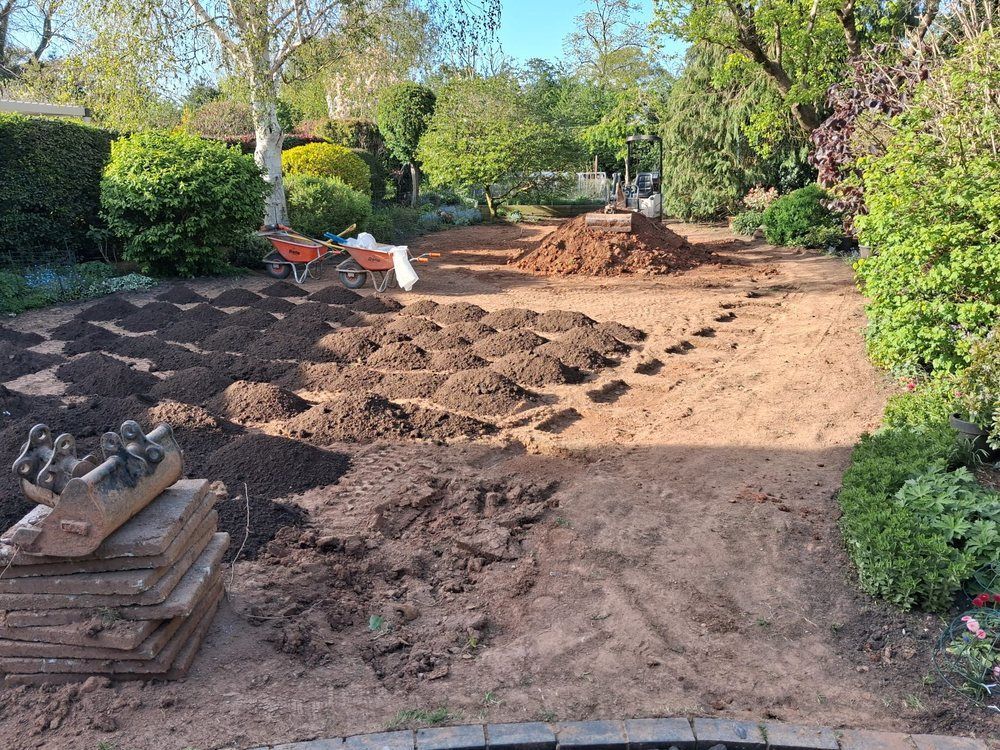
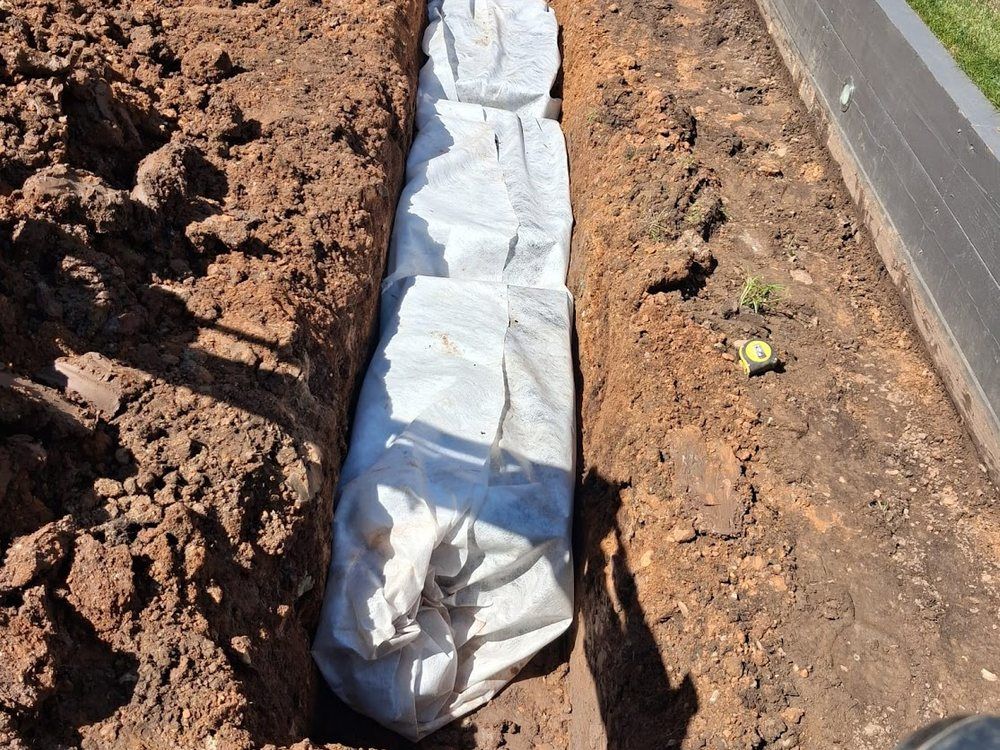
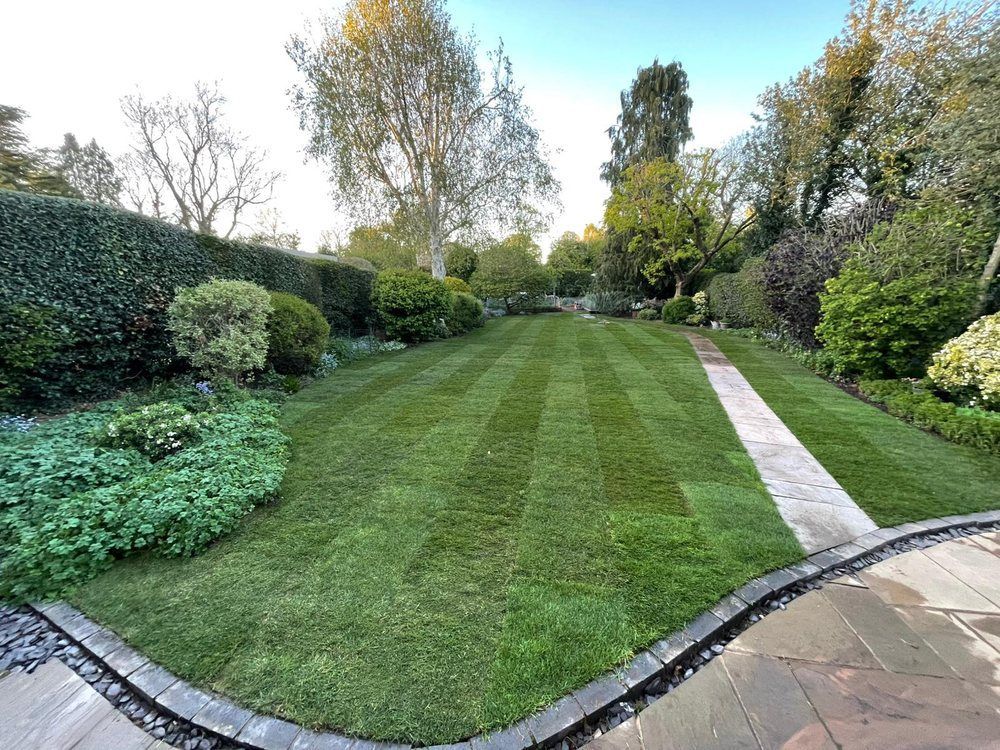
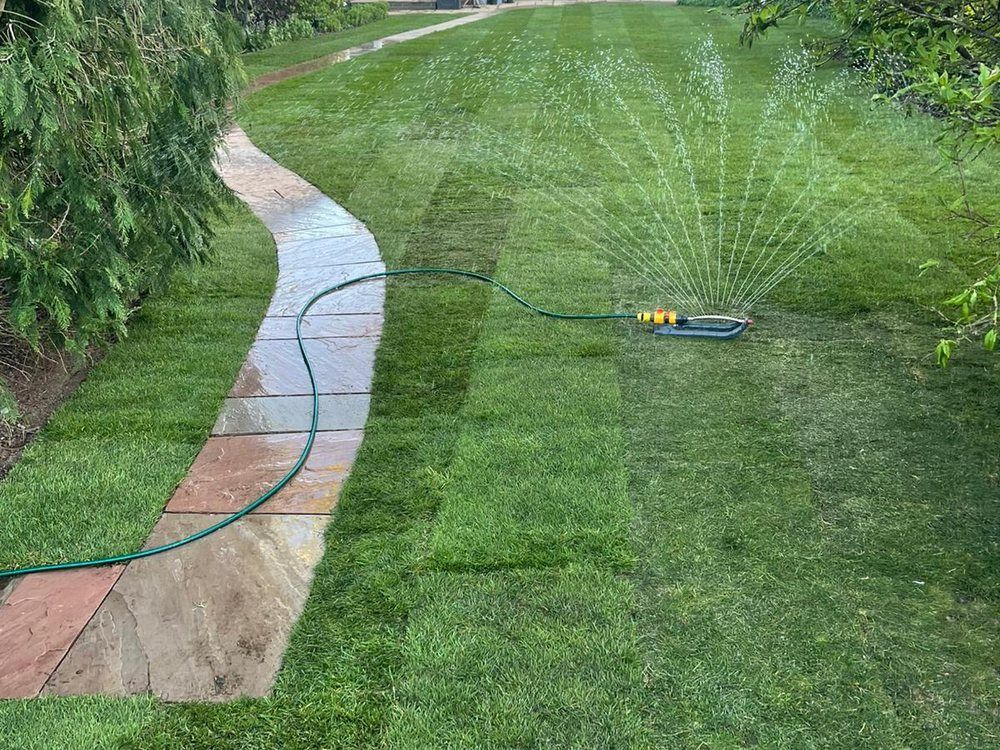
Photographs from a recent drainage scheme at Kenilworth, a few miles up the road. Same ground, same methods, from the first trench to the finished lawn.
Why Warwick gardens behave differently either side of the river
In the higher parts of town and out on the newer estates at Woodloes Park, Chase Meadow and Warwick Gates, the story is the one you would expect: stiff red clay, usually compacted hard by construction traffic, with a thin skim of topsoil over it. Water arrives faster than the ground will accept it, sits on the surface, and the lawn turns to porridge by December. A land drainage system and somewhere sensible for the water to go fixes that.
Nearer the Avon, in the low-lying streets around Emscote, Myton and St Nicholas Park, the problem is different in kind rather than degree. The winter water table can sit within a metre or so of the surface. A soakaway dug into ground that is already saturated does not drain — it fills from below and behaves like a pond. Householders there have often already paid for one, watched it fail, and concluded that nothing works.
Something does work, but it is not a soakaway. It is collecting the water and taking it somewhere that can legally receive it, which is where the rules start to matter.
How we decide what to build
Before anything is priced we dig a trial hole, fill it, and time how long it takes to empty. That single test decides almost everything that follows. Ground that drains at a usable rate can take a soakaway sized against the area feeding it. Ground that holds water overnight cannot, and pretending otherwise produces an expensive hole.
Collecting the water
Trenches are cut to a consistent gradient, lined with geotextile so that clay particles cannot migrate into the stone, backfilled around perforated pipe with washed stone, then capped. Gradient beats depth every time — a shallow run falling truly will shift more water than a deep one sitting flat. Where a whole lawn is affected, side runs feed a central spine in a herringbone rather than chasing individual wet patches.
Getting rid of it
Where infiltration works, a crate soakaway holds far more water per cubic metre than rubble and can be sized properly. Where it does not, the water has to be routed — to an existing surface water drain, to a watercourse, or in the more awkward cases collected in a sump and pumped. Each of those has a permission attached to it, and none of them should be decided on site with a mattock.
The ditch at the bottom of the garden is not a free outlet
This catches people out in and around Warwick more than anywhere else we work, because there are so many brooks, ditches and field drains running through and behind properties.
The general position in England
- A new outfall into a ditch or brook needs consent. Under Section 23 of the Land Drainage Act 1991, works that affect flow within an ordinary watercourse — and an outfall pipe or headwall counts — require land drainage consent from the lead local flood authority, which in this area is Warwickshire County Council. There is a small statutory application fee.
- It cannot be granted after the event. Consent is not issued retrospectively. If the pipe is already in, the authority can require the watercourse to be put back as it was, at the owner’s cost.
- The Building Regulations set an order of preference. Part H expects rainwater to soak away into the ground first, then go to a watercourse, then to a sewer, working down the list only as each option proves impracticable. A high water table is a legitimate reason a soakaway is impracticable.
- Land drainage must never enter a foul sewer. Connecting to a public surface water sewer runs through an application to the water company under Section 106 of the Water Industry Act 1991, and for Warwick properties that is Severn Trent.
None of the above is advice on your particular garden, and we are landscapers rather than drainage consultants or solicitors. What we will do is identify at survey stage where a consent or a connection application is likely to be needed, so it is priced and applied for at the start. Our garden drainage service page sets out the methods, and the clay soil guide explains what the ground is doing.
What moves the number
We price after the survey, not over the phone, because on this ground an honest figure depends on things you cannot see from a photograph. The variables are always the same ones:
- Where the water can go. An existing surface water drain in a useful position is the cheapest outcome by a distance. A consented outfall or a pumped system is the most expensive.
- How much pipe. A single catch line along a fence and a full branched layout across a third of an acre are different orders of work.
- Access. Warwick’s town-centre terraces frequently have no rear access at all, so every barrow of clay and every tonne of stone goes through the house on boards. That is slower, and the price reflects it.
- Spoil. Clay cannot be spread on the garden. It is heavy, it is bulky, and every load of it leaves on a lorry.
- Putting it back. Turf is quick. Mature borders, paths and edging take longer to reinstate properly.
Whatever the scheme, the figure given after the survey covers the crew, the machine, the excavation, all materials, spoil removal and reinstatement.
Why a landscaper rather than a groundworker
Once the trench is closed you will never see whether the work was done properly. That asymmetry is the whole reason to care who does it.
We test before we price
A trial hole and a timed percolation test take an hour and decide the whole scheme. Quoting without one is guessing with your money.
We will tell you a soakaway will not work
Near the river it often will not. Saying so costs us the easy sale and saves you paying twice.
Membrane, aggregate, fall
The three things that decide whether the system still works in ten years, and the three most commonly skimped.
Finished, not just drained
Turf, borders, paving and edging all go back as part of the same contract. You are not left with a drained building site to sort out.
Drainage in nearby towns and villages
Frequently asked questions
Do you cover Warwick and the surrounding CV34 villages?
Yes. We work across Warwick town, Woodloes Park, Chase Meadow, Warwick Gates and the villages around, and on into Leamington Spa, Kenilworth, Southam and Coventry. Wet ground is the single most common reason people here ring us.
We had a soakaway put in and it made no difference. Why?
Two usual reasons. Either the ground will not accept water at a useful rate, in which case a soakaway was never going to work and the water needs routing somewhere else; or it was built without a geotextile wrap and has silted up with fine clay. Nearer the Avon there is a third: a winter water table high enough that the soakaway fills from below. A trial hole tells us which of the three you have.
Can I run the water into the brook at the bottom of the garden?
Possibly, but not without asking first. A new outfall into an ordinary watercourse needs land drainage consent from Warwickshire County Council as lead local flood authority, under Section 23 of the Land Drainage Act 1991. The important part is that consent is not granted retrospectively, so this is a permission to obtain before the pipe goes in rather than after.
Our terrace has no rear access. Is drainage still possible?
Yes, and it is a large share of the work we do in the town centre. Internal routes get boarded and sheeted, plant is sized to fit through a doorway, spoil goes out by barrow and deliveries are staged so nothing sits on the street. It changes the programme and the price rather than the outcome.
Does it matter that the house is listed or in the conservation area?
For drainage confined to the garden, usually not. Where work would affect the building itself, a boundary wall or another structure within its curtilage, listed building consent can come into it, and in central Warwick there are also areas where ground disturbance is of archaeological interest. We flag anything that looks like it needs a conversation with the local planning authority before we start rather than after.
How long does a garden drainage job take?
Anywhere from the better part of a week to a fortnight. Access decides it: where a machine can reach the working area the digging is done quickly, and where everything moves by barrow the same length of pipe takes two or three times as long.
What does garden drainage cost in Warwick?
No figure goes out before someone has stood in the garden, because here the answer turns on three unknowns: what the trial hole does, which outlet is permitted, and how the materials get in and out. Once those are settled the quotation is fixed, and it already includes the labour, the plant, the excavation, the materials, the muck away and the reinstatement.
Water sitting on a Warwick garden?
Describe where it pools and how long it lingers. The trial hole comes before the quotation, not after it.
