
Artificial Grass in Coventry and Warwickshire
Supplied and fitted on a base built to drain and stay flat
An artificial lawn gives you green grass all year with no mowing, no bare patches and no muddy paws. What makes it last is the groundwork underneath, and that is where we never cut corners. We bring samples, help you choose, then dig, drain and fit it properly.
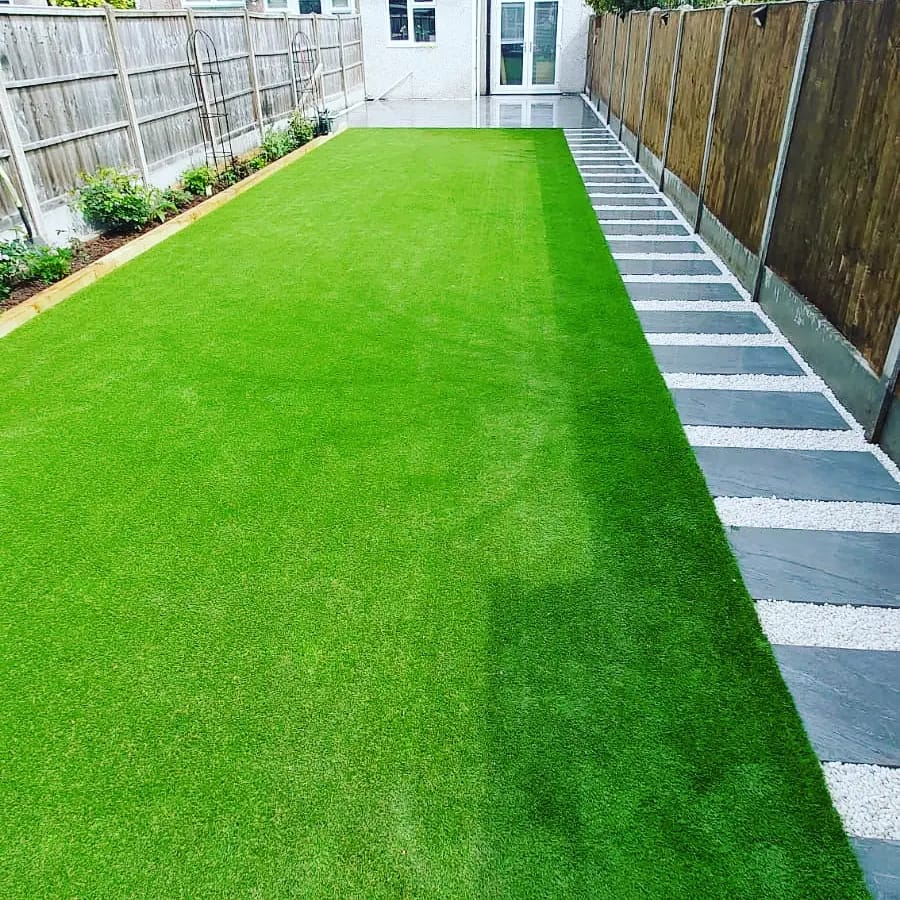
How We Lay an Artificial Lawn
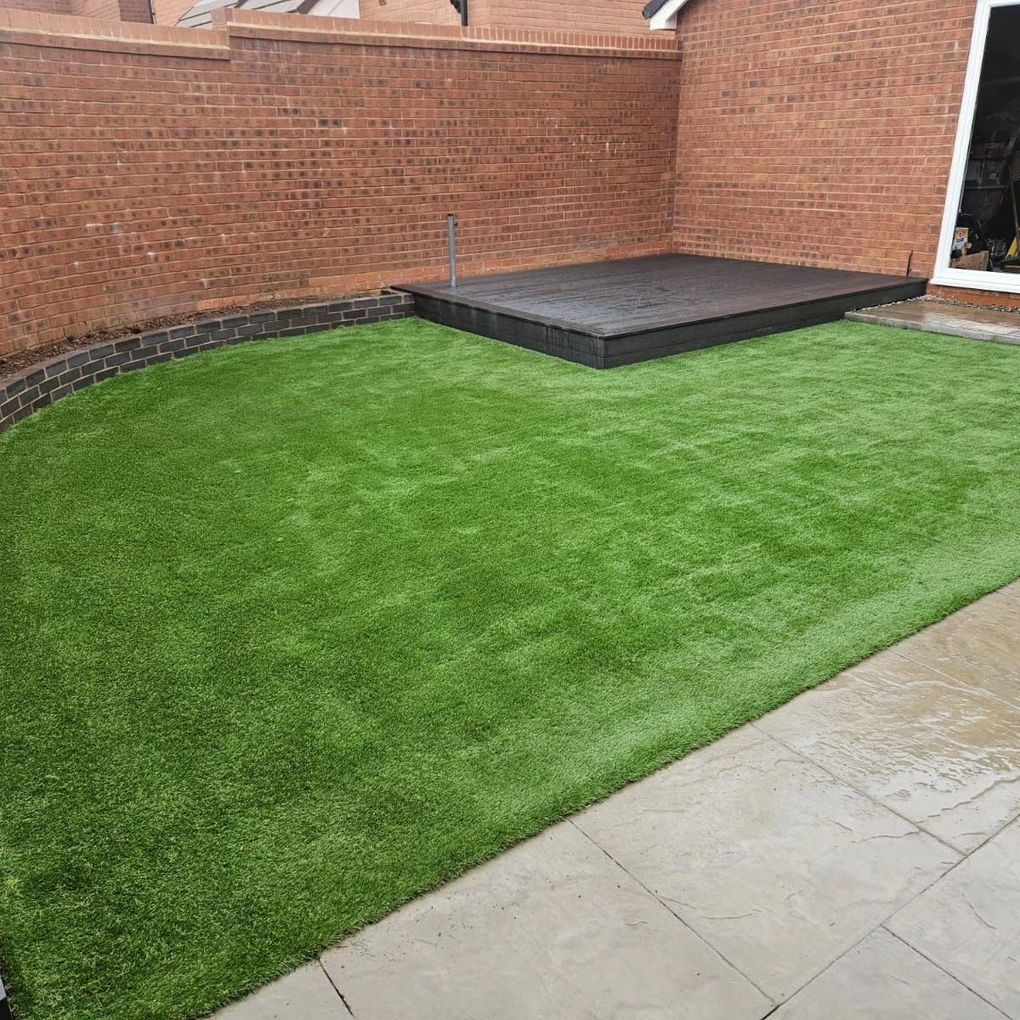
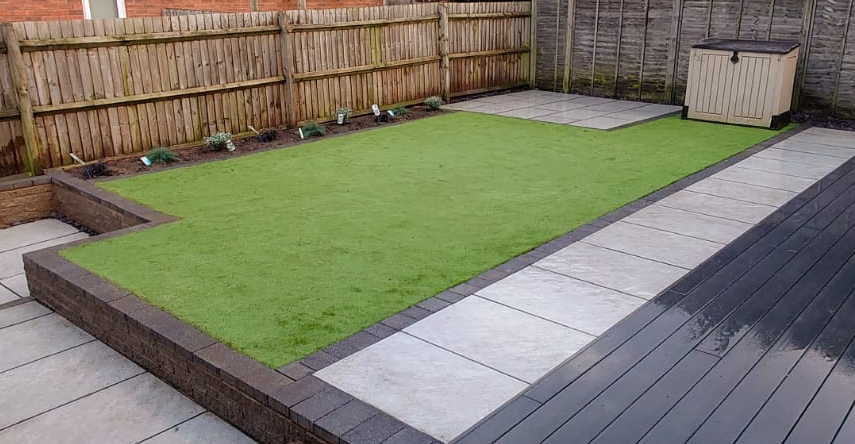
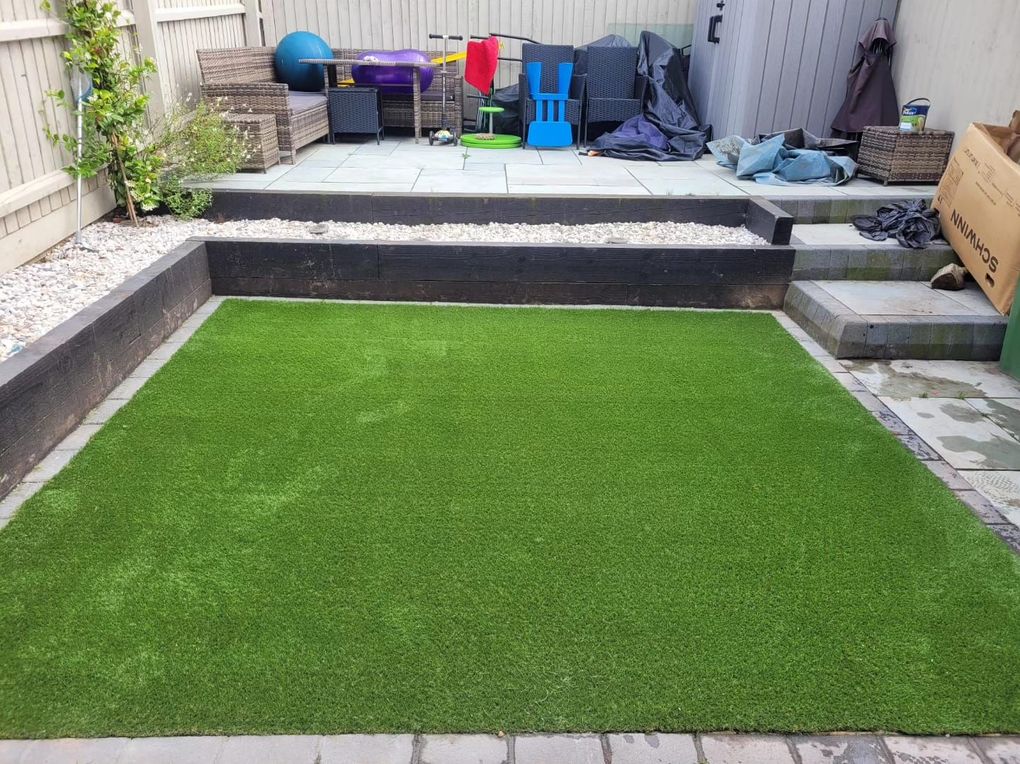
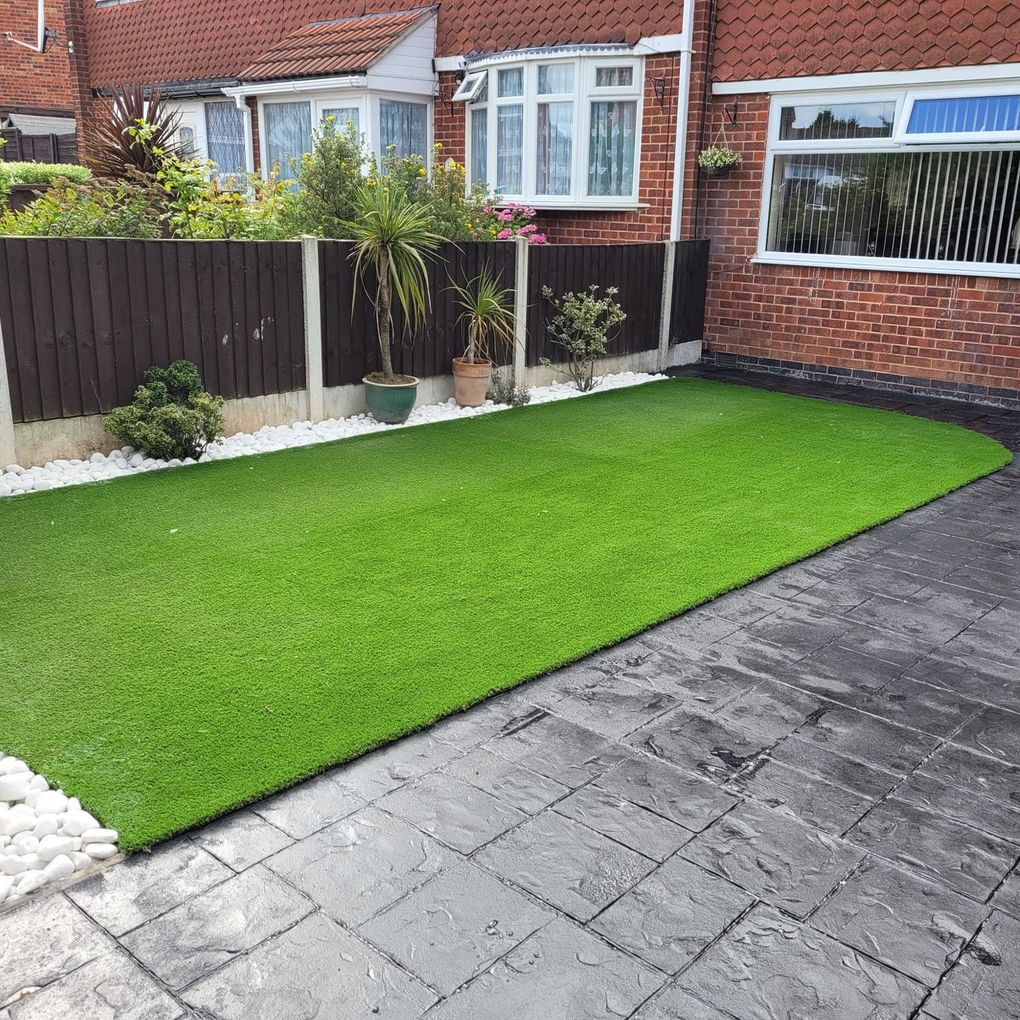
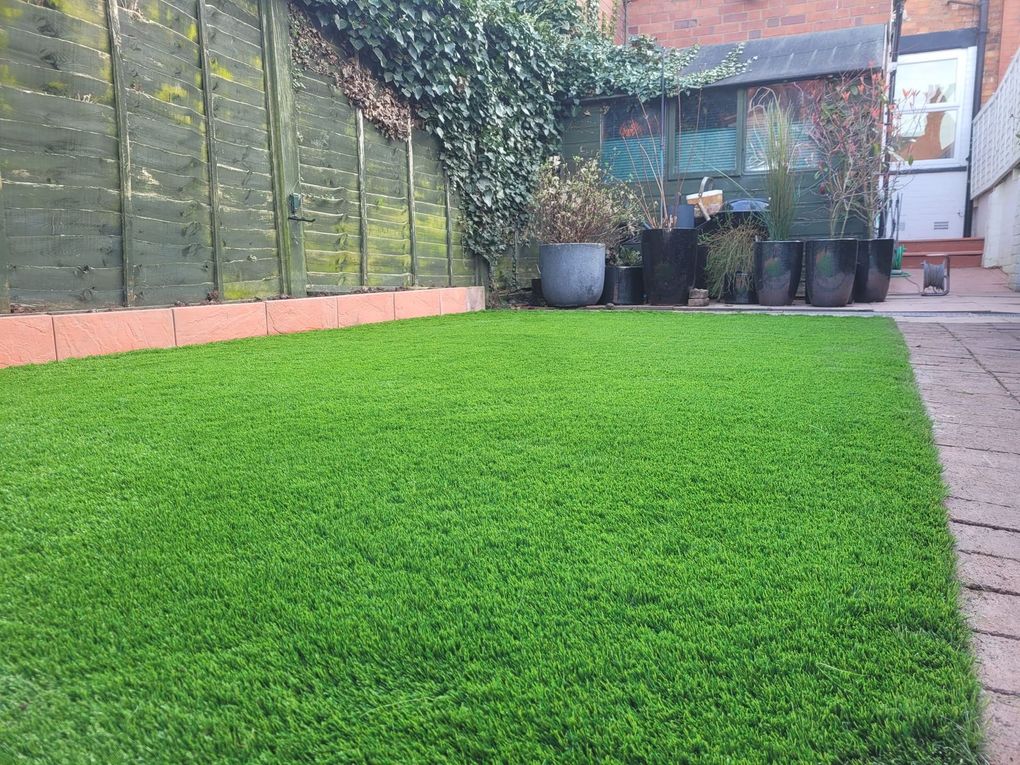
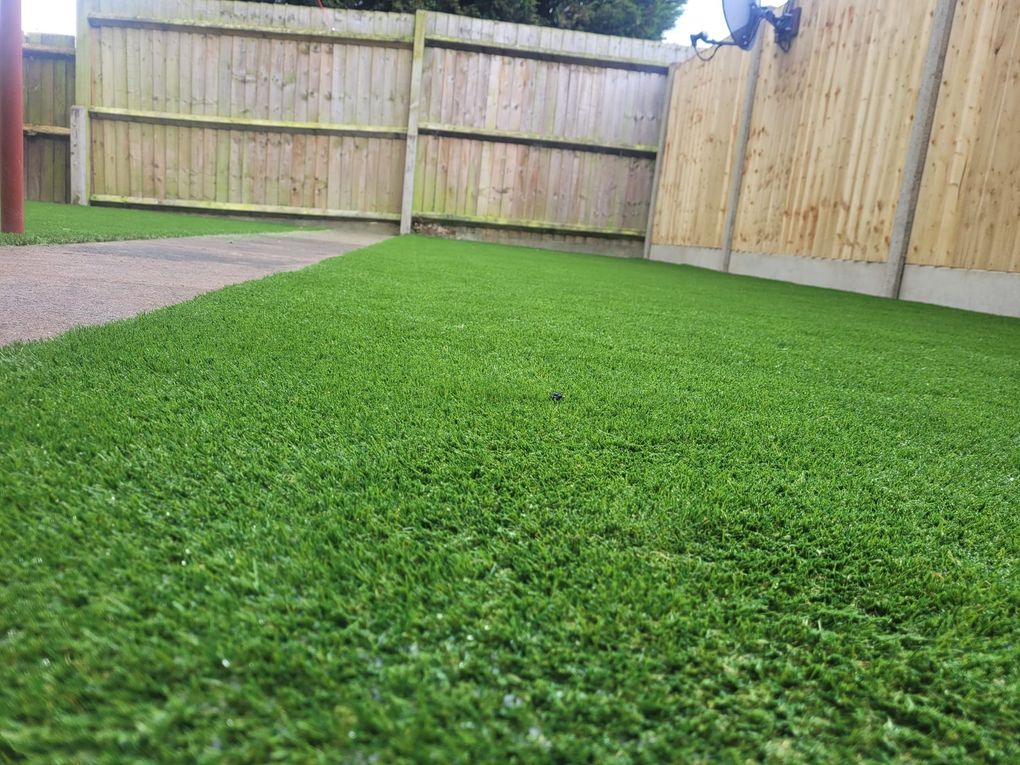
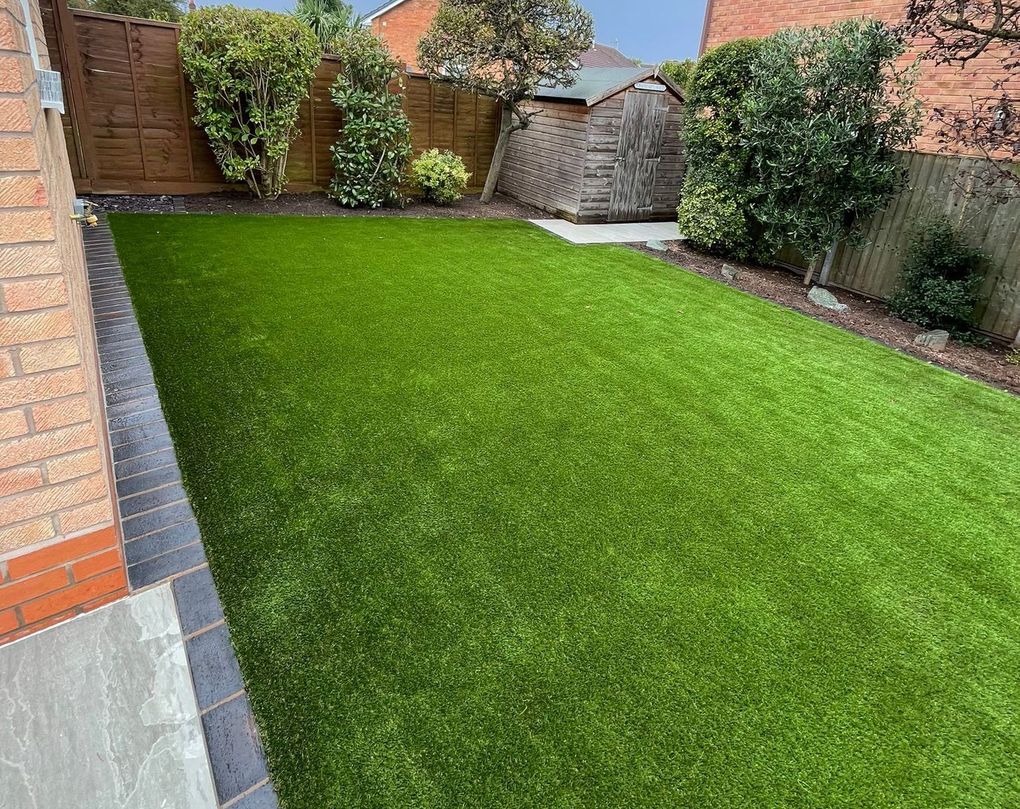
Artificial Lawns We Have Laid
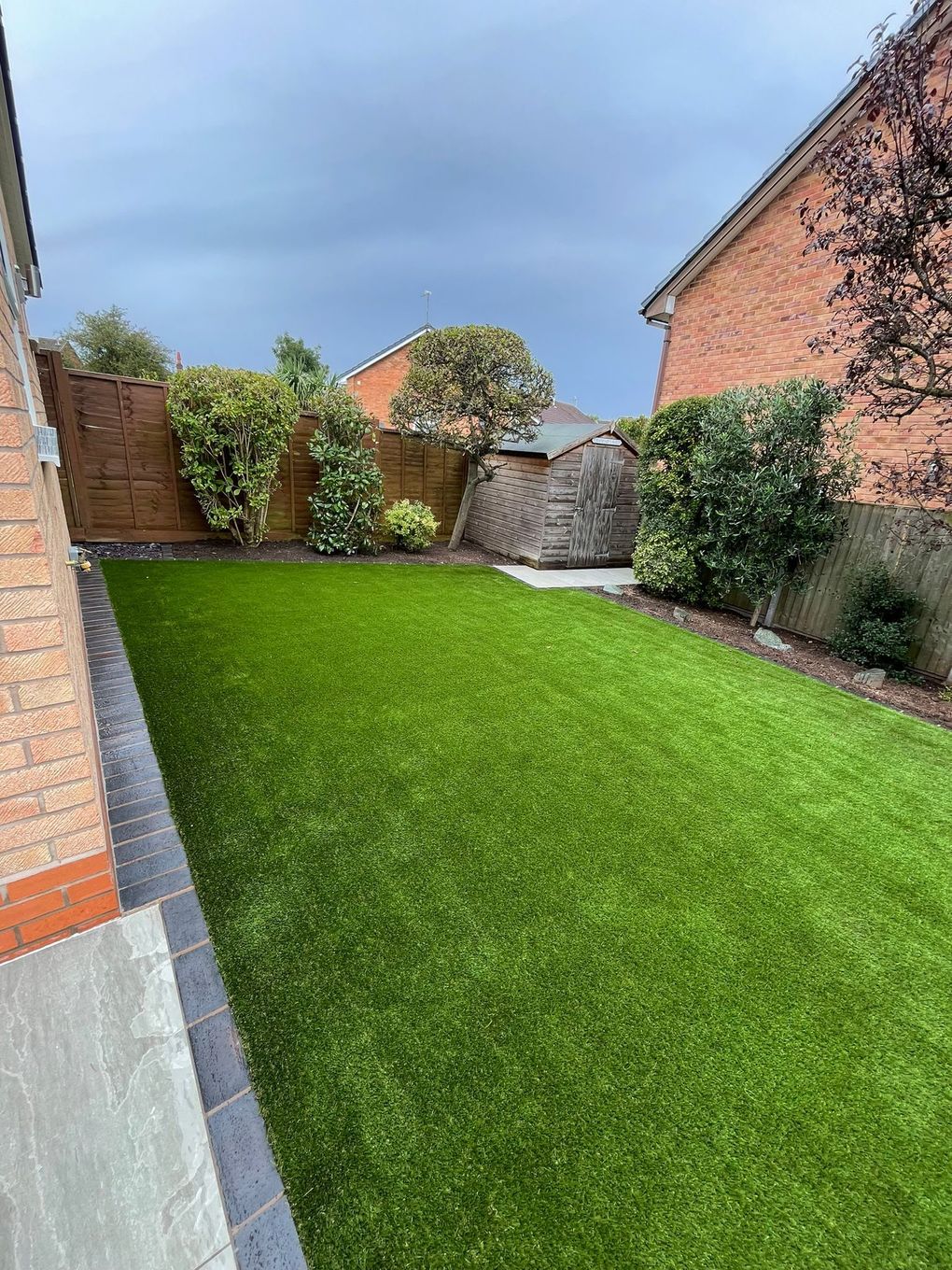
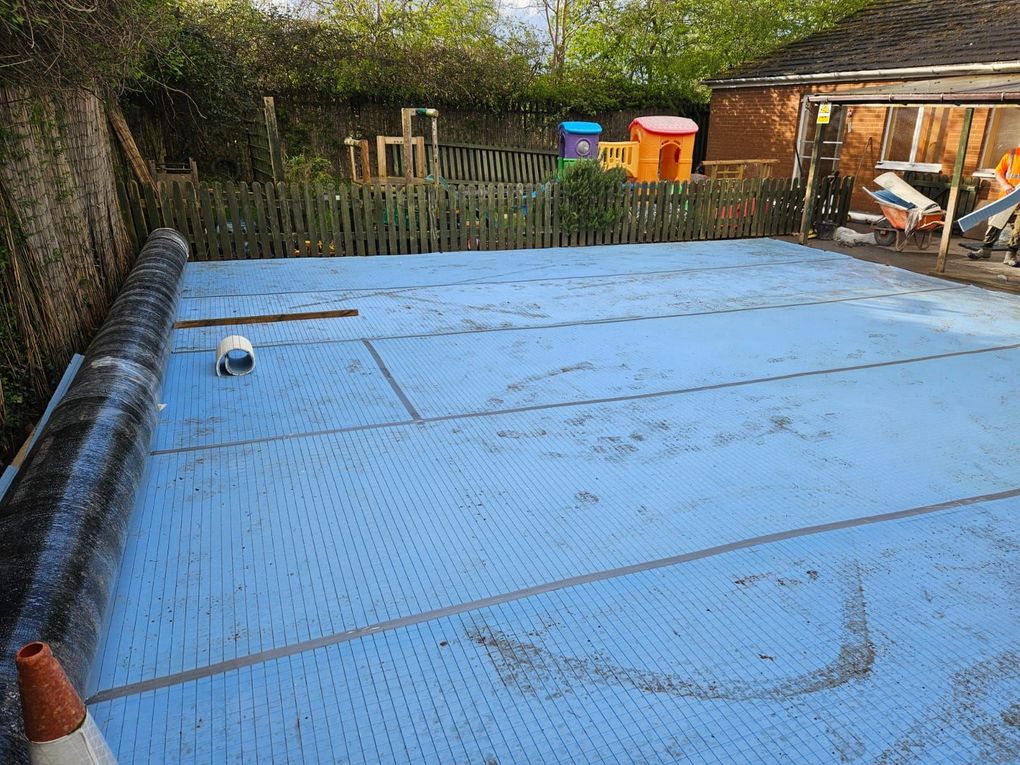
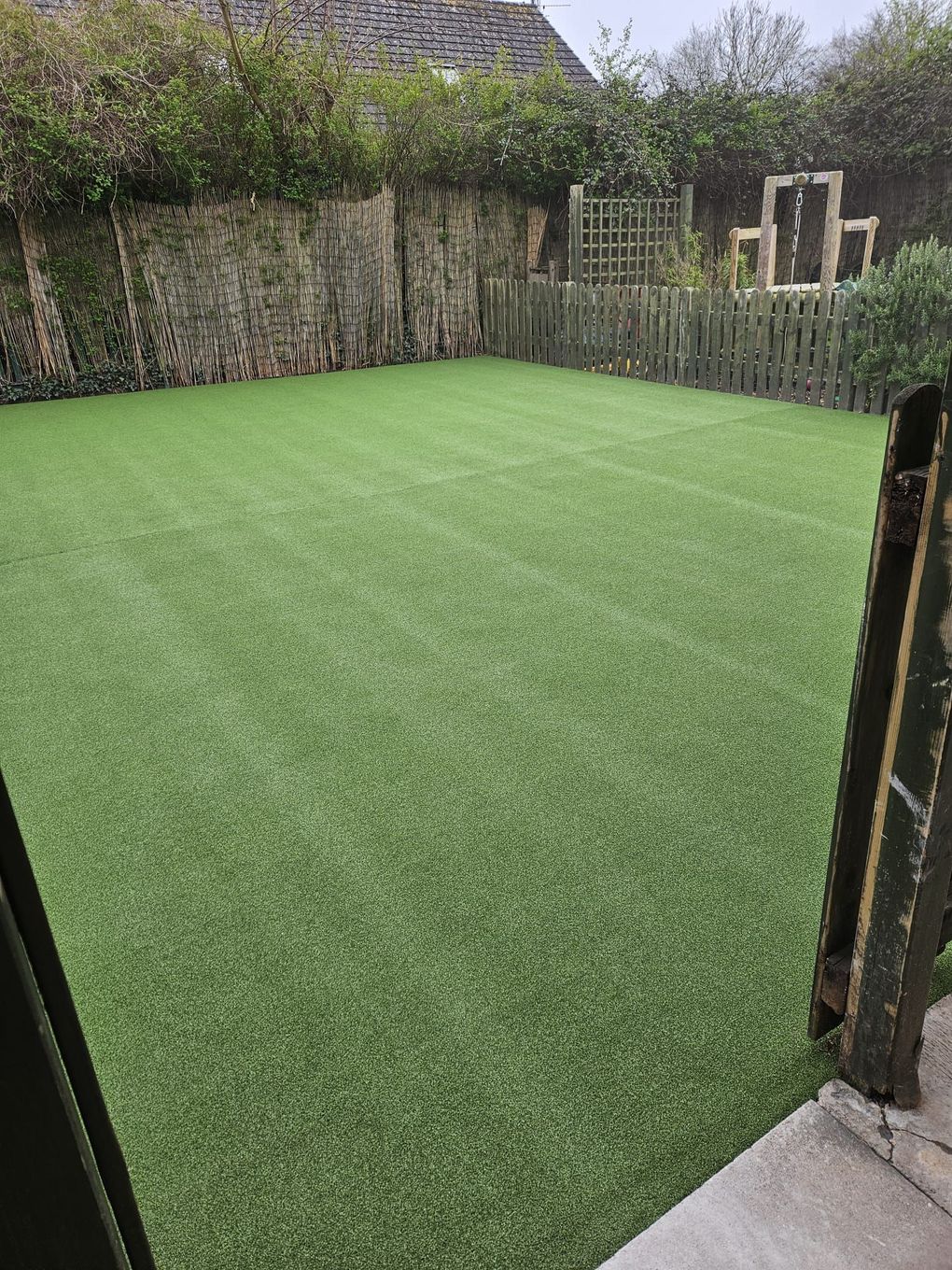
What Goes Under Our Artificial Grass
Artificial grass is only as good as the base it sits on. A poor base drains slowly, dips and ripples within a year or two, and there is no fixing it without lifting the lawn. This is how we build ours:
- Dig out at least 100 mm below the finished level, deeper where the ground needs it.
- Lay a geotextile membrane, overlapping the joins by at least 100 mm on larger areas, to separate the base from the soil beneath.
- Put down 50–75 mm of Type 1, compacted in layers, and check the levels with a laser level, correcting any dips.
- Finish with grano dust, not sharp sand. Sand holds organic matter that encourages weeds and insects, and it changes density between wet and dry, which lets the base move. Grano costs a little more, but it is clean, drains well and stays put.
- Fix the edges to suit the use (see below), then power-brush the pile and add infill where the grass calls for it.
On heavy, wet ground the base needs to drain somewhere, so we check the drainage of the garden first.
Framed With Paving, Sleepers or Timber
A lawn bordered by paving or block edging can be laid without pins. The grass is heavy enough to stay down, especially with infill, and it can expand and contract slightly through the seasons, which is our preferred method where the lawn is not under heavy, constant use. For ball games, school playgrounds and anywhere the grass must not move, we build a treated timber frame round the base and pin or glue the grass to it.
A frame of paving, sleepers or brick also stops soil from beds spilling onto the lawn and gives it a crisp finished edge. That frame is often part of a wider job with a new patio or decking alongside.
Artificial Grass for Dogs
A lot of our artificial lawns are for dog owners. By the time we are called, the real lawn is usually yellow in patches, bare in others and uneven, and every trip outside ends with muddy paws on the kitchen floor. A pet-friendly artificial grass on a free-draining base ends all of that.
The base matters even more with dogs, because it has to let liquid drain straight through. Rinse the areas your dog uses regularly with a hose, more often in hot weather, and pick up solids as you would on any lawn.
Pile Height, Density and Samples
There is no single best artificial grass. We bring a range of samples from a supplier we have worked with for years and talk through pile height and density with you. How the lawn will be used, and by whom, should shape the choice: a lawn for children and dogs needs different grass from one that is mostly there to look at.
Two practical points. Artificial grass can be damaged by heat, so keep barbecues, fire pits and hot ash off it. And it is worth leaving room for borders and planting round the edge, so the garden still has space for plants and wildlife.
Still deciding between artificial and real? Our guide to real turf versus artificial grass sets out the pros and cons.
Commercial and Indoor Artificial Grass
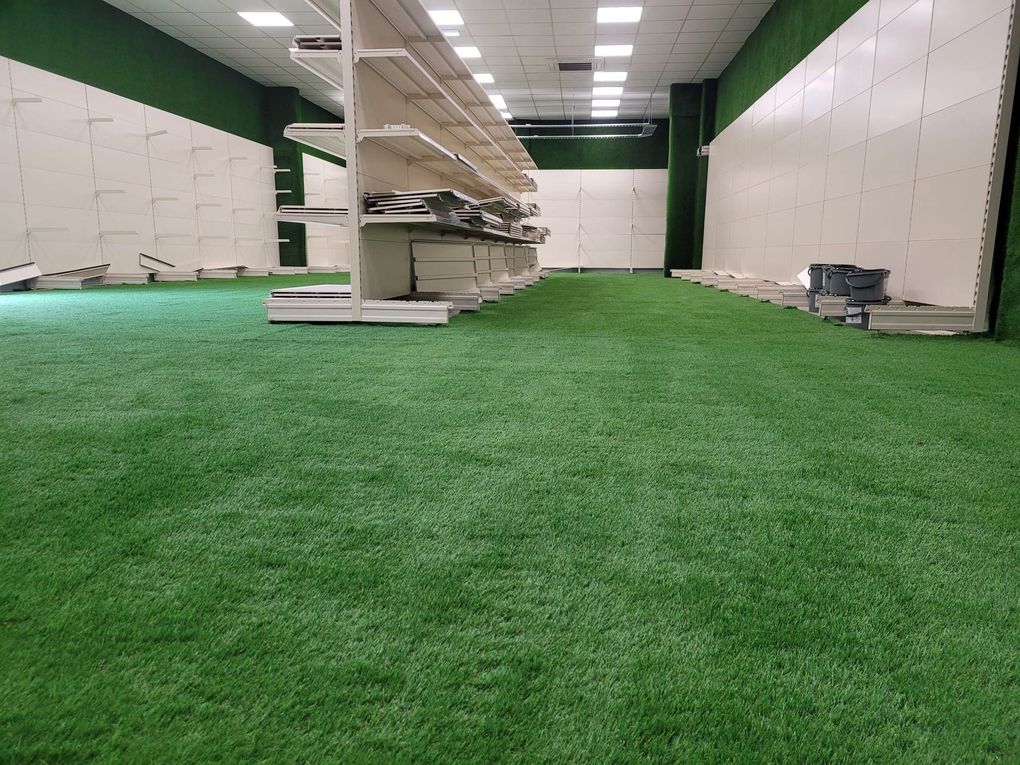
As well as homes, we install artificial grass for schools, businesses and sports and social clubs. It works indoors too: at Bayton Horticultural Centre we covered the showroom floor and parts of the walls. Our largest single area so far is 150 m², laid in two parts on a timber frame to stop it moving, with the rolls joined using joining tape and contact adhesive.
Where there is play or climbing equipment, in schools, playgrounds or family gardens, we lay a foam shock pad underlay beneath the grass. Critical fall height figures are available on request for schools and nurseries that need to meet the playground surfacing standard, BS EN 1177.
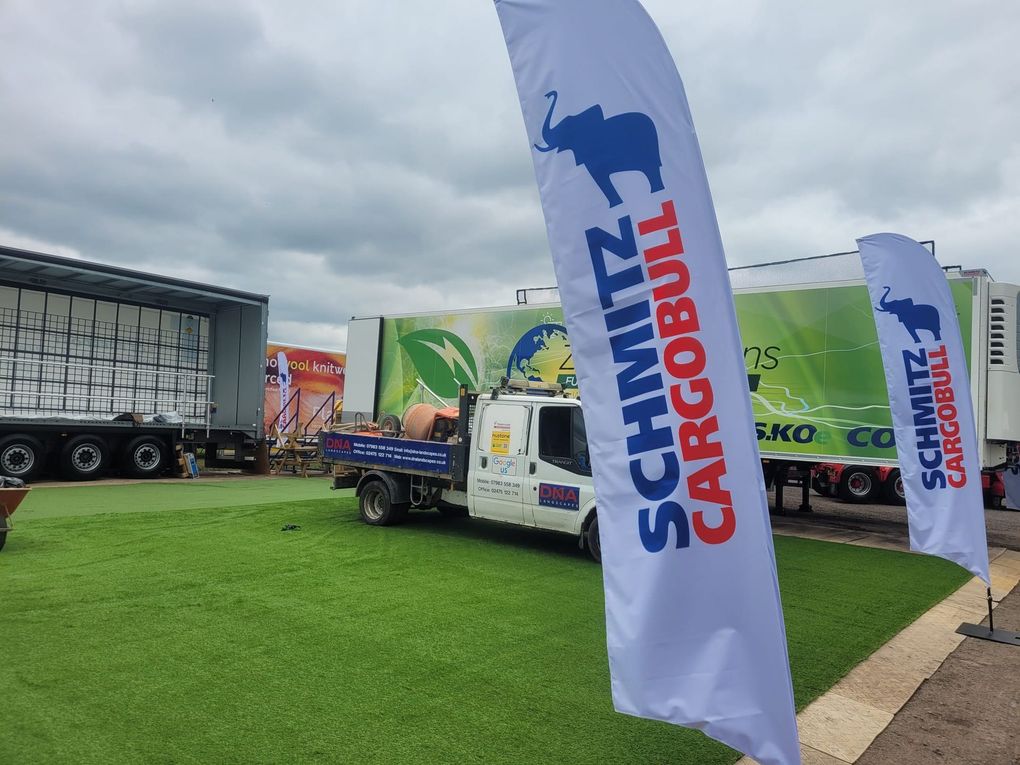
Why Choose Us for Your Artificial Grass
Groundwork first
Dug, membraned, compacted and laser-levelled, with grano dust instead of sharp sand, so the lawn drains and stays flat.
Landscapers, not just fitters
Edging, paving, sleepers and drainage done by the same team, so the lawn is framed and finished properly.
Samples and honest advice
Grass chosen for how you will use it, from a supplier we have trusted for years.
Guaranteed and insured
Our 12-month workmanship guarantee covers every lawn we lay, with £1M public liability insurance.
Artificial Grass Installers Across Coventry and Warwickshire
Artificial lawns laid throughout Coventry, Solihull and Warwickshire, with recent and regular work in:
Artificial Grass Questions
Why choose DNA Landscapes to install our artificial lawn?
We have been installing artificial grass for many years and have a trusted working relationship with our supplier, so we can offer quality products for every budget. We keep up to date with the latest products and installation methods, and we never take shortcuts on the groundwork.
Which artificial grass is the most popular?
It depends on the job. With so many products and budgets, we bring a range of samples and advise on pile height and density based on how the lawn will be used.
How do you prepare the ground for artificial grass?
We dig out at least 100 mm, lay a geotextile membrane, then compact 50 to 75 mm of Type 1 in layers and check it with a laser level. The final layer is grano dust rather than sharp sand, because it drains well and does not shift between wet and dry.
Does artificial grass need to be pinned down?
Not always. Bordered by paving or block edging, it can be laid without pins and is heavy enough to stay put. For ball games, playgrounds or heavy use, we fix it to a treated timber frame round the edge.
Is artificial grass good for dogs?
Yes, as long as the base drains freely. It ends muddy paws and worn patches. Rinse the areas your dog uses with a hose regularly and pick up solids as normal.
What is the largest area of artificial grass you have installed?
150 square metres, laid in two parts on a timber frame to prevent movement, with the rolls joined using joining tape and contact adhesive.
Can artificial grass go under play equipment?
Yes. Where children play or there are climbing frames, we lay a foam shock pad underlay beneath the grass. Critical fall height figures are available on request for schools and nurseries.
Can a barbecue or fire pit damage artificial grass?
Yes. Artificial grass can melt or scorch from direct heat, so keep barbecues, fire pits and hot ash on paving rather than on the lawn.
Ready for a lawn that looks after itself?
Tell us roughly how big the area is and who will use it, and we will bring samples, measure up and price it.
