How British Weather Affects Your Patio, and Why What's Underneath Matters
What Happens Beneath a Patio When the Weather Changes?
A new patio is an investment in your home and a space to enjoy for years to come. Choosing the paving is an exciting part of the process, but the long-term performance of your patio depends on much more than its appearance.
The ground beneath it, how it is built and how water drains away all play a part. Add the changing British weather, and it becomes clear why a successful patio starts well below the surface.
At DNA Landscapes, we believe homeowners should understand both the benefits of their chosen paving and the care it may need over time.
Why Can the Ground Beneath a Patio Move?
Ground conditions respond to changes in moisture, particularly where shrinkable clay is present.
During prolonged dry weather, susceptible clay can lose moisture and shrink. When moisture returns, it can swell again. If different areas move by different amounts, the supporting ground may become uneven.
Depending on the circumstances, this can contribute to cracked joints, loose paving or changes in surface levels.
Other factors can influence stability too, including previously filled ground, nearby trees, drainage problems and past excavation work. This is why the construction that suits one garden may need adapting for another.
Does Porcelain Paving Cause the Problem?
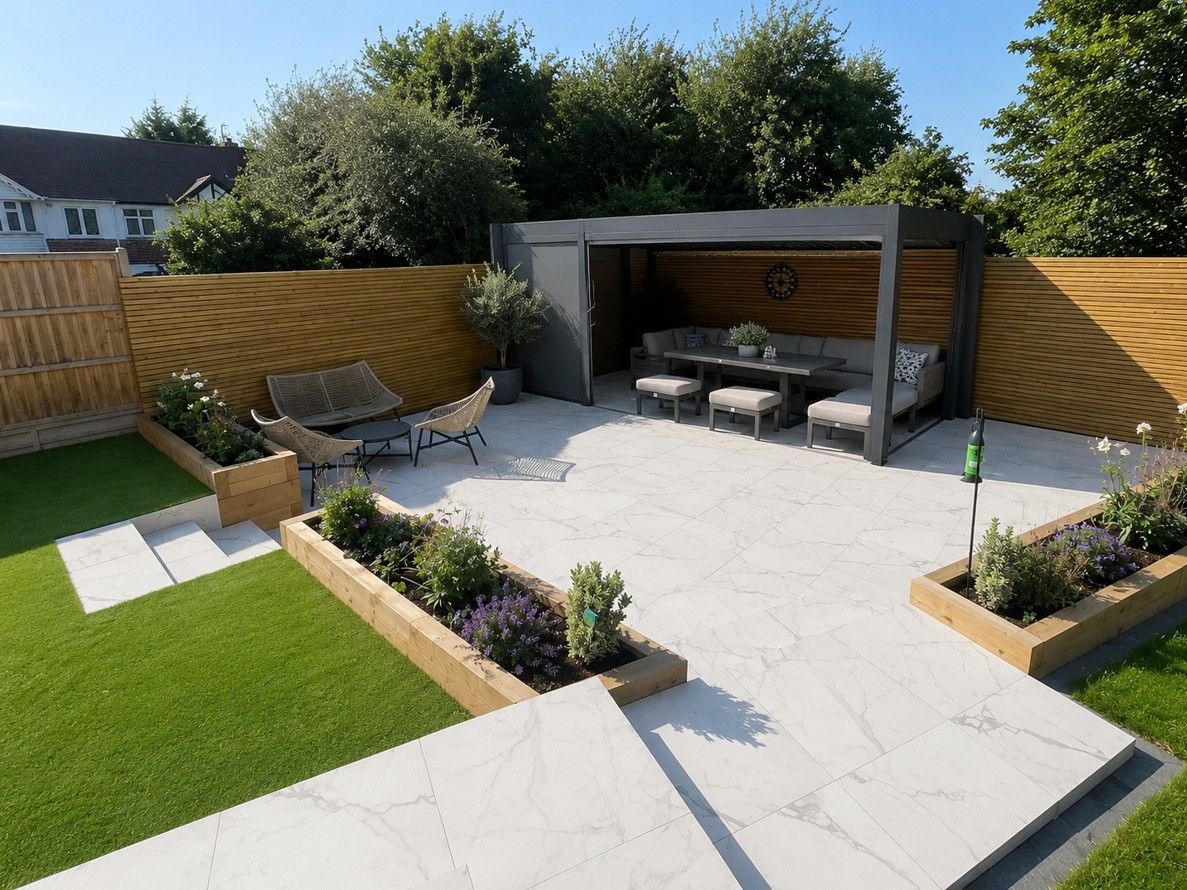
Porcelain is a popular choice for modern gardens. It offers an attractive finish, low water absorption and relatively straightforward cleaning.
However, the durability of an individual slab is only one part of the picture.
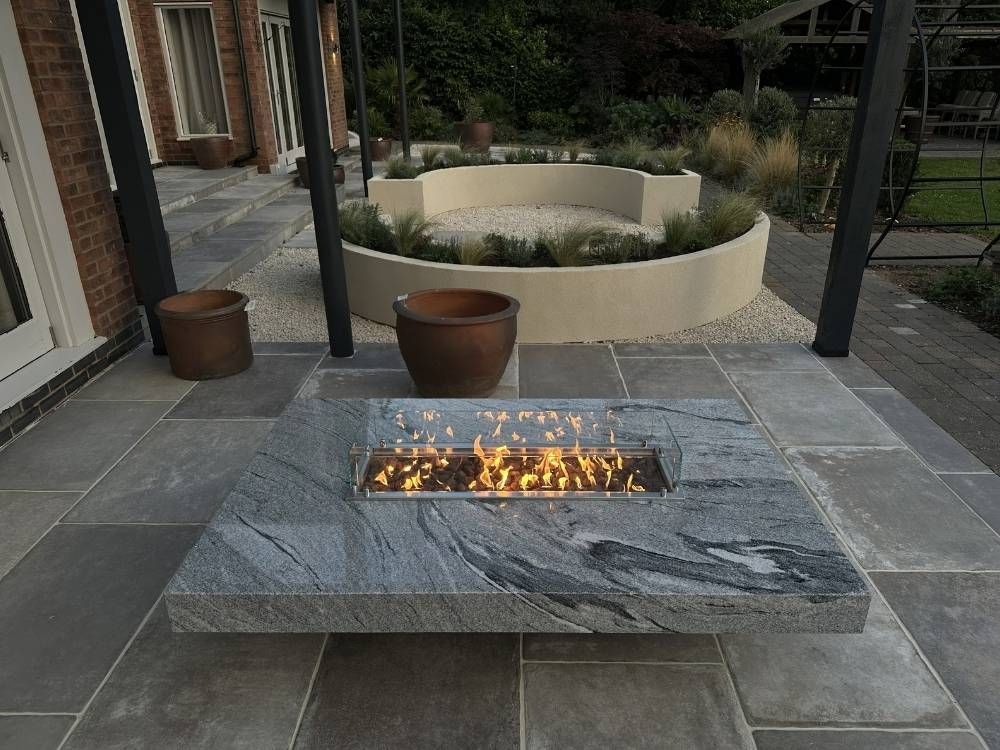
Porcelain patios are commonly installed as a rigid system, with the paving bonded to a mortar bed. If the supporting construction moves, stress can affect the bedding, the bond beneath the slabs or the joints between them. We explain more about the build-up in installing a porcelain patio properly.
Similar issues can affect natural stone and other paving materials installed using rigid construction methods. Changing the surface material alone will not resolve an underlying ground problem.
The aim is to choose paving and a construction method that work together for the site.
Heat, Rain and Frost Affect Patios in Different Ways
British gardens experience a wide range of conditions throughout the year.
Hot, dry periods can cause susceptible soils to shrink, while exposed paving heats up and cools down. Movement caused by temperature changes is different from movement originating in the ground, so both need consideration.
Persistent rainfall can saturate poorly drained ground. Where water collects within or beneath an installation, it can affect its performance.
Freezing conditions can cause movement in frost-susceptible ground and damage where water becomes trapped within vulnerable parts of the construction.
Thoughtful design and installation help manage these risks, although an outdoor space will always be exposed to its surroundings.
What Helps a Patio Stand the Test of Time?
A reliable patio starts with understanding the site before laying begins.
Assessing the ground
The condition of the ground helps determine the preparation required. Soft spots, disturbed areas, previous filling and moisture-sensitive soils all deserve attention. Where significant instability is suspected, specialist advice may be needed.
Building a suitable foundation
The sub-base, bedding and bonding system need to suit the ground, the chosen paving and how the area will be used. Proper preparation and compaction are essential parts of that work.
Planning drainage
Water needs a suitable route away from the patio. This means considering surface falls, drainage outlets and the possibility of water accumulating within the supporting construction. Where a garden already holds water, garden drainage may need to be part of the plan.
Allowing for movement
Rigid paving installations need appropriate movement detailing, including consideration of boundaries and adjoining structures. The details should follow the requirements of the chosen system and relevant technical guidance.
These elements work together. A strong slab or a premium grout cannot compensate for unsuitable supporting construction.
Low-Maintenance Paving Still Needs Some Care
Porcelain is often described as low-maintenance, and that is one of its attractions. However, every outdoor surface needs attention from time to time.
A sensible patio care routine includes:
- Cleaning away dirt, leaves and algae.
- Keeping drainage channels and outlets clear.
- Checking joints and movement details.
- Removing vegetation around edges.
- Reporting loose slabs, new cracks or persistent pooling promptly.
Regular care helps keep the patio looking its best and allows developing issues to be investigated early.
What Should You Expect From a Professionally Installed Patio?
You should expect suitable materials, careful preparation, good workmanship and clear advice about aftercare.
It is also sensible to recognise that gardens change. Trees grow, drainage conditions can alter and periods of unusually wet or dry weather can affect the ground.
That does not mean every crack or loose slab should be blamed on the weather. If a problem develops, the cause needs investigating so the right remedy can be identified. Genuine installation defects should be addressed as such.
Choosing the Right Patio for Your Garden
Porcelain, sandstone, limestone and block paving each offer different benefits. Appearance matters, but so do ground conditions, drainage, intended use and the amount of maintenance you are comfortable with. Our guide to choosing the right paving for your garden compares the options in more detail.
At DNA Landscapes, we consider the whole installation when planning a patio, helping you choose a finish and construction suited to your garden.
If you are planning a new patio in Coventry or Warwickshire, get in touch to discuss your ideas and arrange a consultation.