Choosing the right paving for your garden
How Do You Choose the Right Paving for Your Garden?
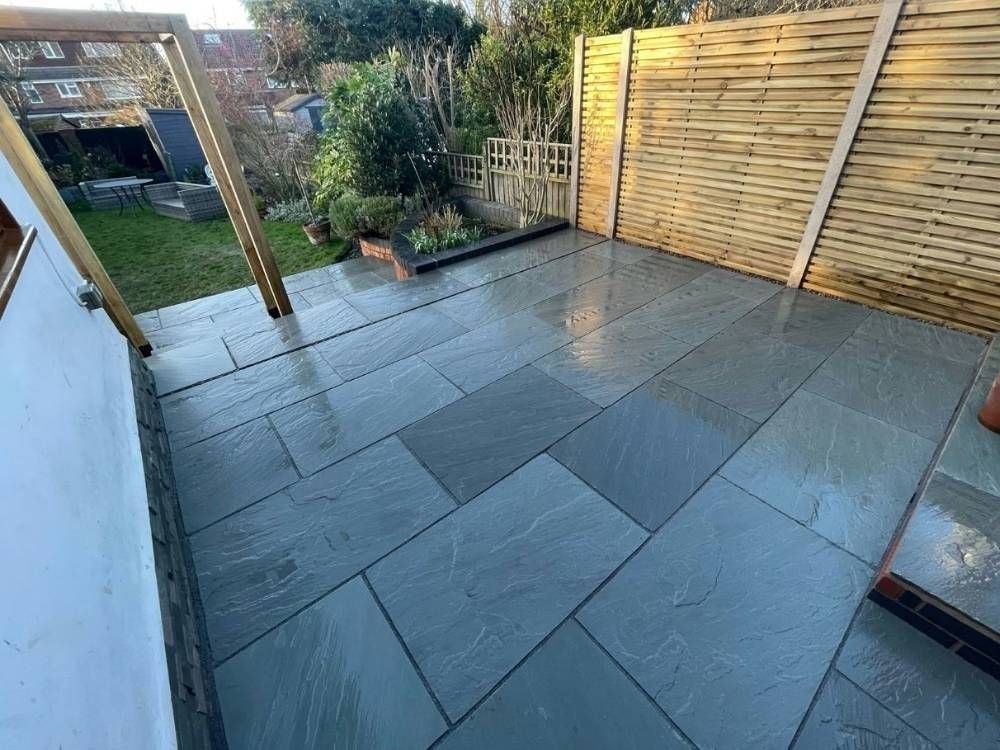
Porcelain or natural stone? A practical guide to choosing patio paving for a garden that looks good and works for everyday life.
Your patio is often the place where garden life happens: morning coffee, family meals, quiet evenings and time with friends. The paving you choose has a big effect on how that space looks and feels, but a sample that looks perfect on its own might look quite different across a whole patio beside your house.
So where should you start? At DNA Landscapes, we look at the way you want to use the garden, the style of your home and how the paving will sit alongside the planting, walls, steps and other materials. Here are the main things to consider before making your choice.
Think About How You Will Use the Space
A patio beside the kitchen doors may need to accommodate a dining table and regular foot traffic. A smaller seating area at the end of the garden might call for a different colour or a more relaxed finish. Steps and paths need careful thought too, especially where you will use them in wet weather or after dark.
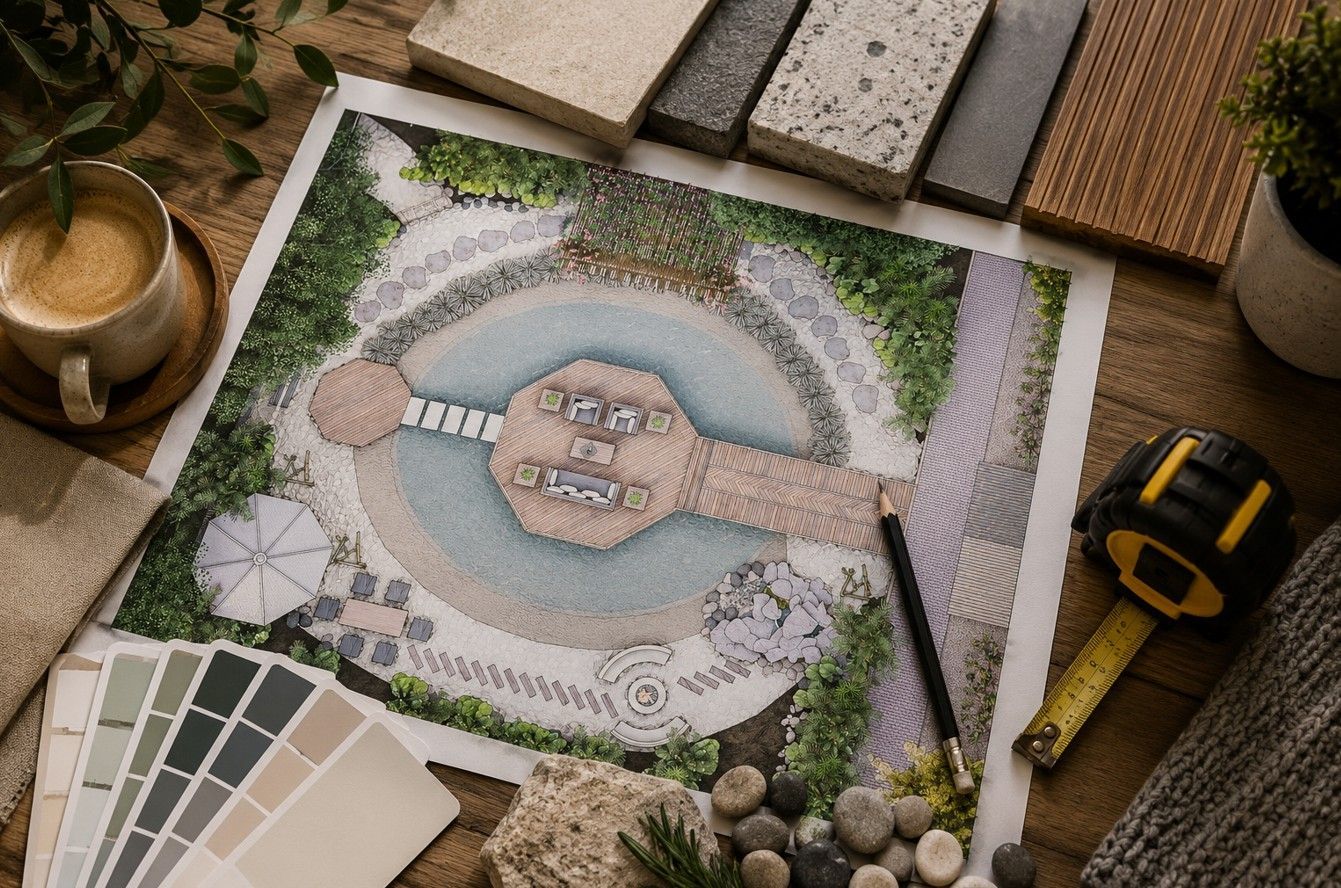
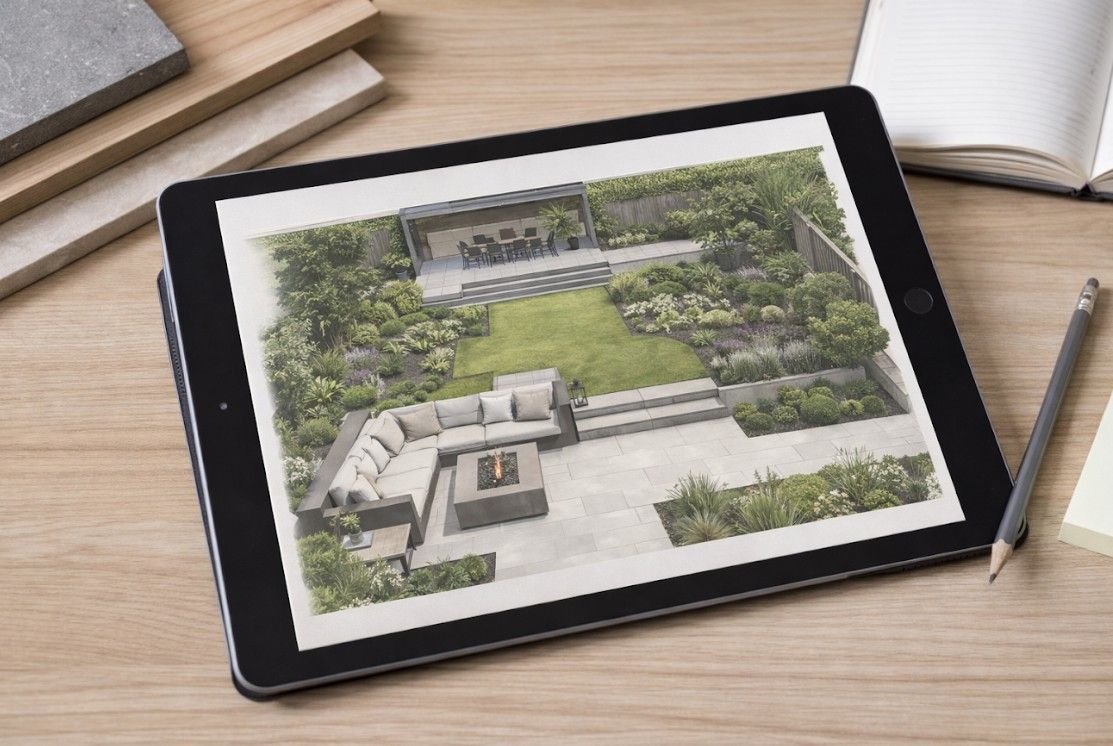
Start with the practical questions: Where will the furniture go? How will people move between the house and garden? Will the paving continue around the side of the property or connect several seating areas? These decisions help determine the size and layout of the paved areas before you choose the slabs.
Porcelain Paving: Clean Lines and Plenty of Choice
Outdoor porcelain is popular in contemporary gardens because it comes in a wide range of colours and finishes, including designs that resemble natural stone. Its consistent sizing can help create neat lines and a precise finish. It is also generally straightforward to clean, although every patio still needs routine care. One of the main reasons is porcelain’s low porosity: it absorbs very little moisture compared with many natural stones, which helps it resist staining and makes everyday cleaning easier.
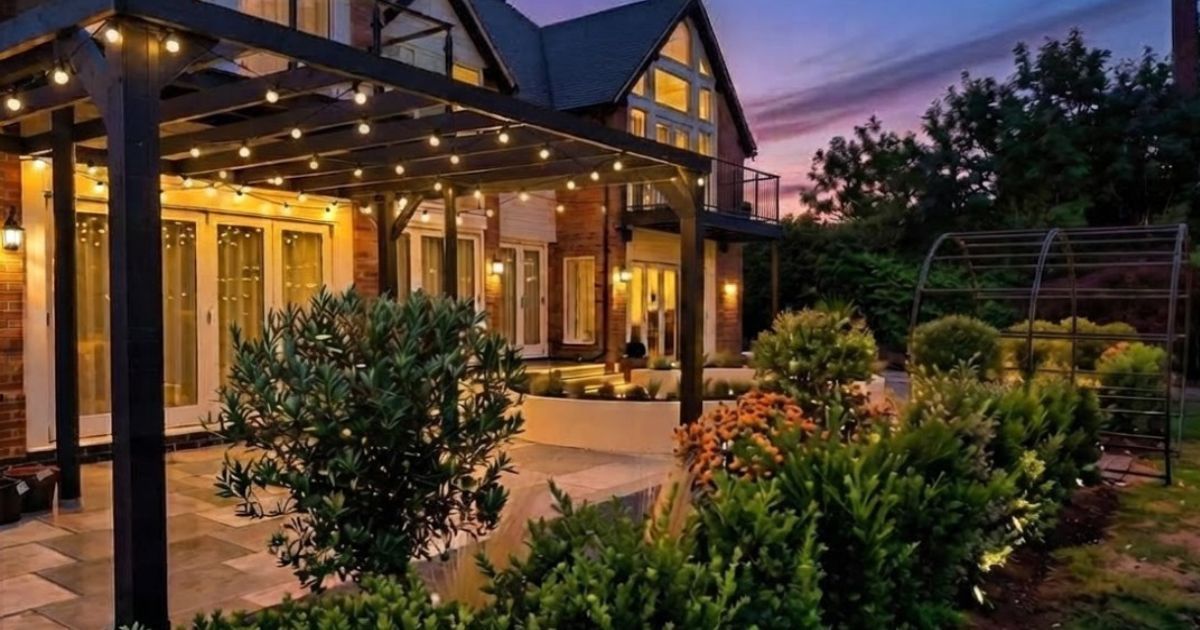
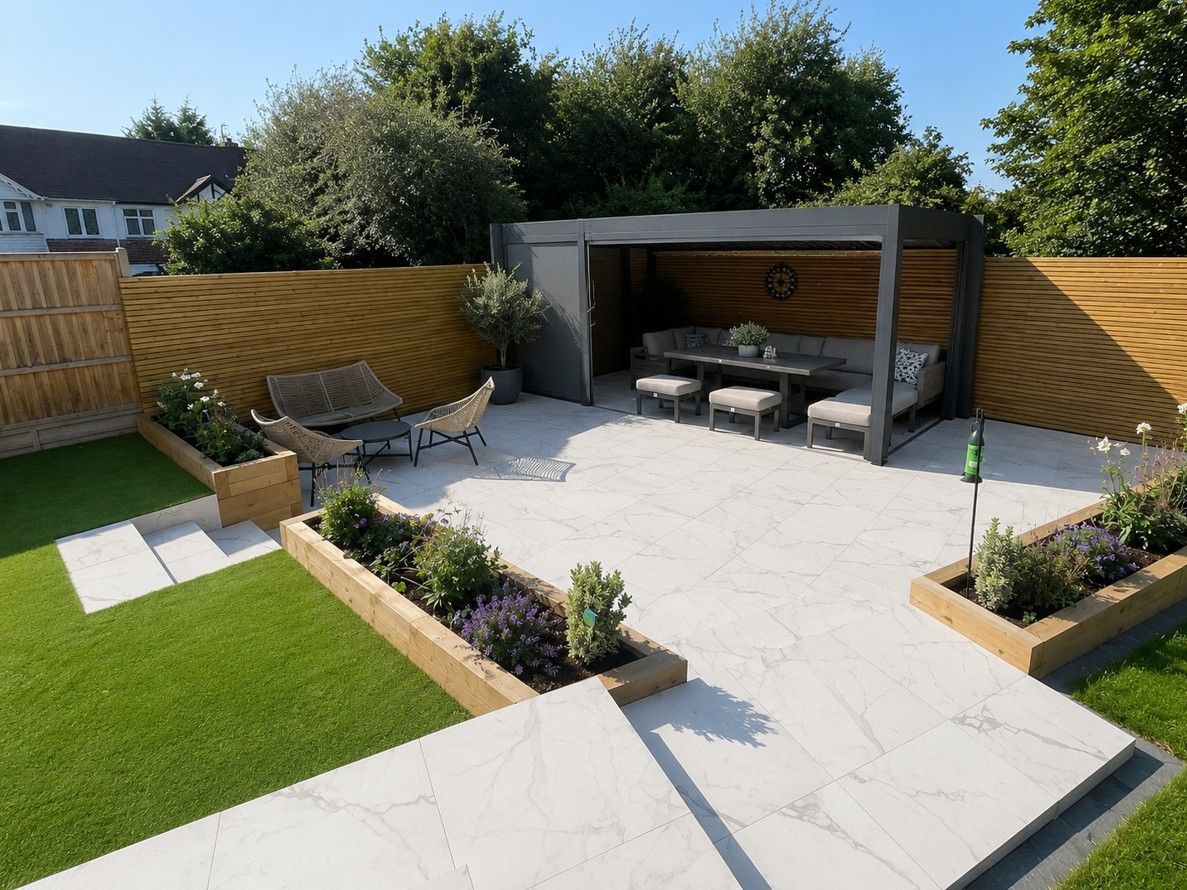
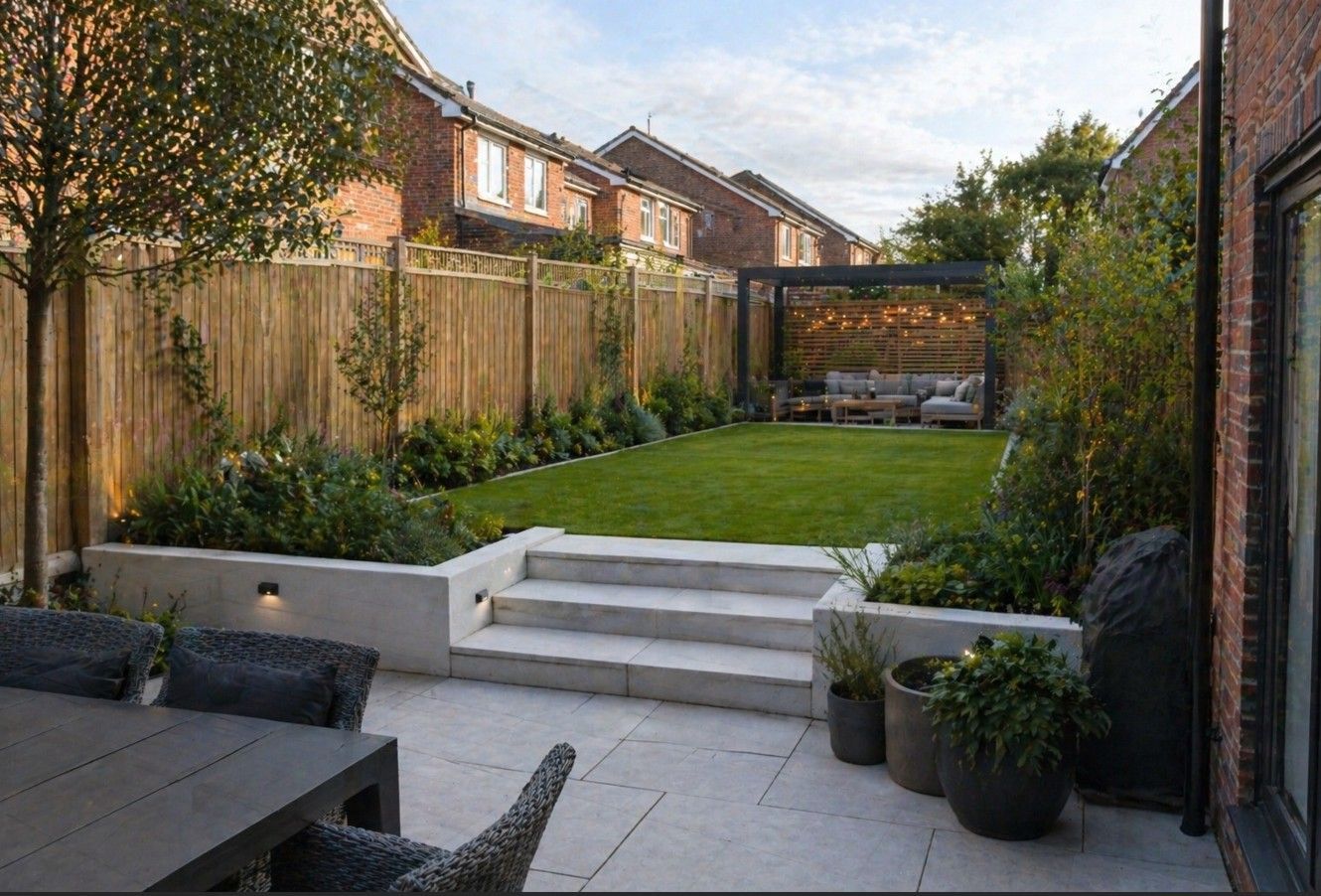
Porcelain does not have to make a garden feel stark. At our Chestnut House project in Lapworth, Wexford Natural porcelain brings a warmer, stone-inspired look to the paving. Curved planters, decorative details and planting soften the overall scheme. At Tid Marsh Close in Coventry, grey porcelain creates a different feel, connecting the patio with the steps and paths through the garden.
If you are considering porcelain, compare samples outdoors beside your home. Check that you are looking at porcelain made for external paving, typically 20mm thick, rather than a thinner internal tile. Always check the product’s R rating, which indicates its slip resistance. For patios and external landscaping, we would generally look for a rating of R11 to R13, depending on the location and how the area will be used. The texture and finish matter as much as the colour, particularly for steps and routes used in wet weather.
Natural Stone: Character and Variation
Natural stone appeals to homeowners who like variation between individual slabs. Sandstone and limestone can bring warmth and texture to a garden, and the differences in tone are part of their character. With sandstone, you quite literally have nature beneath your feet. Every slab has its own markings, tones and characteristics, helping a landscaped garden retain a natural feel.
That variation is also why a small sample may not tell the whole story. Ask to see a wider selection of slabs or photos of an installed patio in the material you are considering. Think about whether you want the paving to feel rustic and informal or more refined, as the stone and its finish will influence the result.
Sandstone will also weather and evolve over time. Unlike manufactured porcelain, which is chosen for a more consistent appearance, natural sandstone gradually changes as it is exposed to the elements. For some homeowners, that is part of its appeal: you are choosing a material that will mature and become part of the garden as the years go by.
Natural stone needs care appropriate to the particular product. Ask about cleaning and any sealing recommendations before deciding; there is no single maintenance rule that applies to every stone.
Choose a Colour That Works With Your Home
The house is the largest feature beside many patios. Brick colour, render, doors, frames and existing paths can all influence which paving feels right.
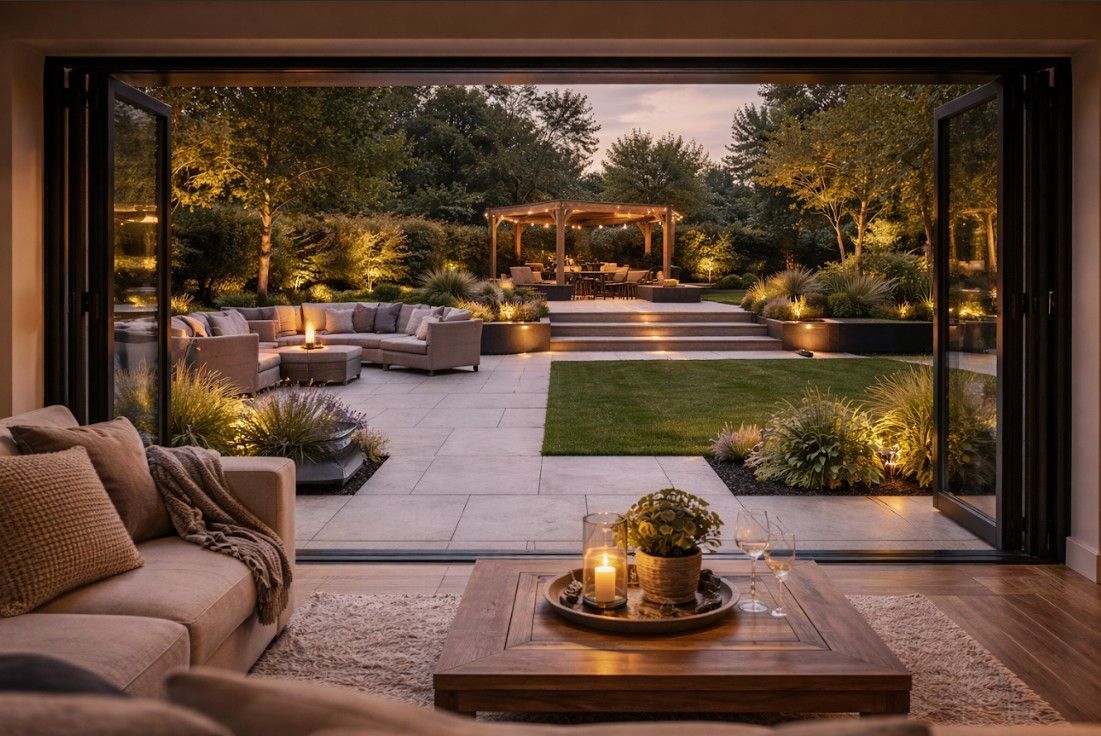
Light paving can give a space an open, airy appearance, while warmer tones can sit comfortably with timber, brick and softer planting. Darker shades may create strong contrast in a modern scheme. Look at samples against the property in daylight and, if possible, in both sun and shade. Consider how the colour will sit alongside any walls, fencing and gravel you plan to keep.
You do not have to use one material everywhere. A contrasting edge, a change of paving at a seating area or a decorative path can add interest, provided the choices feel connected rather than competing for attention.
Look Beyond the Slab to the Finished Detail
Even beautiful paving depends on a well-planned layout and careful installation. The size of the slabs, joint lines, step edges, transitions to the lawn and the route for surface water all affect the finished garden.
At Tid Marsh Close, for example, the paving does more than form a patio. It also helps define the steps, side access and edges of the lawn. Looking at those connections gives you a much clearer idea of what a paving choice will achieve than looking at an isolated product sample.
This is also the stage to think about drainage and levels, particularly near the house. They should be considered as part of the patio design, alongside the appearance of the paving.
How Much Maintenance Are You Comfortable With?
No outdoor paving remains spotless without attention. Leaves, soil and general garden debris need clearing, and cleaning methods should follow the manufacturer’s guidance for the material and finish you choose.
If easy upkeep is high on your list, discuss it early. It may affect not only the paving material but also the colour, surface texture, jointing and the position of nearby planting. The best choice is one you will still enjoy looking after in years to come.
So, Which Paving Is Right for Your Garden?
There is no single answer for every home. Porcelain may suit you if you prefer a more consistent appearance and a wide choice of finishes. Natural stone may be the better fit if you love its individual colour and character. The layout, your property and the way you use the garden matter just as much as the material itself.
At DNA Landscapes, we design and build patios and complete gardens across Coventry, Warwickshire and the surrounding areas. We can help you compare options, see how the paving will work with the rest of your garden and plan the practical details that bring it all together.
If you are thinking about a new patio or a wider garden redesign, get in touch to discuss your garden.